
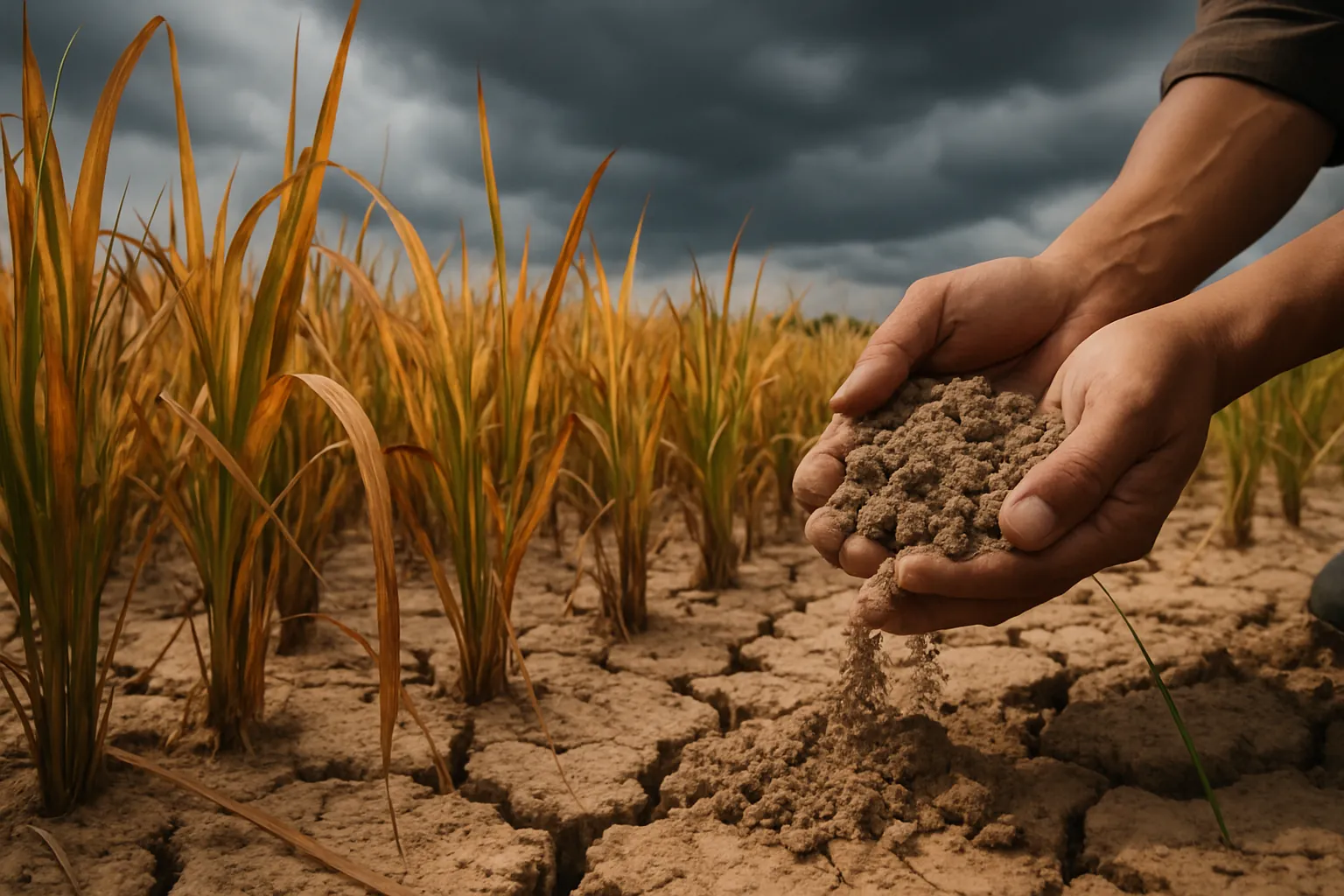
Rice: The Global Staple Now Under Threat
Walk through the markets of Hanoi, Kolkata, Lagos, or New Orleans, and you’ll see rice everywhere: piled high in sacks, sold by the kilo to families who depend on it as their daily bread. For over half the planet, rice means more than a meal—it’s survival. But beneath its simple white grains, a disturbing crisis is brewing. The world’s rice harvest, lifeline to billions, is quietly accumulating an ancient and terrifying toxin: arsenic—the so-called “king of poisons.”
This insidious transformation stems not from industrial recklessness alone, but from a rapidly warming planet and the ways we’ve cultivated rice for centuries. Newly published research in The Lancet Planetary Health delivers a stark warning: as climate change intensifies, rice plants are absorbing ever-greater quantities of inorganic arsenic from the soil, sharply increasing health risks for communities that rely most on this indispensable grain. Donming Wang, the study’s lead researcher at the Institute of Soil Science, Chinese Academy of Sciences, called the results “a disaster… a wake-up call.”
Why the alarm? Science has long recognized that arsenic—once used as a notorious assassin’s tool—exists naturally in the Earth’s crust. Yet while trace amounts may be tolerable, chronic exposure at higher doses is a different story. The World Health Organization classifies inorganic arsenic as carcinogenic, linked to increased risks of cancers, cardiovascular and neurological diseases, and developmental problems in children. Now, with climate change rewriting farming’s rules, arsenic’s hidden threat is reemerging in deadly new ways.
How Climate Change Boosts Arsenic in Rice Fields
Rice paddies are a marvel of agricultural engineering. Their traditional waterlogged conditions, dating back thousands of years, fortify rice plants against weeds and pests—but they also help release arsenic from soil into water, priming it for plant uptake. According to the research conducted by Wang and colleagues—an extraordinary international collaboration spanning a decade—these risks weren’t just persistent; they were worsening as global temperatures and carbon dioxide rise.
Here’s the twist: climate change’s signature effects—hotter weather and elevated CO₂—actually stimulate more vigorous root growth in rice. This sounds positive for crop yields. In reality, it enables rice plants to draw up even more arsenic from groundwater, especially in soils already contaminated through past use of arsenic-based pesticides or irrigation with toxic groundwater. Elevated CO₂ further accelerates the process by feeding microbes in the soil that boost release of arsenic compounds.
To measure the scale, the study team grew 28 rice strains under simulated future climate conditions across China’s Yangtze Delta, a region whose varieties anchor diets in at least seven of the world’s top rice-consuming nations. Their findings: if we remain on our current emissions trajectory, by 2050, millions of people with rice-heavy diets—especially in South Asia, Southeast Asia, and parts of the United States—could endure sharply higher arsenic exposure, with all its toxic consequences.
“Unless we change the way we produce rice, or take swift action on climate change, we could soon be facing increased cancer and disease risks for entire generations whose lifeblood is this grain.”
For those tempted to view this as a distant tale from far-off paddies, consider this: the United States is the world’s sixth-largest producer of rice, and regions in Arkansas, Louisiana, and California grow rice under similar—sometimes worse—arsenic contamination risks. According to a 2021 Consumer Reports investigation, some U.S. rice products already contain arsenic levels that exceed what health experts recommend for children. This isn’t just a developing-world tragedy—it’s a global food safety emergency, hiding in plain sight.
Conservative Inaction and the Urgent Path Forward
Looking back, the science is unambiguous and the warning clear—and yet the political inertia in addressing both agricultural reform and climate action is breathtaking. Agri-business lobbies and conservative lawmakers—especially in the United States—have long resisted stricter environmental and food safety regulations, trotting out tired arguments of economic inconvenience and government overreach. Where does this leave everyday families who trust that something as basic as rice should be, at the very least, safe?
Historical parallels aren’t hard to find. Recall the lead crisis in Flint, Michigan—a preventable tragedy worsened by regulatory neglect and shortsighted cost-cutting. Researchers like Harvard’s Dr. Philip Landrigan, a renowned public health expert, warn that “without strong federal oversight and urgent change, we’re repeating our most disastrous public health mistakes, this time on a global scale.”
Bold government intervention is imperative, not bureaucratic delay. The study’s authors urge immediate innovation: switching to rice varieties that are less prone to arsenic accumulation, overhauling irrigation techniques, and remediating contaminated soils. At the policy level, we need tighter regulations on arsenic in food, robust consumer testing and labeling, and decisive climate policy to reduce greenhouse gas emissions. Pretending this isn’t a crisis betrays those most at risk—children, the poor, entire nations—while protecting industrial interests that profit from the status quo.
Beyond technical fixes, a cultural reckoning awaits. How can we ask individuals to change diets or cooking methods when policy continues to ignore the underlying cause? As a society, facing a “scary” burden like this should unite us in demanding science-based solutions from our leaders, not more excuses. Pew Research surveys consistently show vast public support—even among conservatives—for safe food and environmental protections. Shouldn’t we expect lawmakers to listen?
Progressive values—equality, justice, and the common good—demand that we center the most vulnerable in global food policy and make climate action inextricable from the fight for food safety. The stakes could hardly be higher: saving the world’s rice harvest from a slow-motion “poisoning,” and protecting the fundamental right to safe nourishment for all.
