
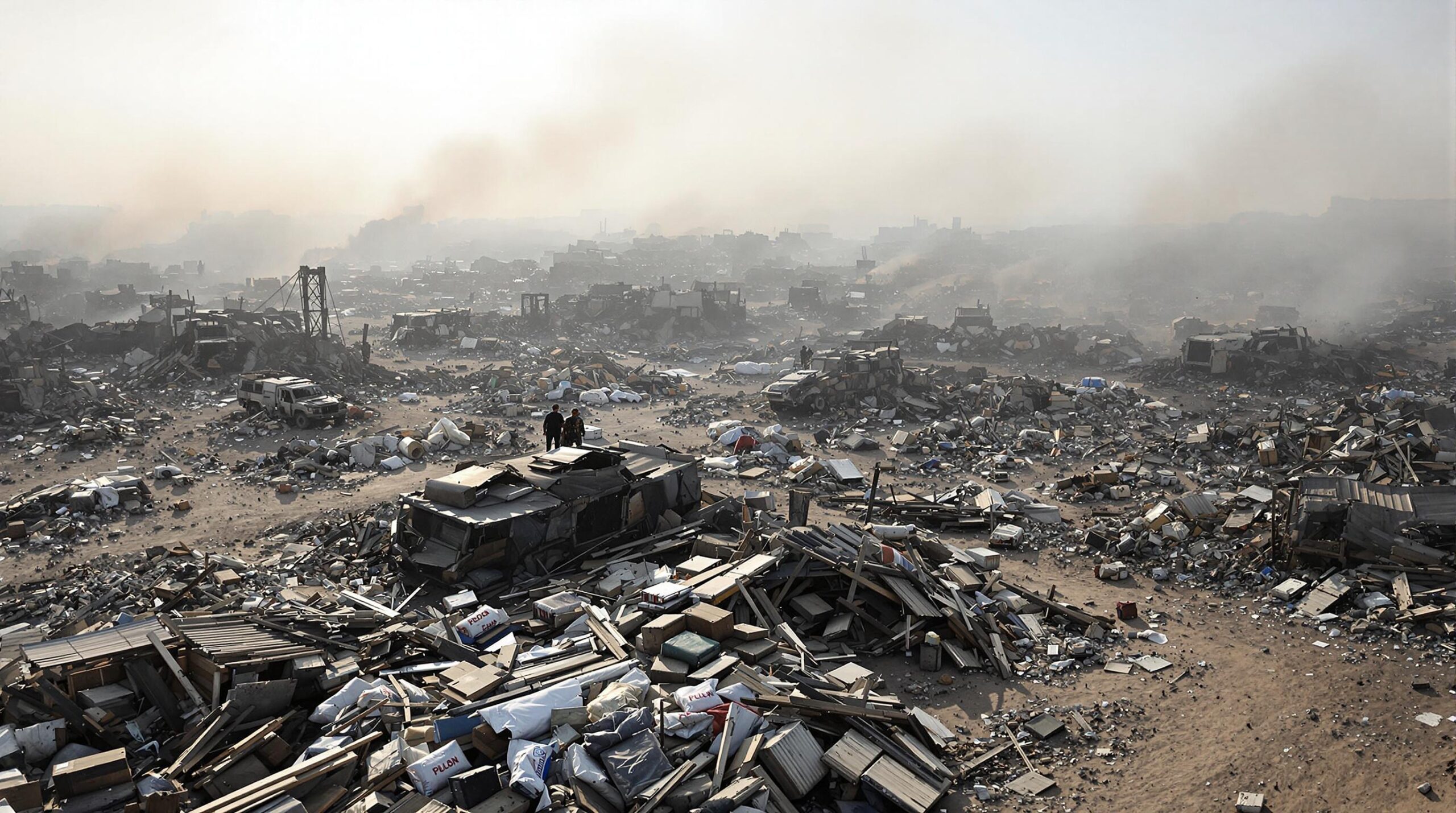
In a troubling escalation of violence, Israel has significantly intensified its military offensive in the Gaza Strip, bringing renewed suffering to a population already facing staggering humanitarian crises. The current operation has seen Israeli forces encircling the Tel Sultan neighborhood in Rafah, marking a dramatic shift in the Israeli government’s approach following a short-lived truce that had offered a brief respite since January 19.
A Shattered Truce and Renewed Violence
Recent actions by the Israeli Defense Forces (IDF) follow frightening bouts of violence that have once again shattered the hopes for sustained peace. In response to missile firings from Yemen and heightened tensions along Israel’s northern border with Lebanon, Israeli military officials have publicly declared their intent to dismantle infrastructure and eliminate members of Hamas in targeted Gaza neighborhoods, notably Rafah’s Tel Sultan district.
The sudden resumption of intense bombardments starkly contrasts the tenuous moments of calm earlier this year. This drastic return to violence risks entrenching a vicious cycle of retaliation and rage. Tragically emblematic of this grim reality, a recent strike in Khan Yunis killed senior Hamas official Salah al-Bardawil along with his wife, underscoring the deadly seriousness of Israel’s renewed military campaign.
A Desperate Humanitarian Situation
The IDF issued urgent evacuation warnings aimed at the residents of Rafah, deploying drones to drop leaflets instructing citizens to swiftly flee from oncoming attacks. Such dire messaging amplifies fears already felt keenly among Gaza’s civilian population, comprised mostly of refugees and internally displaced families. The order to vacate has been described as essential for protecting civilian lives, yet paradoxically, it serves to aggravate an escalating humanitarian catastrophe.
Now, Gaza’s already battered civilian infrastructure is nearing collapse. The region has long suffered under harsh conditions, with shortages of essentials such as food, medicine, and clean water—a situation gravely accentuated during Ramadan. Israeli decisions to cut off electricity have only aggravated civilian despair, disabling vital facilities like Gaza’s primary water desalination plant and reducing hospitals’ abilities to save lives.
More devastatingly, the decision to block humanitarian aid entry to Gaza in March disrupted vital supply chains, causing worsening malnutrition and illness among vulnerable populations, particularly children and the elderly. As residents frantically relocate in search of relative safety, many face impossible decisions and cascading trauma that define lives lived in unremitting conflict.
Political Repercussions and Moral Questions
This new chapter in conflict arrives under a political climate saturated with uncertainty and intensifying moral questions about the nature of warfare and occupation. Defense Minister Israel Katz previously warned of a strategy signifying potential long-term occupation of pivotal parts of Gaza should Hamas refuse Israel’s demands to return hostages. Such declarations provoke profound ethical and logistical dilemmas, challenging global understandings of humanitarian rights and occupation legality.
Is Israel prepared for the civil and political backlash resulting from a protracted and expanded military occupation? History serves as a stark reminder that attempts at sustained territorial control over populations resistant to such occupation rarely result in lasting peace or safety.
“The cycle of occupation, resistance, and reprisal renders a peaceful future for both Israelis and Palestinians more elusive with every passing day.”
Crucially, the moral authority of Israel, its international standing, and the potential for genuine diplomatic resolutions hinge critically on nuanced approaches that prioritize humanitarian provisions and just coexistence over brute force.
The Global Community’s Urgent Call to Action
As heartbreakingly evidenced by the ongoing suffering of Gaza’s 2.4 million people, the international community faces a moral imperative to push forcefully for immediate ceasefires and meaningful negotiations. Progress hinges not on escalations of violence but on a collective acknowledgment of shared humanity and dignity, bolstered by sustainable diplomatic efforts addressing root causes of conflict.
Global leaders must urgently respond to Gaza’s humanitarian disaster with compassion and strategic interventions. Without explicit international pressure for solutions prioritizing peace rather than occupation, the impending humanitarian disaster in Gaza threatens historical echoes of past tragedies.
In the face of this unfolding crisis, silence or neutrality effectively constitutes complicity in continued human suffering. Now more than ever, robust global leadership must confront this humanitarian disaster head-on and unequivocally demand a halt to the violence. Israel’s military expansions in Gaza underscore a dire need for compassionate and concerted global intervention. It is clear: we must choose progress, negotiation, and empathy over perpetual war and destruction.
