
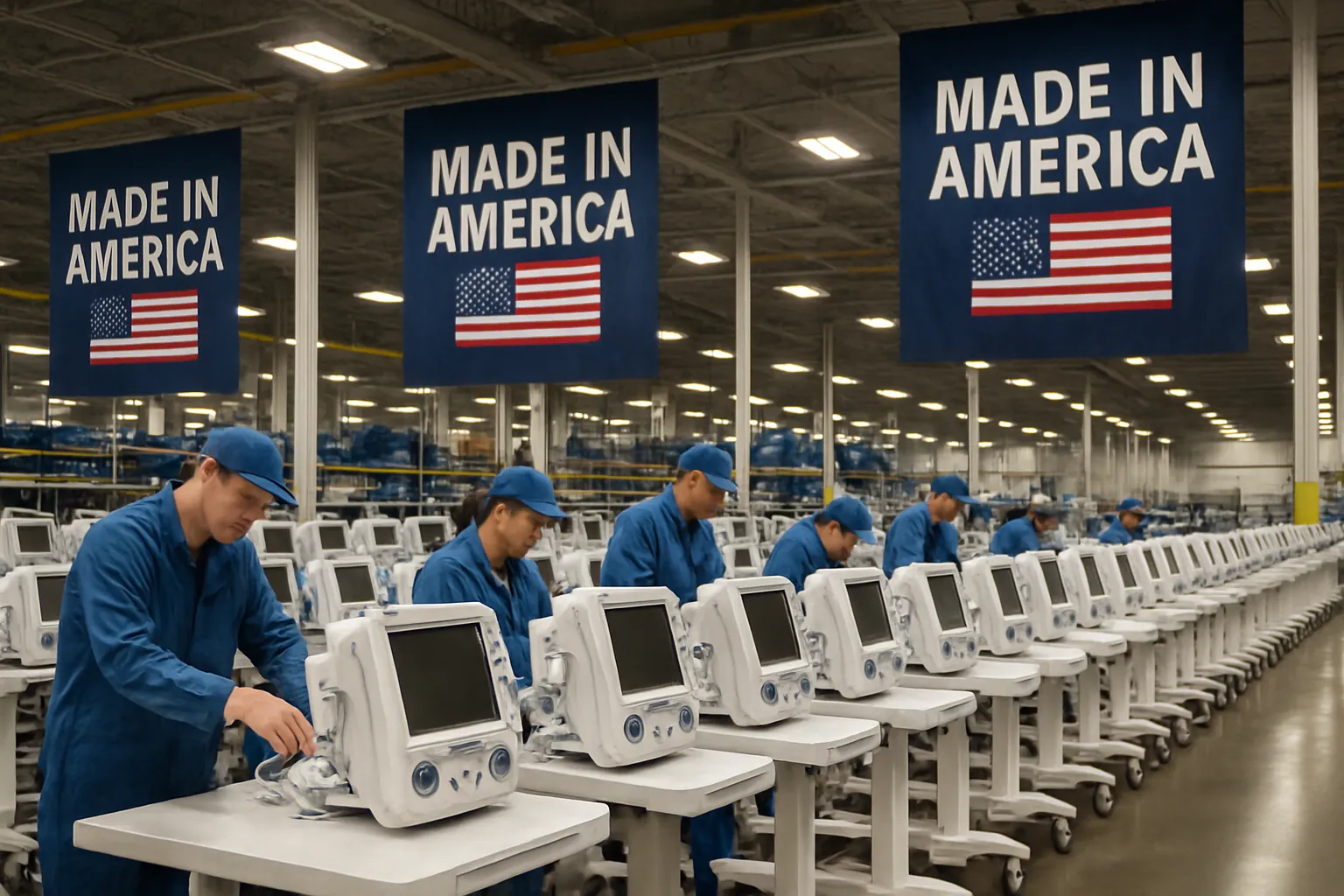
America First, Pharma Style: Behind the $2 Billion Push
The familiar skyline of North Carolina is about to see a radical transformation. Johnson & Johnson—America’s pharmaceutical titan—has just revealed its latest gamble: a $2 billion investment in a sprawling, state-of-the-art biomanufacturing facility at Fujifilm’s Holly Springs site. This announcement has grabbed headlines, but the real story reaches far beyond the construction jobs, steel beams, and ribbon-cutting ceremonies that local news loves to showcase.
What set the stage for such a dramatic move? Rising anxiety over potential drug import tariffs imposed by the Trump administration—a tactic meant to strongarm multinationals into “reshoring” jobs and supply chains back to the U.S. While the pharmaceutical industry has historically relied on a global tapestry of research, ingredients, and production, seismic shifts in trade policy are forcing corporate giants to rethink those assumptions. According to University of North Carolina labor economist Rajiv Malhotra, “Tariffs or threats alone won’t fix our supply chains, but the uncertainty is high enough that business leaders have to hedge their bets.”
Beyond policy turbulence, this is the latest move in Johnson & Johnson’s $55 billion, four-year commitment to beefing up its U.S. footprint. A closer look reveals how the Holly Springs project fits into a larger chessboard of facility expansions across the country—including a high-profile site in Wilson, North Carolina, that’s projected to employ more than 500 people once fully operational.
The Economic Impact: Who Benefits, Who’s Left Out?
The numbers are impressive on the surface: a 160,000-square-foot facility, 120 permanent jobs, 5,000 construction gigs, all in a region hungry for growth. But who actually wins when Big Pharma plants its flag? Local construction companies and suppliers will see a short-term boom, and a handful of highly trained biotechnology workers will find stable, well-compensated employment. Some industry boosters claim these projects create a domino effect, attracting startups and raising local living standards.
Reality proves more complicated. While J&J is quick to showcase its “commitment to American jobs,” the long-term economic dividends often flow upward, not out. According to a 2023 Brookings Institution report, large-scale manufacturing investments in the U.S. frequently create fewer middle-class jobs than advertised, as automation and advanced robotics dominate modern pharma production. The 120 permanent roles slated for Holly Springs are expected to require highly specialized degrees—leaving many local workers out of the running for these coveted positions.
“Mega-investments like this are a double-edged sword for communities,” says Duke University economist Sandra Lee. “The short-term wins are real, but the benefits rarely trickle down to the people most in need of economic mobility.”
For the 5,000 or so temporary construction workers, the influx of work will be brief and then disappear, leaving little long-term economic security behind. The story is familiar: a surge in demand for hotels, bars, and takeout food, then a return to the status quo for local neighborhoods struggling with stagnant wages. What do these projects deliver in terms of social justice, equality, and local empowerment? Too often, the answer is “not enough.”
Healthcare Resilience or Corporate Maneuvering?
Amid the fanfare of domestic investment, there’s a stark reality: this strategic reshoring is less about American health security and more about insulating profit margins from Washington’s unpredictable trade saber-rattling. Harvard health policy scholar Janine Cole notes, “Reshoring does not directly address affordability or access for American patients—it just makes companies less vulnerable to political headwinds.”
Is there upside for the millions of Americans battered by high prescription drug costs? Sadly, the answer remains elusive. Even as manufacturing returns stateside, there’s no guarantee these savings will ever trickle down to patients. The reality is that Big Pharma’s focus on domestic manufacturing often coincides with lobbying efforts against meaningful price controls or universal healthcare, perpetuating a system where lifesaving medicines remain out of reach for many.
History offers little comfort. Despite similar investments in biomanufacturing during the Obama administration’s “Investing in America” initiative, pharmaceutical prices have continued to soar, and medical debt remains a crushing burden for working families. Drug manufacturing jobs—unlike auto plants built a generation ago—do not typically create wide swaths of local prosperity, nor do they deliver equitable access to care.
Yet, the clamor for reshoring is unlikely to wane. Americans of all stripes crave a sense of security—economic and pharmaceutical. Memories of pandemic-era shortages and broken supply chains loom large. The promise of “Made in America” drugs stirs a potent mix of patriotism and self-preservation. But is it enough to ensure that everyone—not just shareholders—reaps the rewards?
Far from being a silver bullet, Johnson & Johnson’s $2 billion North Carolina expansion marks an inflection point in debates about economic justice, healthcare access, and the role of government in shaping industry incentives. As voters and activists scrutinize the next wave of manufacturing projects, it’s fair to ask: Who really benefits—and who keeps shouldering the risk?
