
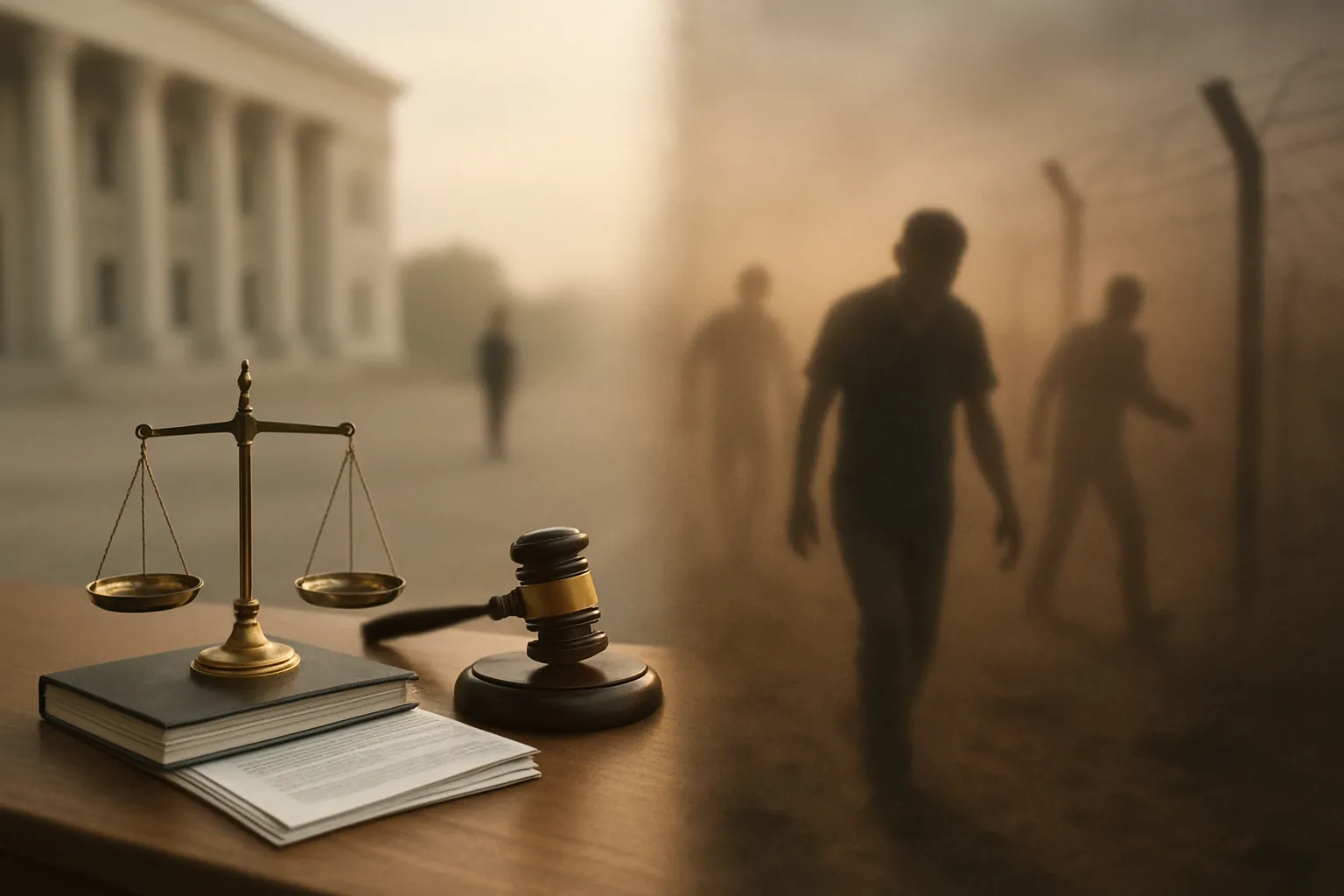
When Policy Collides With Principle: A Stranded Humanitarian Crisis
High noon in Djibouti. Temperatures crest well above 100 degrees as a converted shipping container doubles as a makeshift detention cell at Camp Lemonnier, the sole U.S. naval base on the Horn of Africa. Inside this steel box, nearly a dozen Immigration and Customs Enforcement (ICE) officers and eight deportees—many facing accusations of serious crimes like murder and assault—have been marooned for weeks. Their deportation flight derailed, not by a war zone or mechanical failure, but by a federal court order thousands of miles away.
This unfolding drama reads less like a lawful, orderly process and more like the fallout from a policy caught in the jaws of legal oversight. At the heart lies a collision between Trump-era immigration enforcement—dogged in its attempts to expel as many as possible without adhering to rigorous humanitarian protocols—and a judiciary asserting basic due process for even the most vilified among us.
A closer look reveals both ICE officers and detainees suffering under conditions one top official described as “outrageous.” Medical care is nearly nonexistent; antimalarial drugs were unavailable upon arrival, resulting in multiple illnesses within 72 hours. The air, thick with toxic smoke from nearby burn pits, breeds chronic cough and respiratory infections. Security is threadbare: rocket attacks from Yemen-trained militants are a daily threat, and neither detainees nor officers enjoy adequate protective gear.
Bureaucratic Deadlock and the Human Cost
How does it come to this—a group of Americans and migrants stuck on the other side of the globe, caught between executive action and judicial restraint? According to the federal court in Boston, the simple answer is impunity. Trump administration officials attempted to deport individuals to so-called “third-party” countries like South Sudan, sidestepping the due process rights guaranteed under U.S. law. US District Judge Brian Murphy responded by ordering the government to cease such deportations and mandating that detainees be granted “meaningful access to counsel,” humanitarian screenings, and continued U.S. custody.
Instead of bringing the group back to American soil for proper legal review, administration officials chose to offload the deportees and their ICE custodians at the only available U.S. facility in the region: Camp Lemonnier, Djibouti. The decision created a humanitarian and security nightmare—one now being decried by both ICE leadership, who feel abandoned by Washington, and by legal advocates for the detainees, who see a gross violation of legal and ethical standards.
“This is a manufactured crisis: the product not of legal necessity, but of policy stubbornness and a lack of regard for basic rights.” Legal scholar Harold Koh, a former State Department legal adviser, called the situation, “a tragic emblem of the perils that come from weaponizing deportation policy without guardrails.”
“The very people entrusted with implementing our laws are now themselves victims of a process that has become unmoored from constitutional principles and human decency.”
Beyond that, the repercussions extend to local staff and Djibouti’s own tenuous security environment. With inadequate supplies, the risk of infectious disease, and visible American vulnerability, the standoff imperils not just individuals but ongoing military cooperation. Harvard public health expert Dr. Marie St. Jean warns, “Turning a military staging area into a de facto detention camp introduces public health, diplomatic, and operational hazards that should never have been contemplated.”
The High Stakes of Immigration Stalemate
The impasse in Djibouti illuminates a central tension in American immigration policy—one that is both ideological and operational. Conservatives who champion mass deportations have frequently sought to bypass the painstaking humanitarian vetting demanded by both U.S. law and international treaties. Yet, federal court oversight remains the only bulwark preventing the government from flouting the rights even of those with criminal records.
Federal officials now argue that judicial intervention jeopardizes ICE agent safety and hampers military operations, but this narrative omits critical context: the Trump administration knowingly risked both operational security and legal compliance by seeking the path of least resistance. Returning the group stateside would not only have honored the judge’s order; it would have preserved the integrity of American institutions and avoided this dangerous fiasco.
Polls from Pew Research Center consistently show a public appetite for humane process in deportations—even when national security or crime is invoked. The tragedies in Djibouti echo, on a smaller but no less alarming scale, the infamous 2018 family separation policy debacle. Policy divorced from values and careful implementation produces suffering for all involved—officers and accused alike.
What next? As appeals wind their way to the Supreme Court and the Biden administration faces pointed questions about how to resolve the ordeal, the episode serves as a stark reminder. Judicial oversight and humanitarian obligations are not obstacles to be dodged, but rather the cornerstone of democratic governance and the nation’s moral standing.
For now, the ICE officers and deportees, both pawns in this grim tableau, continue to languish in a state of legal and physical limbo—one that could have, and should have, been avoided by adherence to principle and prudence over political expedience.
