
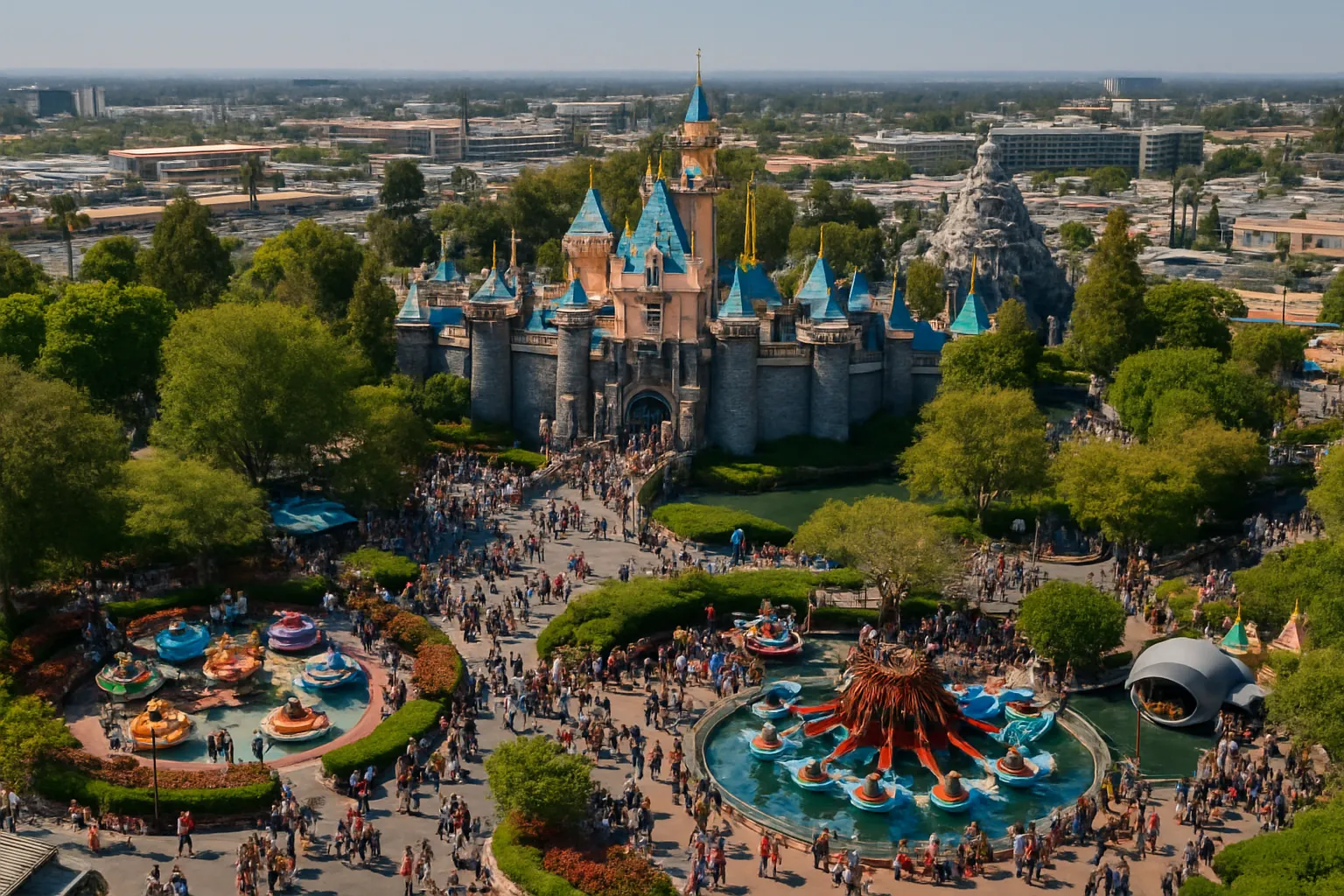
Disneyland: Beyond the Castle Gates—A Regional Lifeline
As Disneyland Resort marks its 70th anniversary, the numbers tell a story almost as fantastic as the fairy tales within its gates: $16.1 billion in annual economic impact and more than 102,000 jobs supported in Southern California. While Disney magic is crafted inside Anaheim’s theme parks, its economic wizardry extends far wider, fueling local economies, small businesses, and entire communities. “Disneyland isn’t just Orange County’s largest employer with 36,000 workers—it’s an economic engine keeping thousands of Southern California families afloat,” says Mark Vitner, senior economist with Oxford Economics. The newest data, tallied by Tourism Economics, lays bare what many locals already sense: much of Orange County—nearly one in every 20 jobs—depends on the Mouse.
Strip away the fantasy, and you’ll find the real world impact. Hotels sprout up to house visitors, local restaurants bustle with tourists spilling from the park gates, and thousands of small suppliers keep the massive logistical waltz in motion. The city’s budget feels the magic, too. Just last year alone, Disney generated $2.6 billion in tax revenues—including a remarkable $279 million flowing directly into Anaheim’s own coffers, money that pays for local services, parks, emergency response, and the social infrastructure that keeps the city humming. Policies around the tourism sector and labor have direct consequences for the life and livelihood of everyday people in the region.
Disney’s National Reach: From Anaheim to Every Corner of America
Look past the Matterhorn and Sleeping Beauty Castle, and you’ll glimpse a much broader tapestry. Disney Parks & Resorts—the collection of theme parks, hotels, and experiences stretching from California to Florida—generated a historic $67 billion in annual economic impact last year, supporting over 403,000 jobs across the United States. This is not just white-collar executives or costumed characters; it’s janitors, custodial staff, bus drivers, and thousands upon thousands of unionized workers, many of whom have fought hard for incremental wage increases and greater workplace protections.
Nearly 75% of Disneyland-related jobs are in Orange County itself, embedding the resort deeply into the region’s economic DNA. And thanks to the power of collective bargaining, wages for many are inching upward. One of the largest unions within the resort, representing 14,000 employees, recently secured a stepped wage hike through 2026—reaching $26 an hour. This isn’t solely about worker justice, although it is critical; it’s about the public good. Higher wages mean families can better afford rent, groceries, healthcare, and education, rippling outward to strengthen entire communities.
“Economic impact studies show that Disneyland isn’t just about rides and fireworks—it’s a vital support system for local and national economies, a hub of job creation, and an anchor for communities.”
The reach of this economic support isn’t limited to the neighborhoods surrounding Disney-branded gates. According to the latest Tourism Economics report, Disneyland’s ripple effect stretches into hundreds of small businesses, from local construction firms expanding themed lands to farming cooperatives ensuring a steady supply of produce for resort kitchens. These indirect and induced jobs embody the broad definition of economic vitality—a basic fact that conservative policymakers often seem to dismiss in their rush to grant tax cuts for the already-wealthy rather than investing in engines of shared prosperity.
DisneylandForward: The Next Chapter, and the Real Stakes for SoCal
Now, Disney is betting big on its own importance—promising an additional $30 billion in capital expenditures across California and Florida parks through 2033, including the ambitious “DisneylandForward” project. According to Josh D’Amaro, Chairman of Disney Experiences, these plans aren’t just about new attractions. “Every dollar we invest spins off far more across the local and national economies—hotels, suppliers, contractors, and more,” he explained in a recent announcement. Disney’s future growth is poised to invigorate even more sectors: hospitality, construction, skilled trades, logistics, and creative industries.
Why does this matter to you—especially if you’re not hitting Space Mountain this weekend? Because developments like DisneylandForward mean jobs and revenue at a scale that few private projects can match. It’s not just about ticket sales. It’s new contracts for local construction companies, high-skill positions in themed design, small business growth in the shadow of the Monorail—all with a view toward sustainability, accessibility, and innovation. That said, progressives must remain vigilant. Expansion can mean displacement if not carefully regulated. Affordable housing advocates have sounded alarms for years about the rising cost of living in resort regions like Anaheim, fueled by tourism’s seemingly endless boom. Ensuring that economic growth is both inclusive and responsible is the challenge local leaders must meet head-on—resisting the urge to rubber-stamp every proposal without safeguards for vulnerable residents.
Past experience demonstrates that unchecked corporate expansion can deepen equity gaps. Harvard economist Rebecca Henderson argues, “When policymakers over-indulge corporate development without setting community standards—affordable housing, environmental protection, labor fairness—the cost is often felt most acutely by low- and middle-income residents.” The lesson here? Growth must be balanced with a deep commitment to social justice, environmental stewardship, and broad-based prosperity.
Lessons for Progressives: Making the Economy Work for All
Disney’s impact provides a useful prism for national debates about economic development. It’s not enough for job creation to be the only metric of success; the quality of those jobs, the strength of collective bargaining, and the public investments they support are equally essential. A closer look reveals that sustainable prosperity comes when major employers like Disney partner with unions, local governments, and community groups to ensure a rising tide truly lifts all boats.
Policymakers must take note. As conservative pundits push for deregulation and corporate tax holidays in the mistaken belief that benefits will inevitably “trickle down,” Disneyland’s example makes a different case. Strategic partnerships between private giants and the public sector, rooted in equity and shared goals, yield the most resilient communities. It’s a vision of progressivism that does not reject big business, but demands it play its part in building a more just, prosperous, and sustainable future.
