
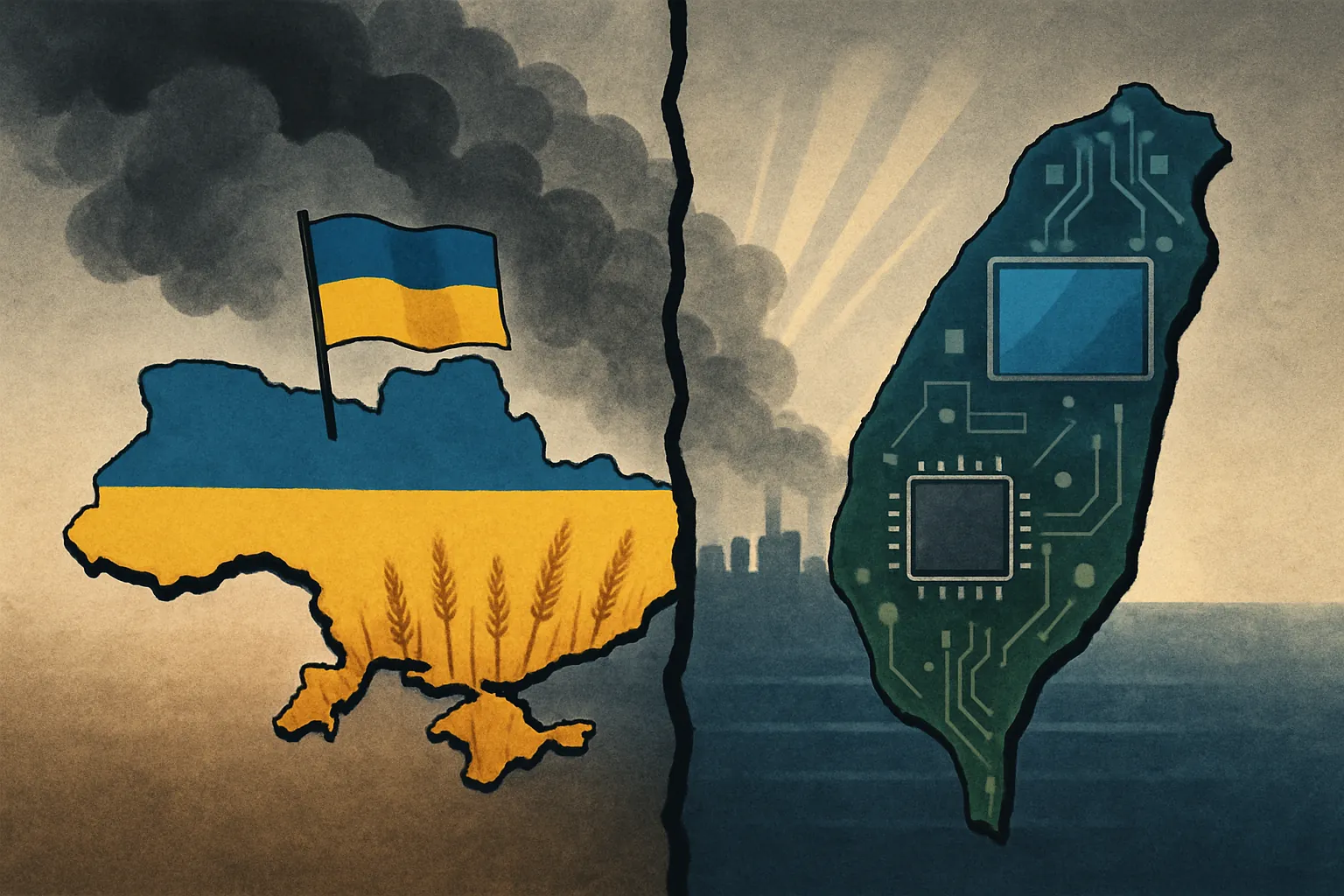
The Tensions on Display at Singapore’s Shangri-La Dialogue
Most foreign policy disputes play out in quiet backrooms, but sometimes the world’s sorest diplomatic nerves get exposed front and center—precisely what happened at this year’s Shangri-La Dialogue in Singapore. French President Emmanuel Macron’s candid remarks warning that unchecked Russian aggression in Ukraine could embolden Beijing to move on Taiwan clearly shook the room—and provoked a swift, keenly worded backlash from Chinese officials.
China’s embassy in Singapore didn’t mince words, labeling Macron’s comparison of Ukraine and Taiwan “unacceptable” and dismissing it as a classic case of Western “double standards.” From Beijing’s standpoint, the two conflicts share no meaningful equivalence. Ukraine, China insists, is a sovereign nation attacked by another—while Taiwan, in their eyes, remains an uncontestable province awaiting “reunification.” Behind the rhetoric lies deep anxiety within China’s leadership over any effort, even rhetorical, to internationalize the Taiwan issue.
Beyond that immediate uproar, the event’s context reveals deeper fault lines. China’s own relatively modest presence at the forum this year—dispatching lower-profile military academics rather than heavyweight defense ministers—underlines a cautious, almost defensive diplomacy. This isn’t just about a single weekend scuffle; it’s a window into how Beijing, Paris, and Washington are all recalibrating their roles in an era of compounding crises and shifting alliances.
Macron’s Warning: Aggression Unchecked, Precedents Set
Macron’s warnings were hardly an outlier in Western military circles. His rhetorical question—“What would you do the day something happens in the Philippines?”—reminds us that Taiwan is only the most prominent flashpoint in a region crisscrossed by territorial disputes and power plays. He suggested that failing to constrain Moscow in Ukraine might signal permissiveness regarding future actions by China. This is a profoundly consequential stance, shared increasingly by a chorus of European leaders, who now view Asian security as inseparable from their own.
At the same forum, U.S. Secretary of Defense Pete Hegseth declared China “credibly preparing” for military action against Taiwan, accusing Beijing of “rehearsing for the real deal.” For many in Washington and across allied capitals, this heightens the urgency to reinforce deterrence and support alliances from Manila to Taipei. Harvard scholar Bonnie Glaser, an expert on China’s foreign policy, notes that “the clear intent behind Beijing’s reaction is to discourage any perception that Taiwan’s fate is subject to international scrutiny, let alone intervention.”
Such high-stakes rhetoric wouldn’t matter so much if there weren’t stark underlying realities. China’s military flybys over Taiwan and its buildup of amphibious capabilities are real, as regularly documented by international defense analysts. The tension is not manufactured but hardwired into the new global landscape. The Council on Foreign Relations ranks a potential Taiwan conflict among the world’s most dangerous flashpoints, right alongside Ukraine.
“Failing to stand up for Ukraine now means we are all less safe tomorrow—whether in Europe, Asia, or in our own backyard.”
– French President Emmanuel Macron, Shangri-La Dialogue, 2024
A closer look reveals another key detail: China’s rebuke also doubles down on the notion of sovereignty as an absolute—yet the reality is far more complicated. Taiwan maintains an elected government, independent foreign policy, and a thriving society. As Amanda Hsiao, a senior China analyst for the International Crisis Group, argues, “Beijing’s insistence on strict non-interference may play well in nationalist circles, but it obscures the actual will of the Taiwanese people.”
Double Standards and the Global Stakes of Hypocrisy
Beijing’s central talking point—that the West operates with “double standards”—isn’t new, but it has intensified as international focus sharpens on Taiwan’s fate. The Chinese embassy in Singapore asserted that “attempts to denounce double standards with double standards only perpetuate the problem.” It’s a telling phrase: For China, the message is that any outside attention to Taiwan infringes on sovereign rights, whereas its own interpretation of sovereignty is not up for debate.
The liberal world order relies on upholding some universal norms, among them the right to self-determination and resistance to territorial conquest. Yet these principles are often tested against raw power. Authoritarian governments, whether in Moscow or Beijing, interpret international norms through a lens of self-interest and historical grievance, while liberal democracies are left arguing the moral case.
Historically, such double standards are not unique to any one country or ideology. Recall the U.S. record in Latin America or colonial interventions by European empires—there’s plenty of hypocrisy to go around. But there’s a crucial difference here: in our era of interconnected economies and shared threats (from pandemics to climate change), indifference or passivity can quickly spiral into global peril.
One pragmatic lesson from Putin’s war in Ukraine is that appeasement is a luxury the modern world can ill afford. National boundaries, once violated, invite further violations elsewhere. While China insists on Taiwan’s “inevitability,” the world cannot simply standby—progressive values demand that smaller nations and peoples have a say in their own future, free from the shadow of authoritarian ambition.
Ultimately, Macron’s blunt analogy struck a nerve precisely because it exposes the stakes: If the international community fails to halt naked aggression in one continent, it risks normalizing the tools and tactics of conquest in another. The Taiwan issue, then, is not an isolated question of Chinese pride or American containment—it’s a broader test of whether global norms will be enforced, or hollowed out by fear and cynicism.
