
When The Right to Expression Face Political Hurdles
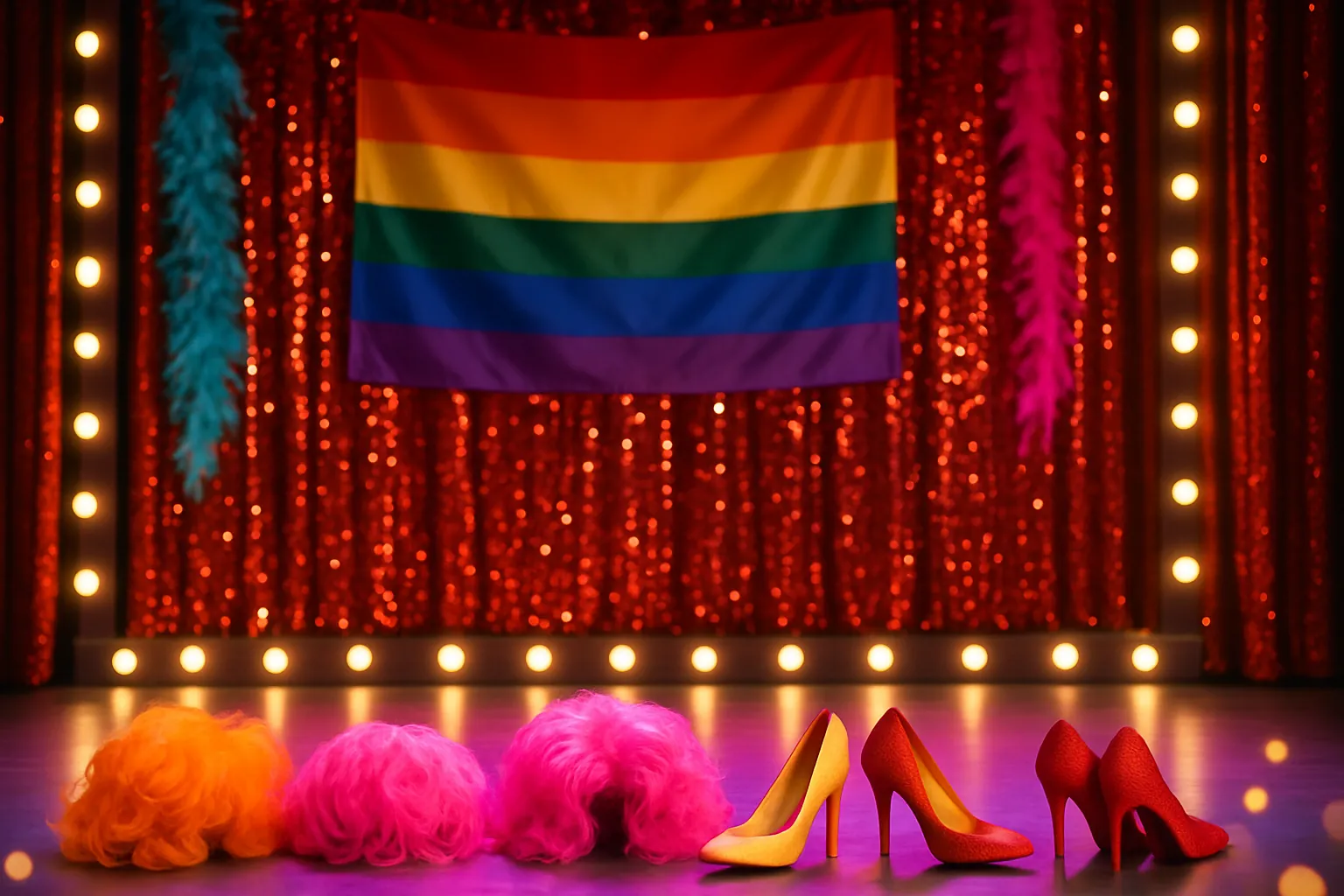
Sunlight filtered through the banners of Cambier Park as Naples Pride leaders filed their lawsuit, aware that their battle was about more than just a stage and costumes. For the city of Naples and its LGBTQ+ residents, the event was a test of whether the First Amendment’s promise of expressive freedom could withstand politicized crackdowns masquerading as “safety” or “decency” concerns. Those anxieties echo nationally: conservative policymakers increasingly target drag shows and other LGBTQ+-centered expression, often with sweeping language or arbitrary restrictions.
A closer look reveals how local governments, intentionally or not, can chill free speech through bureaucratic means. When Naples city officials mandated that drag performances at this year’s Pride Fest be held only indoors with a strict 18+ age limit, their rationale was thinly veiled. The City Council cited unspecified “security concerns”—but Naples Pride argued the city had no consistent formula for assessing those risks or imposing security fees. As Judge John Steele’s ruling notes, such vague, variable requirements let permit-issuing authorities encode personal or political biases into their decisions, instead of genuinely ensuring public safety.
According to the court’s opinion, even increased security fees—arbitrarily doubled by the City Council—sent a clear message of institutionalized deterrence. Naples’ own police chief reportedly set the fee with little transparency, reinforcing activists’ belief that not just the audience, but the very presence of drag was being priced out of the public square. Judge Steele, a George W. Bush appointee, ultimately sided with Naples Pride, observing that “the intended drag performance is symbolic expression that a reasonable person would interpret as conveying a message.” In short, the restrictions looked less like objective rules and more like retaliation.
Symbolic Expression and The Culture War Playbook
This ruling arrives as Republican-led states—Oklahoma, Tennessee, Texas—are competing to see who can most aggressively circumscribe what is deemed acceptable public performance. Some of these laws, such as Oklahoma House Bill 1217, attach criminal penalties to any adult performance a local authority considers “obscene” in the presence of children. No clear definition is offered. Critics warn this is no accident.
Drag performers themselves, such as Porshe Lynn and Porcelynn Turrelle, described in interviews with 2 News Oklahoma, say the law’s vagueness is chilling. It leaves the door open for selective and politically motivated prosecutions. Such laws, argues Harvard legal scholar Randall Kennedy, “hand government officials enormous discretion to police the boundaries of taste,” which in the U.S. has historically led to censorship and repression—think of the red-baiting “decency” campaigns against early LGBTQ+ bars, or the Supreme Court’s winding path to overturning obscenity laws that targeted books from “Ulysses” to “Howl.”
Governor Kevin Stitt seemed almost pleased with the ambiguity, stating in public that while the law “isn’t about men in makeup,” it empowers local authorities to target any behavior they see as “inappropriate.” The result is a climate where an entire community must guess what expression crosses an invisible and shifting line—an atmosphere sure to stifle not just drag, but all forms of nonconforming art or speech.
“What we’re seeing is a return to the kind of vagueness and overbreadth that courts have repeatedly ruled unconstitutional, because the threat of arbitrary enforcement chills protected speech before it even occurs.” — Randall Kennedy, Harvard Law School
Beyond Naples: The Stakes for Free Expression in America
Beneath the headlines and the court briefs, real consequences ripple outward from these legal battles. For LGBTQ+ youth and their families, the right to see themselves reflected on stage—without having to check their age at the door or shuffle behind closed curtains—signifies more than entertainment. It is affirmation, dignity, and often a rare moment of acceptance in a community that still faces discrimination and marginalization.
Strikingly, the Naples court’s injunction not only lifted the indoor and age restrictions for Pride Fest 2025 but ordered the city to reevaluate the mounting security fees—a tacit recognition that economic roadblocks can be as effective as outright bans. The message to other municipalities is loud and clear: policies must be rooted in neutral, evidence-based criteria, not cultural discomfort or moral panic. The First Amendment, after all, does not only protect easy, popular, or mainstream expression; its core purpose is to shield dissenting, disruptive, or misunderstood voices. As documented by the American Civil Liberties Union, attacks on drag and queer visibility often target the most vulnerable, with restrictions sometimes enacted under the pretext of “protecting children.” Yet studies, including one from the Williams Institute at UCLA, consistently show that affirming environments lead to improved mental health and safety for LGBTQ+ young people.
Opponents may insist such measures are about maintaining “public decency.” But decency is subjective, historically weaponized to suppress social change. Consider how similar language was brandished to censor jazz in the 1920s, rock-and-roll in the 1950s, and hip-hop in the 1980s—not to mention civil rights rallies. The arc of justice, as Dr. Martin Luther King Jr. said, bends forward, but only if we refuse to let fear and prejudice dictate the limits of collective expression. Naples’ win, though provisional, marks a much-needed reaffirmation of basic rights at a time when those rights are routinely under siege in statehouses across the nation.
