
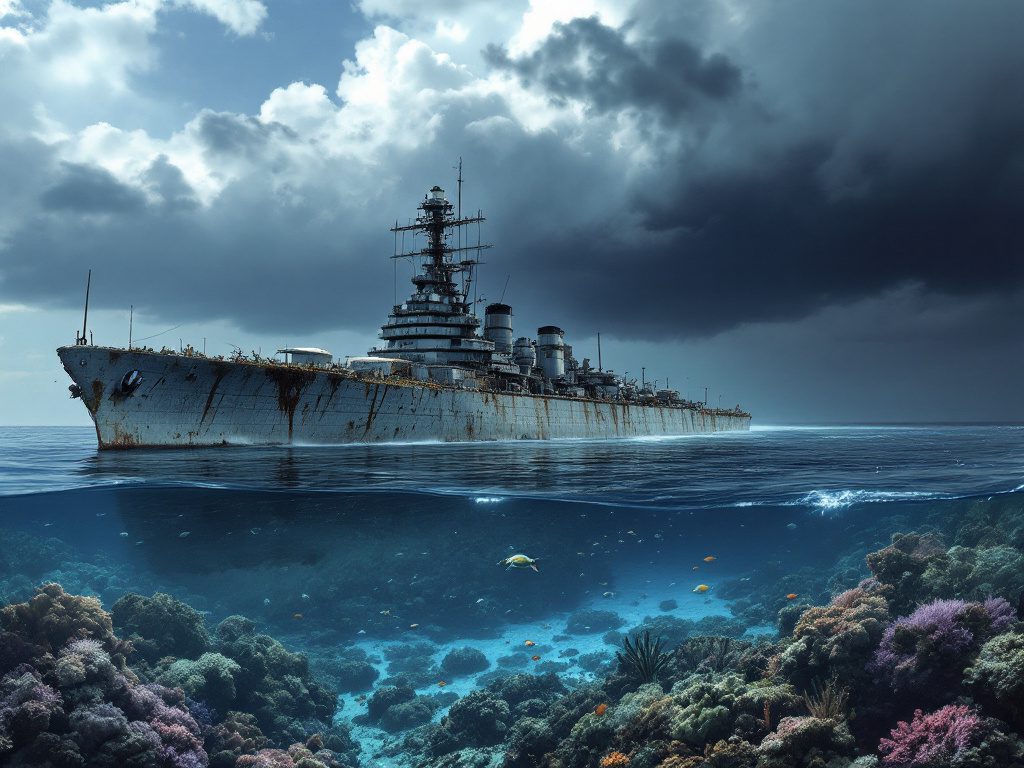
Turning Back the Tide: The Navy’s Climate Retreat
Nothing focuses the mind on the dangers of climate denial quite like watching the world’s largest navy—one with shorelines from Norfolk to Okinawa—deliberately turn its back on mounting existential risks. On a brisk morning in Washington, Navy Secretary John Phelan appeared in a matter-of-fact video announcement, abruptly rescinding the 2022 “Navy Climate Action 2030” initiative. The plan, once hailed as a necessary response to rising seas, extreme weather, and global instability, was quickly relegated to history’s dustbin. Officially, the Navy is “refocusing” on lethality and warfighting, but at what cost?
What does it really mean to wage modern warfare when the very bases, ports, and shipyards meant to shield the nation’s interests are themselves sinking under the weight of unchecked climate change? The Biden-era plan—developed under then-Secretary Carlos Del Toro—acknowledged these stark realities head-on. From Norfolk’s flood-prone shipyards to the increasingly vulnerable Marine Corps boot camp at Parris Island, climate risk isn’t some abstract threat. The Pentagon’s own infrastructure reports confirm that sea level rise puts billions of dollars’ worth of assets in jeopardy.
Yet, as so often happens when conservative leadership walks in the door, the priorities shift. Navy Secretary Phelan, with little experience in uniform but a great deal of faith in the so-called “warrior ethos,” dismissed climate planning as “ideologically motivated regulations.”
What the Navy Leaves Behind: Security in an Age of Unrest
A closer look reveals that rescinding these plans isn’t just a bureaucratic shuffle. The Navy’s now-scrapped Climate Action 2030 program committed to bold steps: acquiring a 100 percent zero-emission vehicle fleet by 2035 and halving emissions from naval buildings before 2032. These targets weren’t mere virtue signaling. They followed urgent warnings from scientists and military planners alike.
Harvard environmental policy expert Dr. Lauren DeWeese frames it bluntly: “Ignoring the climate risks facing our military installations is a strategic failure. Every major international study ranks climate change among the top drivers of instability—and the U.S. military can’t afford to be caught unprepared.”
Think about the stakes: Defense Department analysts have projected that Parris Island—the revered birthplace of Marine recruits on the East Coast—could be underwater by the end of the century. Hampton Roads, Virginia, where the world’s largest naval station sits, is already the focus of a $2.6 billion floodwall project intended to stave off disaster. These are not hypothetical worst-case scenarios; these are real, immediate threats recognized by military engineers and commanders on the ground.
It’s not just about melting ice caps or distant abstraction; this is national security at its core. Former Secretary Carlos Del Toro, who spearheaded the climate plan, described climate change as “one of the most destabilizing forces of our time.” He was right: From the South China Sea to America’s own harbors, the Navy and the Marines are on the front lines of the global climate crisis.
“When storm surges threaten billion-dollar shipyards, and essential training bases face inundation, the line between environmental stewardship and core defense readiness simply disappears.” – Defense policy scholar Dorothy Harris
The abrupt reversal under Secretary Phelan reflects a pattern all too familiar in recent Republican administrations: Obama’s “Great Green Fleet,” a 2016 effort to reduce reliance on fossil fuels for warships, was similarly abandoned in favor of short-term calculations about cost and perceived military tradition. The deeper story here isn’t about one plan or one leader—it’s about a persistent failure to recognize, in the words of Pentagon consultant Alice McBride, “that bullets and bombs cannot swim.”
The Price of Political Myopia: Military Strength in a Changing World
Advocates for science-based planning warn that ignoring the climate crisis is not a show of strength—it’s a costly gamble. The military, often praised as an engine of American innovation, has a long tradition of adapting to technological and geopolitical change. From the nuclear age to the digital era, readiness has always depended upon foresight. So, why is environmental responsibility now considered a “distraction” by conservative leadership?
< b >The answer, critics say, lies in a troubling ideological rigidity. Now-former Secretary Del Toro urged that “Navy and Marine Corps leaders must prepare for an operating environment defined by heat waves, hurricanes, and sea level rise.” Yet the current administration’s fixation on a narrow definition of “lethality” strips the service branches of their ability to plan for threats beyond battlefields. Think of this not as a partisan spat, but as a fundamental misunderstanding of what true security requires in the 21st century.
You might ask: Isn’t the military already stretched? Shouldn’t priorities be focused on adversaries abroad? But the only thing more dangerous than being caught off-guard by a hostile power is being incapacitated by a predictable, preventable crisis at home. As Pulitzer-winning journalist Mark Hertling writes, “A Navy unprepared for climate devastation is a Navy unprepared for war.”
Beyond immediate operational risks, there’s the cost to American taxpayers and communities. Disaster repairs, emergency relocations, unplanned port upgrades—all will demand far more resources down the road than proactive climate adaptation ever would. According to a 2023 Pew Research study, bipartisan majorities of Americans agree that environmental protections strengthen—not weaken—national safety. So why, then, is leadership charting a course that runs contrary to both scientific consensus and the will of the public?
Investment in eco-friendly technologies—like zero-emission vehicles and green infrastructure—does not undermine combat capability. Quite the opposite: Resilient bases and modern energy systems protect readiness, reduce operational vulnerabilities, and cultivate global leadership by example.
Can Security Survive Politics?
Policy reversals like this force a stark reckoning. Will the nation’s most storied service allow short-term priorities and ideological rigidity to shape its preparedness? Or will it reclaim the tradition of innovation, adaptation, and responsibility that have long secured both America’s shores and its values?
History offers an answer: When leadership has failed to plan for emerging risks, it has left a legacy not of strength, but of scrambling catch-up and missed opportunity. Ask the generations of Americans who rebuilt coastal cities after Katrina or fortified bases post-Sandy; ask military families stationed on threatened islands and coasts if their leaders’ focus should be politics or prudence. The answer seems all too clear.
As the world grows hotter and less predictable, the stakes for our military grow with it. Strength—real strength—means seeing the threats before they breach our gates. The time to act on climate is now, no matter what political winds may blow from Washington.
