
America Takes a Giant Leap in Critical Minerals
At a time when the world’s supply chains wobble under the strain of geopolitical tension, the United States now faces a pivotal opportunity to rewrite its dependency narrative. For decades, the West has fretted about the overwhelming dominance of China in rare earth elements—those unsung heroes buried deep in every smartphone, wind turbine, and electric motor. Now, with the formal handshake between ReElement Technologies (an American Resources Corporation subsidiary) and South Korea’s industrial titan POSCO International, a new chapter may be opening. One that puts American innovation and international partnership front and center in the race for clean technology, security, and economic sovereignty.
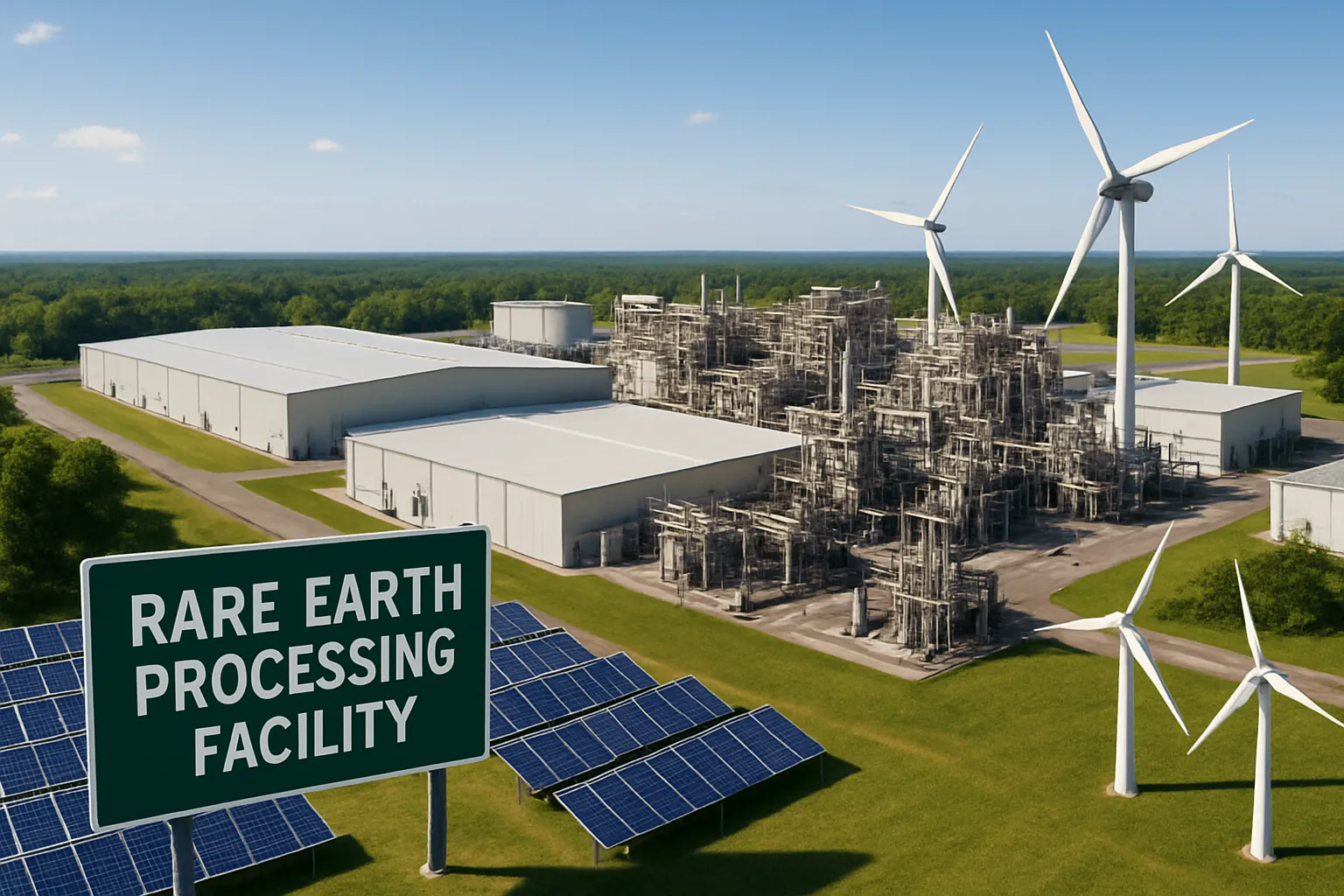
Just days ago, dignitaries including Kye-In Lee (POSCO International CEO), Mark Jensen (CEO of ReElement), Na Sung-hwa, and U.S. Deputy Ambassador Joseph Yun gathered in Seoul for the signing ceremony—a tactile symbol of new possibilities. Together, the two companies announced plans to build the nation’s first fully integrated rare earth and permanent magnet production complex: a facility where everything from raw mineral sourcing, advanced separation, and refining, to the final manufacturing and recycling of magnets happens under one American roof. If successful, this joint initiative promises to loosen Beijing’s grip on technologies vital for electric vehicles, wind energy, and national defense.
Why Supply Chain Security Matters, Now More Than Ever
Rare earth elements aren’t actually rare, but their processing is notoriously complex, hazardous, and—until recently—almost entirely controlled by China. According to the U.S. Geological Survey, upwards of 70% of global rare earth mineral processing occurs on Chinese soil. This isn’t merely a statistics problem; it’s a national security and environmental risk with direct economic consequences. Remember the 2010 spat when China threatened to cut off rare earth exports to Japan? The world has good reason to avoid déjà vu.
Today, American automakers and clean tech companies are racing to electrify the future, building millions of electric vehicles and wind turbines a year. These require permanent magnets—tiny but crucial engine components made possible by rare earth metals like neodymium and dysprosium. POSCO has already “locked in” orders to supply up to 7,700 tons of these magnets by 2031, powering an estimated 3.85 million EV motors in the U.S. and Europe. Relying on a rival nation for these building blocks is playing with fire—which is why the stakes for the Indiana-based ReElement-POSCO complex are so high.
Resilient supply chains—ones that recycle, reprocess, and adapt—are the backbone of any modern economy. As Harvard economist Dani Rodrik notes, “concentrated supply chains create vulnerabilities that ripple far beyond economics; they threaten energy transition goals, employment, and diplomatic maneuvering.” Nothing illustrates this more plainly than the COVID-19 pandemic, which exposed how easily medical, electronic, and automotive supply lines can be severed.
“When one nation controls both the raw materials and the processing know-how, every other nation is negotiating from a place of weakness. This new U.S.-Korea partnership is as much about economics as it is about regaining leverage and security.” — Dr. Allison McCarthy, Global Supply Chain Scholar, MIT
Can this partnership truly deliver a competitive edge? While some right-wing voices decry “industrial policy” as government overreach, the truth is industrial strategy never really went away—it just shifted overseas. Now the U.S. is waking up to the cost of hands-off policies that ceded key industries to authoritarian regimes.
Building a Greener, More Equitable Industrial Base
What makes this partnership game-changing isn’t just the scale, but the ambition to close loops. ReElement brings advanced, eco-friendly separation, refining, and recycling technology to the table—a major step up from the toxic legacy practices that have shadowed rare earth extraction from Mongolia to Inner Mongolia. CEO Mark Jensen has emphasized that their technology reduces environmental harm and recycles manufacturing scrap and end-of-life magnets to minimize waste. As progressive policymakers have demanded, corporate greenwashing only goes so far—now action must follow the rhetoric.
The project’s promise is about more than technology: It’s about jobs, local investment, and a chance to nurture a new cohort of skilled laborers. Workers in Indiana, where ReElement’s refining hub is taking shape, could soon find livelihoods not just in fossil fuels or service industries, but at the cutting edge of 21st-century manufacturing. Economic revitalization in the Midwest isn’t just a campaign slogan—it’s a policy blueprint made real by sustainable industries with global reach.
A closer look reveals important policy underpinnings. The Biden administration’s Inflation Reduction Act and the CHIPS and Science Act have unlocked both carrots (tax credits, R&D funding) and sticks (domestic content requirements) to nurture clean technology supply chains at home. These efforts contrast sharply with the conservative push for “market purity”—an approach that never delivered national independence, and which left fragile communities on the wrong side of globalization’s winners and losers ledger.
From Global Rivalry to Strategic Partnership
America’s bid to retake the lead on advanced materials is, at root, a democratic response to a changing world. POSCO International will guide sourcing and production, while ReElement’s technologies give the venture a green—if not outright revolutionary—edge. With imagined policy and regulatory support already in the discussion, both South Korea and the United States are sending a clear message: Alliances, not isolationism, are the path forward.
History’s cautionary tales abound—the Carter-era energy shocks, Japanese dominance of semiconductors in the 1980s, and today’s semiconductor stand-off with China. Each crisis found the U.S. on the back foot, slow to adapt and quick to pay the price in lost jobs, innovation, and influence. Are we finally learning that real security is built on diversity, innovation, and global cooperation—not nostalgic fantasies of self-reliance?
Liberal values and pragmatic politics must align on this front. Reshoring and “friend-shoring” rare earth supply chains will not be easy; it will demand regulatory clarity, community buy-in, and a willingness to challenge outdated free-market dogmas. But the stakes are simply too high. Americans should not fear the future—they should build it, brick by sustainable, equitable brick.
