
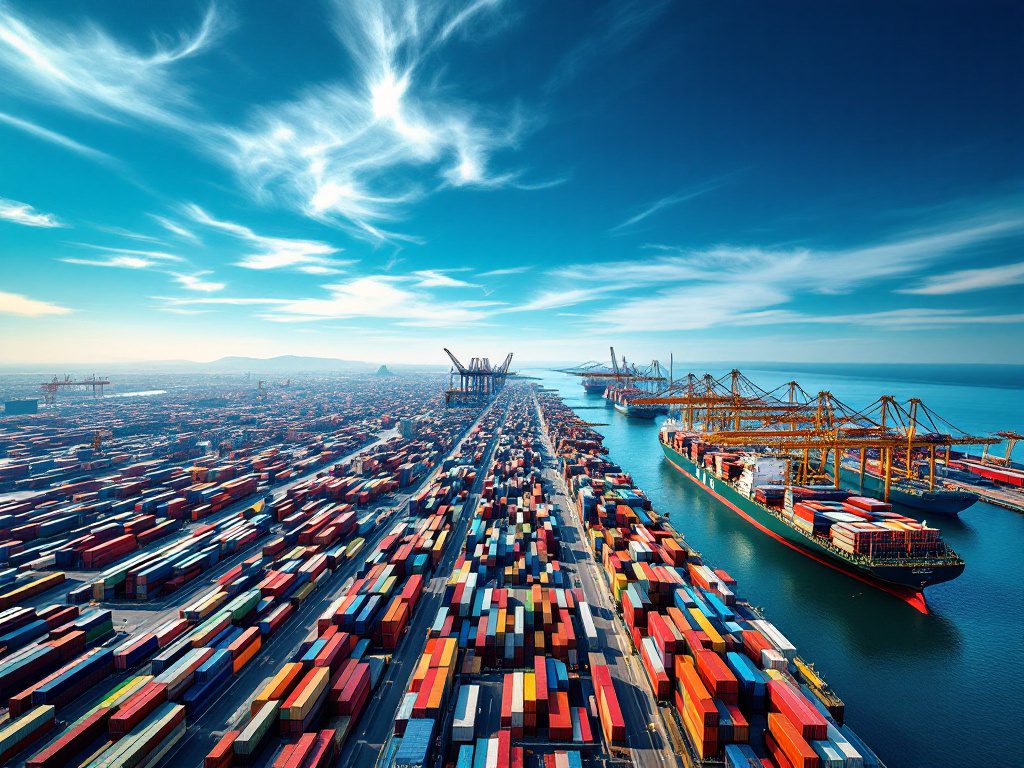
A Risky Gamble: US Port Fees and the Quest for Maritime Dominance
When the United States Trade Representative (USTR) floated the idea of imposing staggering $1.5 million port fees on China-linked ships docking at American harbors, global supply chains and maritime circles didn’t just take notice—they sounded the alarm. In a year marked by inflation, diplomatic brinkmanship, and increasing economic nationalism, this proposal is more than a mere trade policy; it’s a test of competing global visions. Will these proposed fees nurture domestic shipbuilding and shake China’s outsized hold on maritime commerce? Or will American consumers and exporters bear the brunt of spiraling costs?
This proposal, designed ostensibly to reduce reliance on Chinese vessels and invigorate U.S. shipyards, lands at a precarious moment. Just as Southeast Asian exporters—especially in Vietnam—brace for an early, frenetic shipping season, U.S. policymakers threaten to upend carefully calibrated trade flows. Instead of fostering robust, resilient supply chains, the risk looms large that these fees might usher in a new era of self-inflicted economic pain.
Consider the numbers: Industry experts anticipate that targeted port fees could hike the cost of certain goods by as much as 200%. According to an analysis cited by Pacific Basin Shipping and reported by Lloyd’s List, even the mere prospect of these fees is already causing ripple effects in Asia, with ship buyers pivoting from Chinese-built to Japanese-built vessels. “You’re starting to see investment patterns shift,” noted Mats Berglund, CEO of Pacific Basin. “Buyers want predictability, and right now, U.S. policy is anything but predictable.”
Unintended Consequences: Costs, Consumers, and the Market’s Response
Who ultimately pays the price for such sweeping tariffs and port surcharges? History shows that when governments erect trade barriers, the costs rarely stay contained within industry boardrooms. American consumers—already stretched by inflation and wage stagnation—are poised to experience sharply higher prices on everyday products, from electronics and appliances to apparel and auto parts. According to a recent Pew Research Center study, over 65% of U.S. households rely on goods that travel through international supply chains, many of which begin—or at least pass through—Chinese ports.
Beyond that, these fees threaten the competitiveness of U.S. exporters. The chilling effect on U.S.-bound and outbound vessels could force global shipping lines to divert to Canada, Mexico, or even European ports, sidelining American docks and workers. The economic fallout, in this scenario, would ripple far beyond the handful of domestic shipbuilders the fees are supposed to prop up.
Maritime leaders are sounding the call: The World Shipping Council, representing most international container shipping firms, has joined with U.S. port operators and exporters in opposing the plan. A closer look reveals how smaller ports—already struggling to recover from pandemic-era slowdowns—would be particularly vulnerable. These facilities lack the deep pockets of coastal giants like Long Beach or New York, and for them, even modest reductions in shipping volumes could be existential.
“The proposal risks turning American ports into global backwaters, sidelining blue-collar workers and spiking costs for families. Tariffs like this don’t build ships—they build walls.”
The impact reaches farther still. Harvard economist Natasha Wu has pointed out that previous protectionist shipping measures in the 1980s and early 2000s led to net job losses and sluggish port activity in cities like Baltimore and Seattle, with no meaningful rebound in U.S. shipbuilding. “Building local industry can’t come from isolation—it comes from innovation and strategic investment,” Wu says.
Anxieties, Delays, and the Politics of Economic Nationalism
The mounting backlash points to a rare consensus; global industry leaders and local union organizers—rare allies—argue that blunt-force nationalism is the wrong prescription for shipping sector woes. As scrutiny grows, USTR is under pressure to water down the measure or delay implementation entirely—a sign that even within the administration, there’s realization that the cure may be worse than the disease.
The proposal’s defenders claim the fees would provide a lifeline to America’s beleaguered shipyards. But the numbers are sobering: The United States currently produces fewer than 1% of the world’s oceangoing commercial vessels, a figure that’s dwindled since the 1970s despite periodic pushes for revitalization. According to the Congressional Research Service, substantial growth would require not just tariffs, but “massive, sustained investment in physical infrastructure, workforce training, and supply chain coordination.” Without these, tariffs alone fall short—and may erode relationships with U.S. allies in Southeast Asia and Europe who oppose such protectionist moves.
What comes next? Industry insiders suggest the USTR could roll back the scope of the proposal before November, limiting its application or creating carve-outs. Yet the uncertainty is already shaping market decisions across the Pacific. Ship owners looking to invest in new fleets now face a dilemma: risk higher U.S. entry costs, or hedge their bets with alternative shipyards in Japan or South Korea. For a sector that thrives on five- and ten-year planning horizons, such unpredictability can be paralyzing.
Diversity, dynamic trade, and mutual prosperity are not zero-sum games. Holding tight to progressive values—openness, justice, sustainable growth—should drive policymaking, not short-term political calculations or fear-driven isolationism. How long can we afford policies that, in the pursuit of ephemeral victory, undercut the very backbone of U.S. economic resilience?
