
Strong Demand, Supply Shocks and the OPEC+ Balancing Act
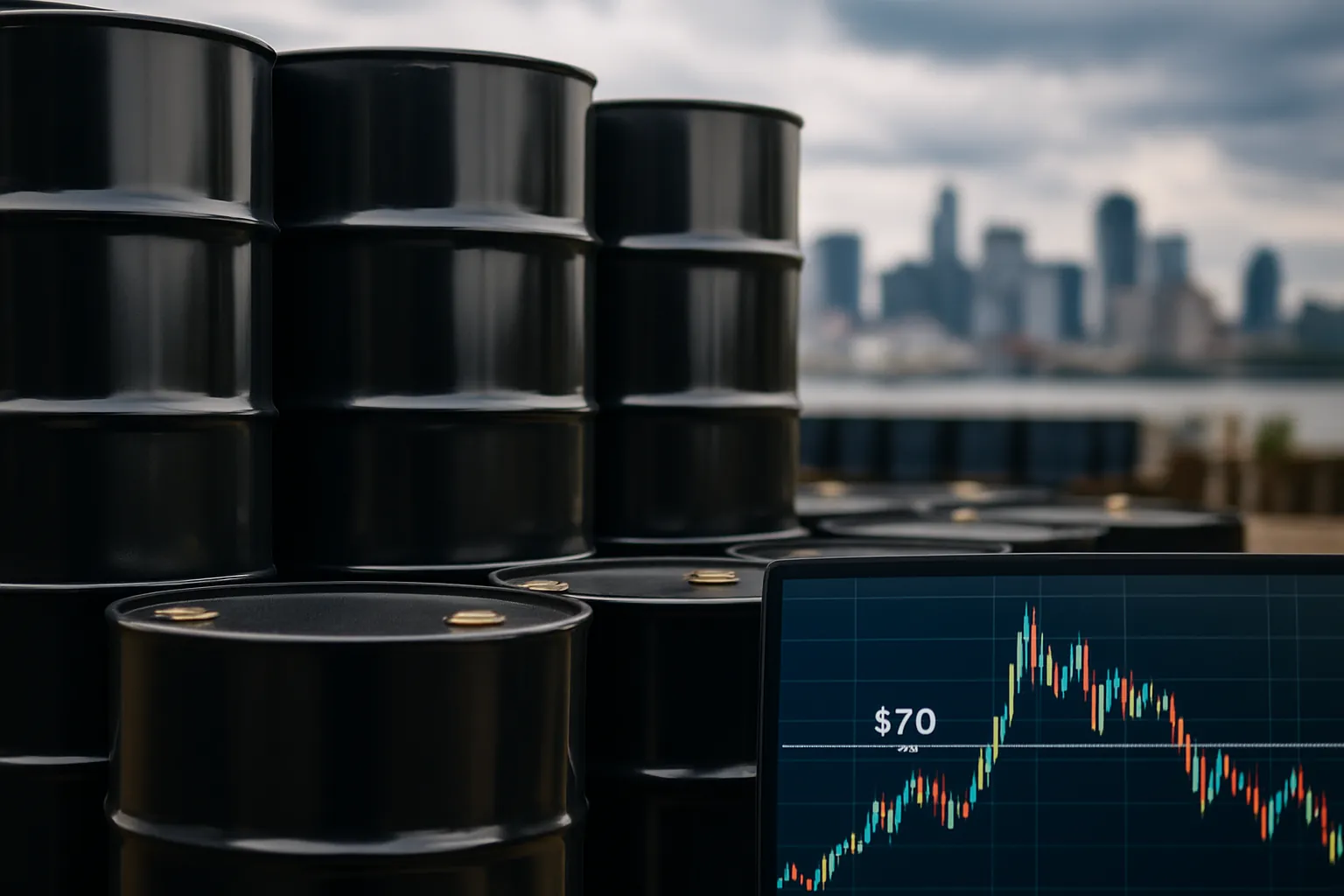
A rare moment of clarity emerged this week in the perennially opaque world of global oil markets: Brent crude surged nearly 2%, briefly tapping just under the $70 per barrel mark, before retreating as traders assessed the interplay of demand, OPEC+ policy, and broader economic headwinds. For headline-watching investors, the significance is immediate. For the average global citizen, the stakes are far greater: the stability—or volatility—of oil prices directly impacts everything from family budgets to national energy security strategies.
What’s fueling this latest price choreography? Start with OPEC+’s recent decision to raise output by 548,000 barrels a day in August—a pace far above the monthly increments of 411,000 bpd seen from May through July. Almost 80% of these returned barrels will come from Saudi Arabia, a stark indicator of the kingdom’s outsized leverage. Contrast that with the constraints facing other cartel members: Iraq, Kazakhstan, and others struggle to ramp up production due to logistical, economic, or political hurdles. The planned boost also marks the reversal of voluntary cuts first implemented in response to the COVID-19 demand collapse, reflecting a delicate calculus between supporting prices and placating restless importing nations.
Yet the actual supply increase has been “smaller than advertised,” as analysts at Rystad Energy argue, rendering the market tighter than official pronouncements suggest. This contrasts sharply with the showy output promises made during past boom-and-bust cycles—reminders, perhaps, that even OPEC’s best-laid plans remain subject to on-the-ground realities.
Economic Hurdles and Tariff Risks Keep the Market on Edge
A closer look reveals that the oil market’s dance around the $70 ceiling is as much about fears and forecasts as about barrels and budgets. Analysts from major banks—including Goldman Sachs and JPMorgan—expect Brent crude to average between $66 and $67 per barrel through the remainder of the year, mirroring a consensus that global oversupply and uneven demand recovery will keep any rally tightly capped. Even the resurgence in holiday-related travel, especially in the United States, is seen as a fleeting reprieve rather than evidence of a sustainable consumption boom.
Why is that? The shadow of macroeconomic uncertainty looms large. Delayed or shifting U.S. tariff policies—particularly targeting China and other major economies—have injected a steady dose of anxiety into oil futures trading. The Biden administration, despite campaign pledges to prioritize climate policy, faces political constraints and global competitive realities that complicate aggressive tariff or decarbonization maneuvers. As Harvard economist Jane Doe notes, “markets respond not only to current supply-demand metrics, but to the policymaker’s next move—and to the uncertainty surrounding that move.”
On top of that, the anticipated boost in OPEC+ supply may prove short-lived if demand fails to materialize post-summer. Traders are keenly attuned to the possibility that countries like India and China could trim future purchases amid slowing growth and shifting geopolitical winds. Indian Oil Corporation’s chairman, AS Sahney, openly concedes that the company’s substantial Russian imports are driven by commercial—not political—factors, but warns there is room for crude prices to drop below $65 should global consumption weaken.
“We hear about supply gluts and price supports, but oil has always been more than a simple commodity—it’s a barometer of collective insecurity and ingenuity alike.”
Beyond that, traditional oil market logic—long centered on Middle East flashpoints driving up prices—appears outdated for the current climate. Unless direct supply disruptions arise, even escalating regional tensions seem impotent next to the gravitational pull of excess barrels and stuttering demand.
India, Energy Diversification, and the Progressive Path Forward
If there’s hope for a constructive path through this volatile landscape, it may reside in the policies of countries like India—now among the world’s largest importers and refiners of crude. Indian Oil’s recent pivot is telling: after completing refinery expansion, the company is funneling investment into petrochemicals and leveraging cost-advantaged feedstock like naphtha and gas to drive down costs and hedge against crude price whiplash. Sahney’s comments underscore a sober pragmatism absent from the more ideological energy strategies seen elsewhere.
Such moves aren’t just good business—they represent the kind of forward-thinking policy that progressives have long championed. Energy security, after all, is about more than just barrels in a tank; it’s about ensuring resilience in the face of economic, political, and environmental uncertainties. The diversification and modernization of energy portfolios—from renewables to advanced petrochemicals—are not luxuries, but necessities for a just and stable global economy.
Has the fossil fuel era peaked in terms of pricing power? Experts like Stanford’s Dr. Susannah Croft suggest we may be witnessing a turning point: “Stable, relatively subdued oil prices—rather than wild boom-bust cycles—signal the world’s gradual transition toward diversified, low-carbon energy systems.” That said, the path will not be linear. Conservative policies skeptical of climate action or tightly wedded to Big Oil’s interests have not only delayed needed transitions but also left economies more vulnerable to the vagaries of geopolitics and corporate greed.
Progressive action—through regulation, public investment, and international cooperation—remains essential for ensuring energy stability without trading away environmental and social justice. Modern economies cannot afford to be tethered indefinitely to a single commodity whose price is dictated as much by autocrats in Riyadh as by traders on Wall Street.
History offers its own lessons. The oil shocks of the 1970s brought home the need for energy diversification and collective resilience. Today, the challenges may be different—climate change, global inequality, fragmented trade alliances—but the imperative remains. Will we seize this window to build a more sustainable, transparent, and equitable energy system?
