
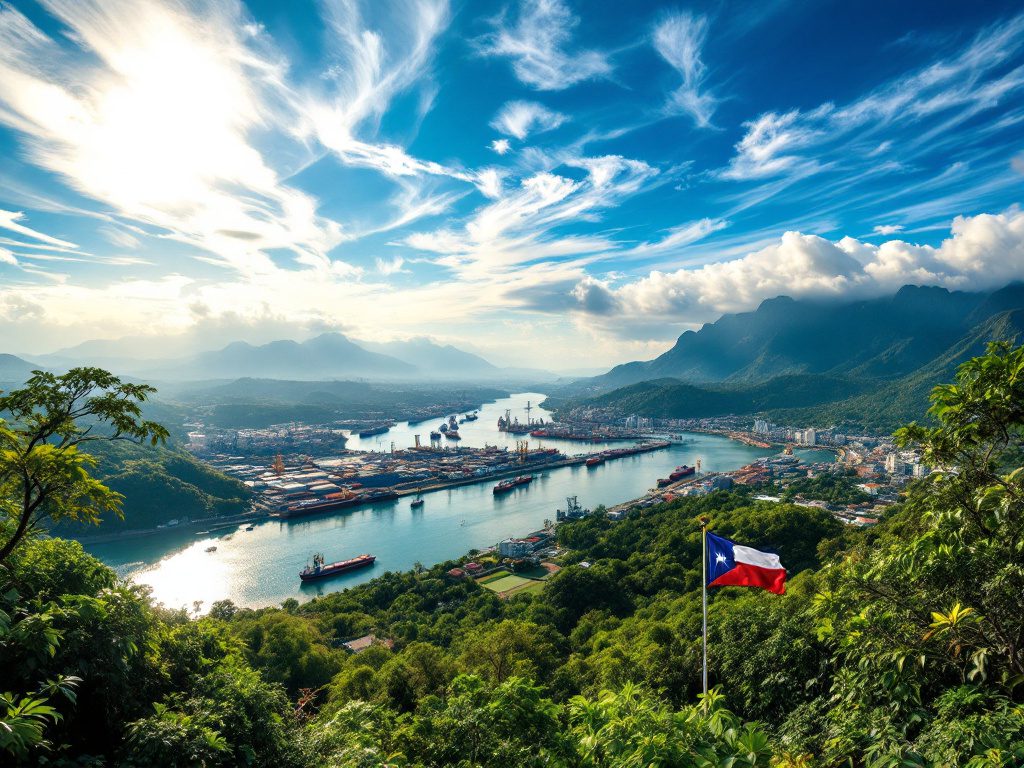
Almost a quarter-century after the United States handed control of the Panama Canal back to Panama — marking the end of nearly a century of military and administrative supervision — a new agreement is putting Washington back into play on the strategic waterways once more. This recent development, involving a deal permitting U.S. troops to deploy to several Panama-controlled bases for military training and joint exercises, highlights the enduring, albeit complicated, relationship between Panama and the U.S.
A Delicate Balance of Influence and Sovereignty
The new memorandum, signed by U.S. Secretary of Defense Pete Hegseth and Panama’s security chief, is particularly noteworthy for what it does not allow: the establishment of permanent American military bases on Panamanian soil. That’s no coincidence. Panamanian President José Raúl Mulino made it clear from the outset of negotiations that any suggestion of permanent U.S. installations would be “unacceptable,” indicating the lingering national sensibilities connected to Panama’s complex history with the United States.
The ghosts of past conflicts over sovereignty and control of the canal zone have not entirely faded. Indeed, sensitivity to U.S. influence—marred by memories of Tensions during decades when Panamanian land was directly controlled by American forces—still runs deep. The Panama Canal’s transfer to Panamanian hands in 1999 was seen as a symbol of national pride and liberation. Allowing U.S. troops back, even temporarily, is fraught with historical undertones and nationalistic anxieties.
China’s Influence Looms Large
Why, then, has Panama granted this significant concession to the United States now? The answer, in short, involves another global heavyweight: China. President Trump has repeatedly voiced concerns that Chinese influence over critical infrastructure worldwide, including the Panama Canal, could pose strategic risks to U.S. national security. Trump’s anxieties specifically center on the presence of Hong Kong-based companies managing crucial ports along the canal, stoking fears that this might give Beijing undue leverage over the vital commercial and military route.
Trump’s administration clearly sees the current arrangement as a strategic necessity, ensuring American influence remains firmly entrenched near global chokepoints affected by expanding Chinese overseas investments. The three-year memorandum reflects a cautious but determined approach from both nations, who are navigating these politically delicate waters carefully while responding to contemporary geopolitical realities.
“The new agreement clearly positions Panama at a critical intersection of global geopolitical rivalry, with Washington eager to counterbalance China’s expanding global trade network.”
The Limits and Opportunities of the New Deal
While the memorandum explicitly rejects permanent bases, it offers significant operational flexibility nonetheless, allowing U.S. military personnel to use Panamanian facilities for training, exercises, and equipment storage. The deal, however, restricts duration to three years, albeit with possibilities for extension—affirming Panama’s commitment to carefully guard its autonomy and sovereignty while balancing its geopolitical relationships.
You might wonder whether this compromise provides sufficient safeguards for Panamanian sovereignty. The limited duration of the agreement seems calculated precisely to acknowledge and address these concerns. At the same time, it hands Trump a notable diplomatic achievement by enhancing U.S. strategic influence in Latin America—a region increasingly impacted by Chinese trade and investment.
Yet, it isn’t just sovereignty prompting unease among Panamanians. Trump’s unpredictable diplomatic style—evidenced by his readiness to rewrite international agreements, from NAFTA to climate accords—has left many Panamanians wary. Could Trump, or a future administration, push Panama into greater concessions down the road? History gives Panama reasons to be cautious; past U.S. involvement in Panama often left visible scars, both economic and political.
Harvard economist Matthew Busch argues that agreements like this are symptomatic of broader U.S. maneuvers aimed at checking Asian influence, noting that “the U.S. increasingly favors short-term, renewable agreements to maintain global flexibility and check China’s growing infrastructural reach.” In Busch’s view, Panama represents the front line in a global strategy that’s as much about economic competition as it is about military presence.
Thus, while the arrangement clearly boosts immediate American strategic capabilities in the region, it also demonstrates how deeply the Panama Canal continues to shape global geopolitical relationships—a century after its opening.
Ultimately, the complexity and caution infused throughout the agreement encapsulate the modern state of U.S.-Panamanian relations. Panama remains keenly sensitive to past traumas yet cognizant of its present geopolitical necessities, while the United States continues balancing military influence against historical sensitivities. How this strategic dance unfolds in coming years will reveal much about shifting alliances in an increasingly competitive global landscape.
