
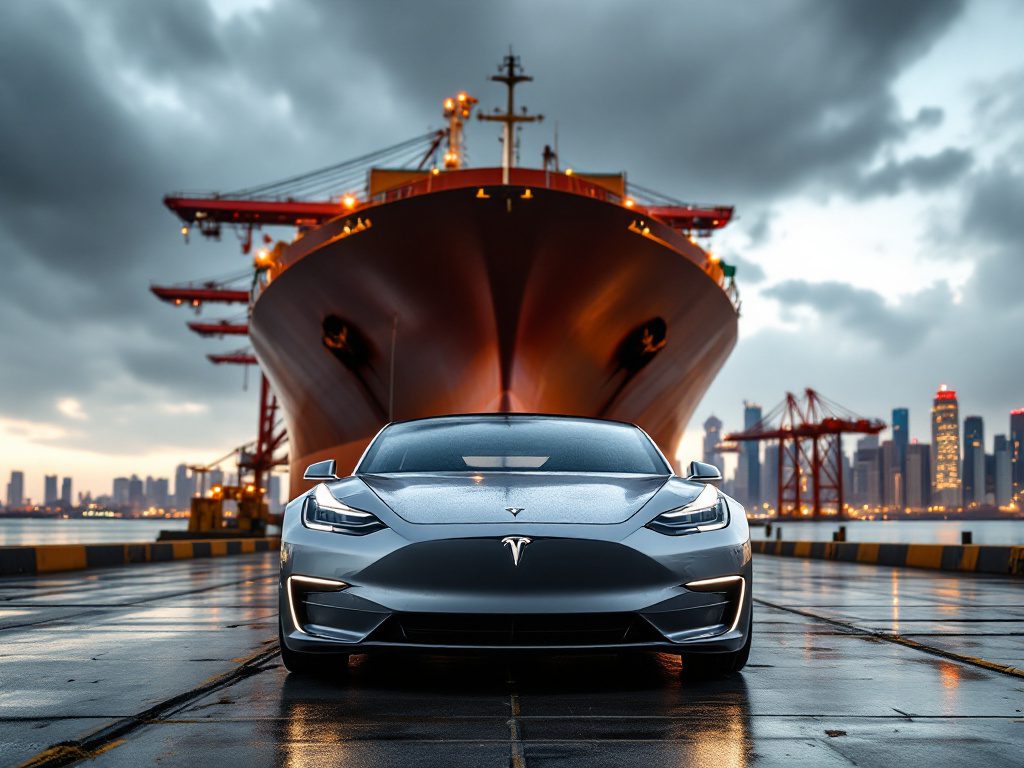
Imagine a scenario in which buying an electric vehicle (EV) becomes akin to acquiring a luxury yacht—a privilege reserved for only China’s wealthiest due to punitive tariffs. In recent developments, this scenario has swiftly evolved into reality as Tesla Inc., the leading American EV manufacturer, has quietly ceased accepting new orders for its popular U.S.-manufactured Model S and Model X vehicles in China—a direct response to escalating trade tensions between the United States and China.
The Tariff Tornado Hits Automakers
Chinese tariffs, now sitting at a whopping 125% as retaliation to the U.S.’s newly imposed 145% tariffs on Chinese imports, have transformed vehicle imports into an economic nonstarter for many in the world’s largest auto market. Such exorbitant taxes virtually eliminate any competitive edge for American automotive companies like Tesla.
Tesla’s prestigious, high-end Model S and X models, which begin at prices already on the higher end, have inevitably fallen victim to these tariff wars. According to various customer reports and checks conducted by Reuters, the “Order Now” button for both models conspicuously disappeared from Tesla’s Chinese website and their WeChat mini-program earlier this month, replaced by a subtle “View Inventory” option. The move signals the stark reality for Tesla: competing with domestic producers now enjoying a tremendous price advantage is no longer feasible.
Elon Musk himself previously acknowledged the far-reaching damage tariffs would impose on Tesla, noting the “not trivial” cost impact affecting imported components, especially batteries sourced from China. This acknowledgment underscores a vulnerability that Tesla now faces: in economies highly interconnected through globalization, even minor disruptions bear deeply consequential impacts.
Escalation Drives Tesla’s Strategic Pivot
Tesla’s pivot in China isn’t just about preventing losses; it’s about strategic survival. A deeper exploration reveals that even prior to this suspension, sales of these imported high-end Tesla models accounted for less than 0.5% of the company’s global deliveries in 2024. The halted sales, therefore, may not drastically dent broader earnings but are indicative of challenges the company faces globally due to shifting economic policies and ever-intensifying EV competition.
As disastrous as these tariffs might seem, Tesla has a built-in advantage: its Shanghai “Gigafactory,” a site dramatically popularized in Musk’s famed tweets, continues to operate robustly. Strategically positioned, this factory produces the more affordable—thus more popular—Model 3 and Model Y, exempt from tariffs because they originate within China. This domestic production hub safeguards Tesla somewhat, but the broader implications of trade conflicts should send ripples of unease across global markets reliant upon international cooperation.
“The trade war isn’t merely about tariffs; it represents broader challenges posed to global economic stability and cross-border cooperation.”
Ripple Effects: Is Tesla’s Aura Fading?
Recent sales reports raise compelling questions about Tesla’s global strength. Its sales in Europe dropped sharply by 44% in January alone, mirroring a global pattern that has analysts speculating about future strategies. Already Tesla has recorded an unprecedented surge in trade-in requests, suggesting growing dissatisfaction among existing consumers. Especially worrying is the marked decline in European sales, where competition from traditional automakers such as Volkswagen and Mercedes-Benz, alongside aggressive upstarts from China’s BYD, is rapidly reshaping the market.
The competitive landscape for electric vehicles is becoming increasingly fraught, suggesting the era when Tesla could dominate via innovation and sheer market presence may be ending. European buyers now have access to new, competitively priced models from China and local producers that present compelling alternatives, diminishing Tesla’s market clout.
In both Europe and China, the market dynamics reveal a universal lesson: global brands operating internationally are vulnerable to geopolitical turmoil and policy disputes to an alarming degree. Companies thriving on transnational supply chains and global trade efficiencies now find themselves precariously positioned amid international political turnabouts. Tesla, with its high-profile CEO and prominent industry innovations, has become particularly symbolic of these vulnerabilities.
As Musk and Tesla confront these new realities, stakeholders globally should reflect upon lessons learned from this episode: resilience and adaptability matter as much as technological prowess and consumer preference. Trade disputes such as these may well predict future challenges for international cooperation addressing broader issues like climate change—which ironically demands global collaboration for the widespread adoption of clean technologies like electric vehicles.
In halting Model S and X sales in China, Tesla doesn’t just respond to market forces—it holds a mirror to the fragile interconnections between economic policy, corporate strategy, and international diplomacy. For Tesla, the road ahead is less about accelerating innovation and more about carefully navigating geopolitical risks that could stall its progress altogether.
