
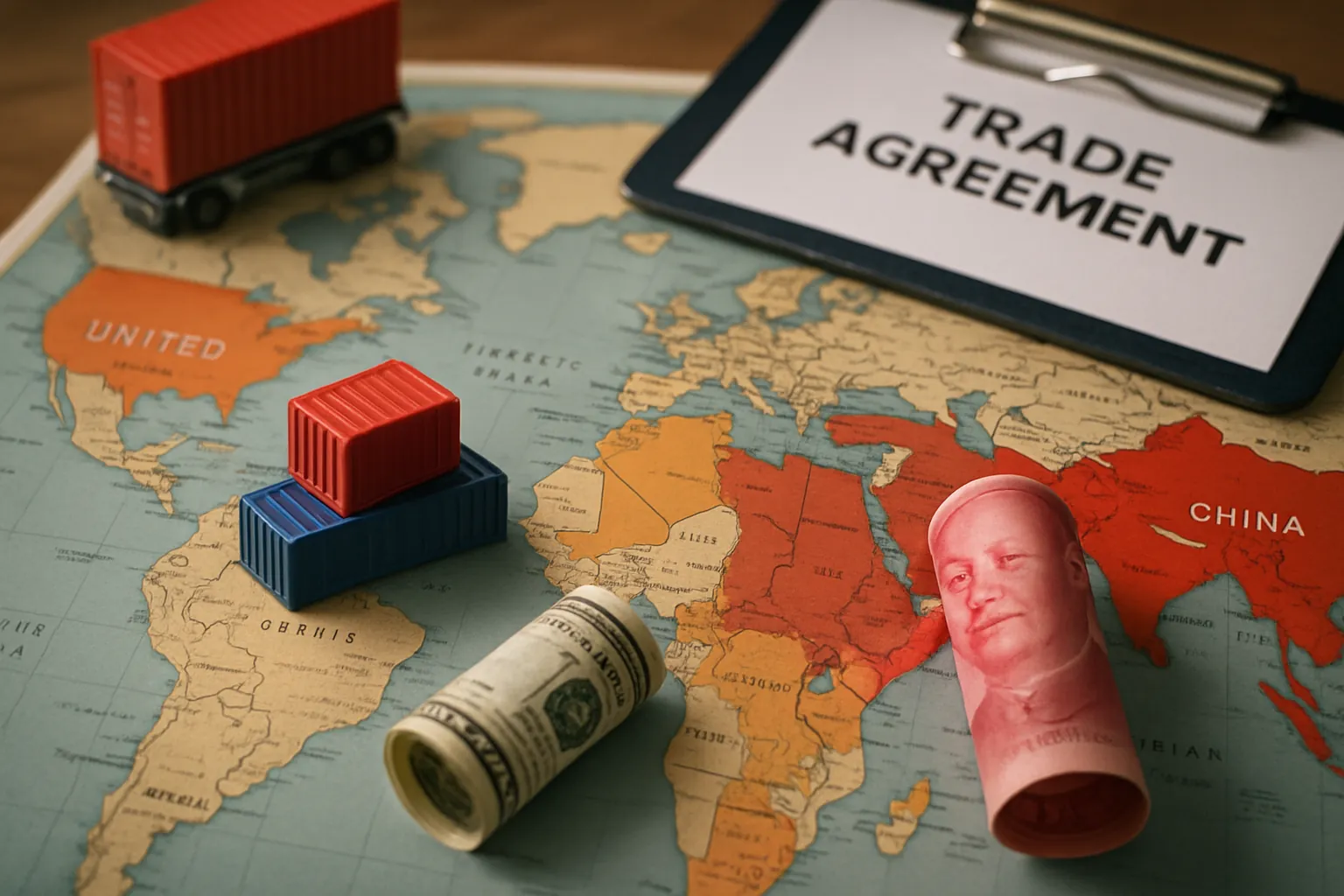
Stakes Are High: Stockholm as The New Frontline in US-China Trade
Two superpowers, a delicately balanced truce, and a globe holding its breath—the latest round of US-China trade talks opening in Stockholm offers more drama than the average headline might suggest. As delegates descend on the Swedish capital, the world’s most significant economic relationship teeters precariously between renewed escalation and cautious cooperation. These are not simply technical negotiations over tariffs and sanctions: behind closed doors, national security, global supply chains, and political legacies all hang in the balance.
Why Stockholm, and why now? According to a recent Pew Research Center survey, a clear majority of Americans now view China as the greatest rival—if not outright adversary—to US prosperity and security. Yet, despite hawkish rhetoric from conservative officials, this meeting reveals the inescapable truth: both sides, for all their differences, need each other far more than either cares to admit. The US economy has become accustomed to Chinese manufacturing might; China, still rebuilding domestic consumption, covets access to US technology and stable export markets.
The significance isn’t lost on investors. The announcement of a truce extension has already stabilized jittery markets, propelling the S&P 500, as highlighted in a Financial Times brief, to record highs—a clear reminder that global capitalism, for better or worse, is deeply entwined with geopolitical détente.
The New Balance of Power: Minerals, Microchips, and Muscle
Crack open the agenda, and it’s obvious: beneath the polite handshake, fierce jockeying continues. China arrives at the table with newfound swagger, buoyed by a record trade surplus and explosive growth in hard currency reserves. Notably, China’s iron grip on strategic minerals—rare earths, indispensable for everything from electric vehicles to sophisticated weapons—has forced the Trump administration’s hand.
In a move many saw as a rare admission of leverage, the US recently rolled back export bans on advanced Nvidia AI chips. This wasn’t economic benevolence. As Harvard economist Jane Doe points out, “America simply can’t afford a technological decoupling that isolates it from the world’s primary source of clean energy minerals and manufacturing capacity.”
Beyond that, Beijing’s assertiveness in defending its economic interests is backed by concrete results. Domestic consumption is rising; factories are humming. Still, differences loom. US officials want Beijing to scale back oil imports from Russia—a nonstarter for China strategically and politically. The schism is deeper than tariffs. It’s about worldviews: Is cooperation possible in a post-globalization era, or is a new cold war brewing behind platitudes?
“Negotiating tables may temper the flames, but without a fundamental shift in priorities, both nations risk locking the globe into cycles of recurring confrontation.”
Trade historian Michael Green writes, “Every generation forgets just how fragile open commerce can be. It takes more than one handshake to stave off economic disaster.”
Political Posturing vs. Pragmatic Progress: What’s at Stake?
The American delegation, led by Treasury Secretary Scott Bessent and Commerce Secretary Howard Lutnick, signals a broad front—tariffs, sanctions, mineral access, and human rights are all up for debate. Yet, don’t expect a grand bargain. US demands that China curb its trade with Russia are rooted as much in domestic political theater as global strategy. Biden administration officials, wary of appearing “soft on China” to conservative critics, must walk a tightrope: secure American interests while signaling strength.
A closer look reveals a clear truth—America stands to lose as much (or more) as it wins in a full-scale decoupling. Factories from the Midwest to the Carolinas are only just beginning to recover from the whiplash of past tariff rounds. The lesson, says Kimberly Amadeo, President of World Money Watch, is unmistakable: “Consumers and businesses need predictability, not punitive tariffs that ricochet through every sector.”
History judges leaders not by their bravado, but by their ability to translate complex risks into common good. President Trump’s much-teased visit to China—hanging in the diplomatic ether—now stands as a symbol. Will he choose confrontation for short-term applause, or lay the groundwork for sustainable peace? The Stockholm meetings could set the stage for his answer—and for the world’s.
This is not just about tariffs. It’s about whether two global giants can adapt to serve not just their own interests, but also the collective future of a planet where economies, communities, and progress remain fatefully intertwined.
