
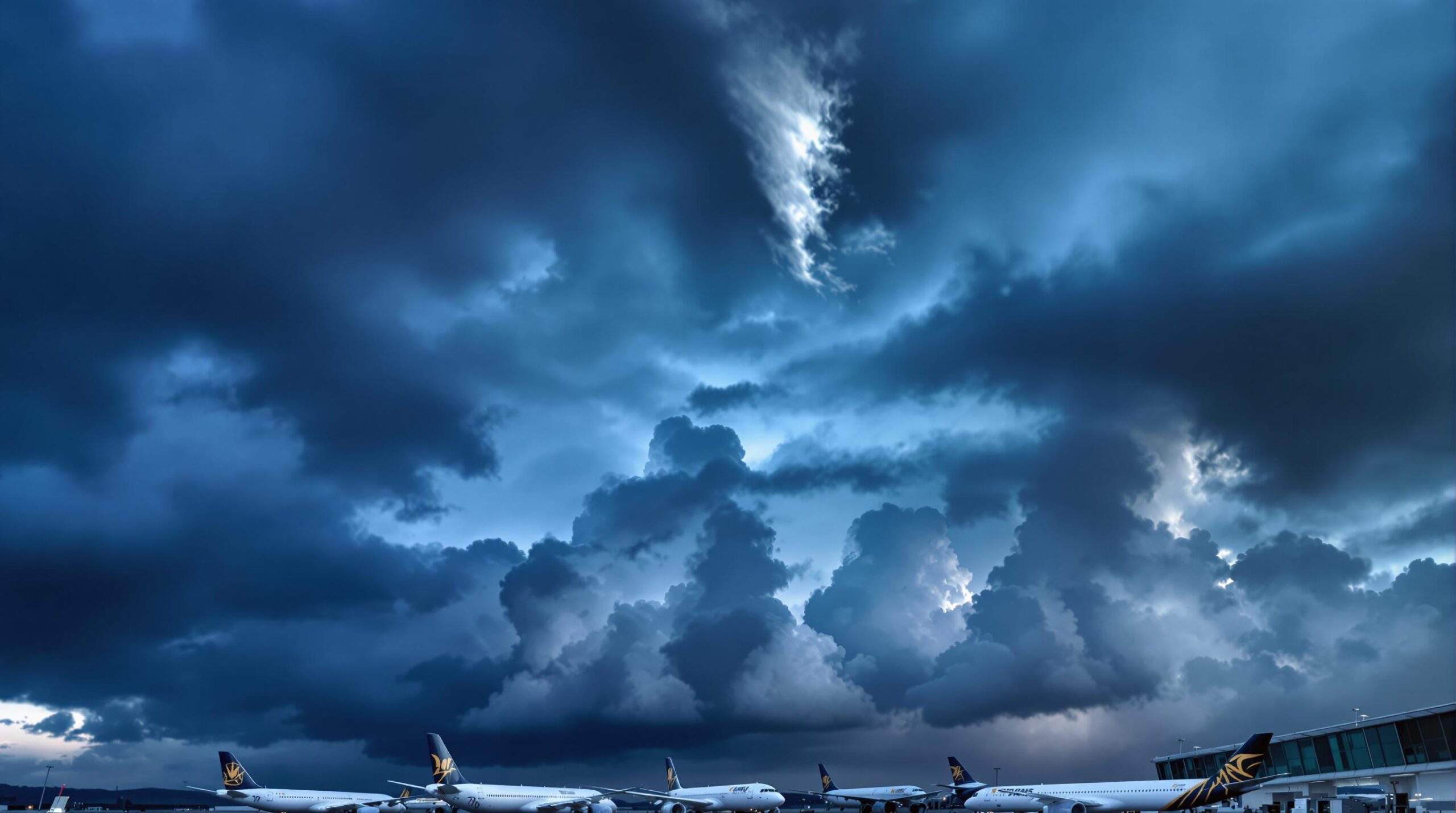
For an industry that was just recently hailing the dawn of a golden age, the U.S. airline sector now finds itself navigating through perilous skies. Despite earlier optimism buoyed by robust travel demand and profitability, economic uncertainty triggered by ceaseless political turbulence, government tariffs, and stringent spending reductions is swiftly eroding airlines’ once-soaring confidence.
Troubled Skies: Economic Anxiety and Dropping Demand
Earlier this year, airline executives painted a rosy picture of burgeoning profits propelled by surging demand and decreased industry-wide capacity. However, a mere few months have dramatically altered that trajectory. Economic uncertainty and disruptive tariffs are now weighing heavily on the U.S. airline market, prompting airlines to revise their first-quarter earnings forecasts drastically downward. Prominent players like Delta and United Airlines have experienced share price plunges around 20%, a stark reflection of diminishing investor confidence.
It’s not just wariness among investors, but consumers too show deepening hesitation toward air travel amidst rising costs and financial insecurity. David Neeleman, CEO of Breeze Airways, astutely summarized this shift in priorities: “Your first needs are food and shelter. And then, we’re a little bit down the list of expenditures.” Indeed, without guarantees of employment and income stability, leisure air travel quickly falls by the wayside.
Safety woes are further compounding this issue, with Google queries about flight safety spiking an alarming 900% in February. This shift underscores a significant trust issue airlines must address to recapture consumer confidence—a crucial factor in fuel for revenue.
Operational Challenges: Flight Disruptions and Capacity Cuts
Compounding these economic issues, operational challenges and logistical reliability have become significant sticking points. Almost one in four flights in the U.S. experienced delays or cancellations last year, leaving millions of passengers stranded, frustrated, and mistrustful. Major transport hubs like Dallas, Chicago O’Hare, and Los Angeles faced the worst of these delays, highlighting the industry’s struggle with timely operations amidst turbulent economic conditions.
United Airlines’ CEO Scott Kirby offered a stark warning, explaining the need to be proactive: “Without a substantial improvement in travel demand, we may see substantial industry-wide capacity cuts by late summer.” In other words, airlines are rushing to trim flights to better match plummeting passenger demand and prevent further erosion of their unreliability reputation. These strategic reductions may preserve profit margins momentarily but raise broader concerns about the industry’s long-term resilience and customer trust.
“Without job security, airline tickets quickly become an expendable luxury rather than a necessary expenditure.” – David Neeleman, CEO of Breeze Airways
Interestingly, despite these overwhelming challenges, United Airlines noted an 8% year-on-year growth in international spring bookings. While domestic leisure travelers may cut back, premium international segments appear relatively resilient. This dichotomy suggests that instead of a universal pullback, what we see might reflect a strategic realignment by airlines toward more profitable routes and demographics.
Longer-Term Prognosis: Bridging Trust and Sustainability
A closer look at these trends illustrates the broader ideological friction between conservative economic policy premised on broad-based deregulation and austerity measures, which traditionally prioritize short-term profits and shareholder value, versus progressive principles prioritizing sustainable growth, consumer protection, and equitable resource management. In turbulent economic waves, consumer-driven industries like aviation suffer disproportionately from shortsighted policies that overlook wage stagnation, inflationary pressures, and consumer confidence.
Combatting these short-term political strategies requires forward-thinking solutions embracing economic stability, labor protections, infrastructure investments, and stringent safety protocols. The Department of Transportation’s report that fewer than 1% of 45.7 million bags processed in December were mishandled—a small operational victory amid broader company-wide turbulence—proves positive change is achievable when resources and efforts align with passenger well-being.
Thus, going forward, airlines must champion policies that encourage consistent infrastructure investment, economic security, and consumer trust as vital ingredients for sustainable growth. Without government leadership committed to fostering inclusive economic security—by prioritizing policies like living wages, robust employment protections, and affordable consumer protections—industries reliant on discretionary consumer spending will continually risk dramatic downturns.
Navigating a Progressive Path Forward
To steer clear of ongoing turbulence, airline leaders must advocate progressive policies promoting inclusive economic strength, environmental sustainability, and consumer trustworthiness—principles essential for long-term industry health. Addressing customer concerns transparently and consistently could mitigate at least some passenger safety fears and operational mistrust exacerbating the drop in demand.
In addressing this critical juncture, we find a poignant opportunity for transformation—moving beyond myopic conservative-focused fiscal austerity toward investing in the comprehensive well-being of passengers, workers, and communities. Collectively, industry leaders, policymakers, and consumers can leverage this turbulent moment to pilot an equitable, sustainable, and economically sound pathway for airlines’ future survival and prosperity.
