
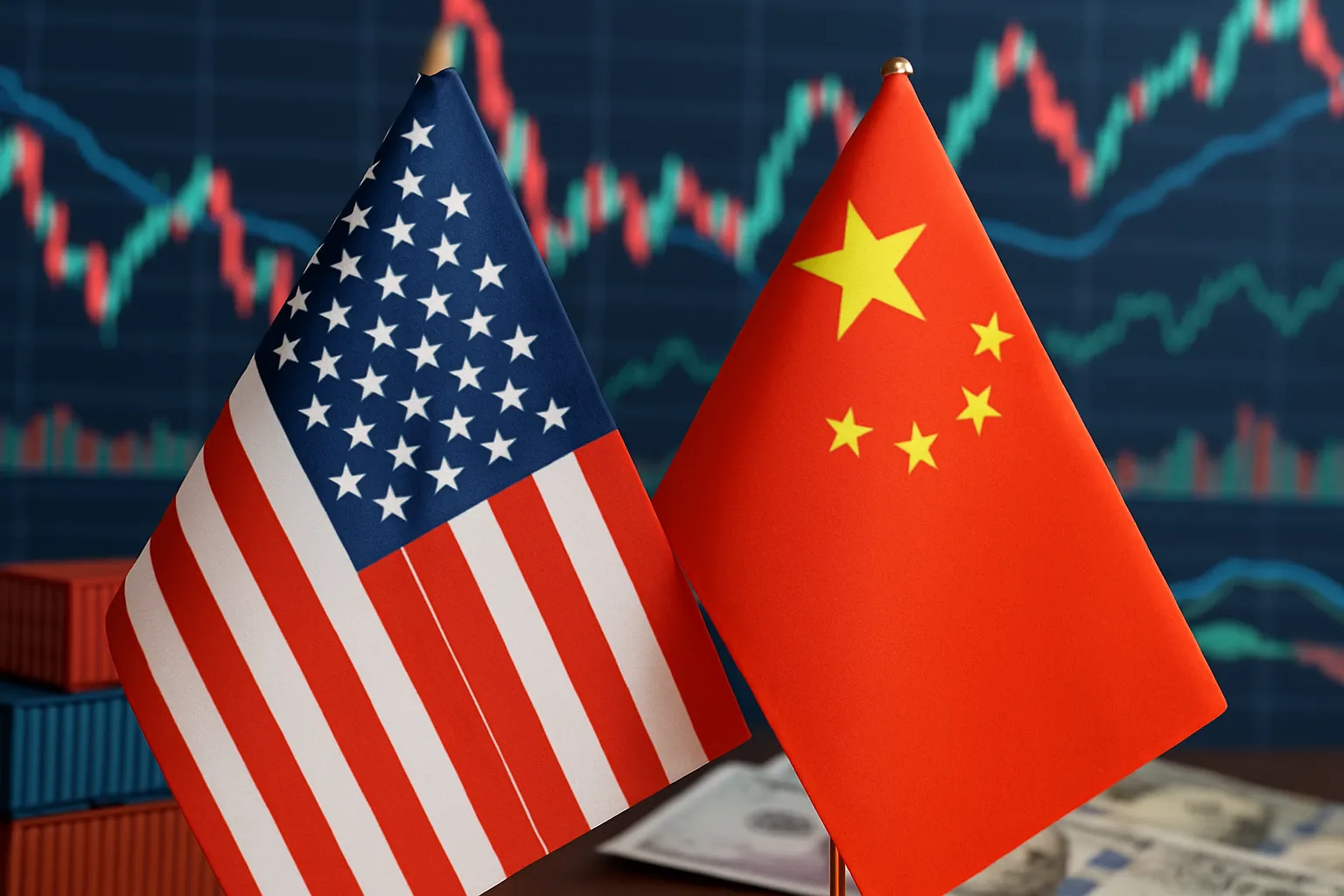
Bluster and Brinkmanship: The Stage for High-Stakes Negotiations
In an era where economic policy is increasingly wielded as a blunt instrument rather than a diplomatic scalpel, the U.S. and China now find themselves in a high-stakes standoff—the outcome of which could reverberate across global markets for years to come. As the Biden administration prepares for talks with Chinese officials in Switzerland, the mood is tense, competitive, and riddled with accusation. Who invited whom to the negotiating table? Both sides have competing versions of the origin story, exposing not just diplomatic maneuvering, but also the ferocious underlying strategic contest.
The substance of these negotiations extends well beyond tariffs; what’s being tested is the very architecture of the modern global economy. Former diplomat Daniel Russel, now at the Asia Society Policy Institute, observed that “Chinese diplomatic strategy historically revolves around never appearing to seek or offer concessions.” That approach isn’t just posturing, it shapes the pace, tone, and likely the ultimate effectiveness of any trade negotiation. For American policymakers and businesses, that fact complicates the already tangled reality: a trade war now entering its second year, tariffs that have climbed into double digits, and hundreds of billions in goods on the line.
President Trump’s recent social media flurry—suggesting tariffs on Chinese goods be dropped to 80%—only added to the tumult. The White House press secretary resorted to careful hedging, offering little clarity on whether this represented an opening position, a misstatement, or a deliberate provocation to unsettle Beijing. Analysts like Craig Singleton at the Foundation for Defense of Democracies interpret these verbal skirmishes as deliberate attempts to sway public perception and strengthen bargaining hands: “This is less about economics than about signaling dominance,” Singleton commented. “What the world is witnessing is performance—pageantry meant for both domestic audiences and the international stage.”
Behind the Headlines: Economic Realities and Political Posturing
With both nations pressing their narratives about who is driving talks, it’s easy to lose sight of the core issue: American consumers and businesses are paying the price of these tariffs. Research from the Peterson Institute for International Economics shows that since the trade war began, average American household costs have risen by hundreds of dollars annually. U.S. manufacturers that rely on Chinese parts have found themselves caught between rising costs and uncertain supply chains. A closer look reveals that these “tough on China” policies amount to little more than a tax on working families, with lasting consequences for U.S. industrial competitiveness and job security.
Chinese officials, for their part, have maintained a stoic front. The refusal to appear conciliatory is deeply embedded in Beijing’s diplomatic DNA, a legacy stretching back to Mao-era principles of self-sufficiency and dignity in the face of western pressure. That positions both sides in a kind of rhetorical arms race; every statement, every press release calibrated not only for its immediate effect across the bargaining table, but its afterlife in the media cycles back home.
What’s the real cost of all this strategic chest-thumping? According to Harvard economist Dani Rodrik, “Trade wars, especially between economic superpowers, are not zero-sum games. They disrupt entire ecosystems.” The uncertainty alone is a drag on investment and innovation. American soybean farmers, for instance, have spent the last year whiplashed by sudden market access changes and retaliatory tariffs from China—a market they spent decades cultivating. For farmers in Iowa or line workers in Michigan, these high-level power plays are anything but abstract.
“What the world is witnessing is performance—pageantry meant for both domestic audiences and the international stage.” — Craig Singleton, Foundation for Defense of Democracies
Despite repeated promises that tariffs would bring jobs home or force Beijing’s hand on intellectual property abuses, evidence remains scant. The trade deficit with China persists, innovation hasn’t surged as promised, and real wages for the American middle class have barely budged. Truth be told, only a reset rooted in mutual gain, not mutual suspicion, will break the cycle.
Strategic Endgames: Can Competitors Become Collaborators?
Yet while tempers flare in the public arena, the outcome of these talks holds much more than economic symbolism. The world’s supply chains—already battered by COVID-19, war in Ukraine, and climate disruptions—cannot endure endless brinkmanship between the planet’s two largest economies. Semiconductor shortages, delayed technology transfers, and the slow-burning fear of decoupling have become near-constant worries. Business leaders, from Silicon Valley to Berlin, are nervously watching—aware that an escalation might lock in a fractured world order for a generation.
Is there a path forward? The history of global trade disputes suggests so, but only if both sides recognize mutual vulnerability as a source of leverage for cooperation—not merely a pretext for doubling down. A lesson can be found in the Nixon-era opening to China: then, as now, domestic anxieties and foreign economic risks forced adversaries into unexpected dialogue. By recalibrating their approach, Americans and Chinese officials can choose collaboration over confrontation. Nobel laureate Joseph Stiglitz put it bluntly: “Integrating with China did not mean accepting unfairness, but disentangling will only multiply the pain on both sides.”
Progressive policy thinkers urge the Biden administration to look beyond the optics of toughness. Instead, the pursuit should target enforceable labor standards, commitments to environmental protections, and the defense of human dignity—not only across the Pacific, but in communities like Decatur and Des Moines that shoulder the real burdens of failed trade strategies. Research by the Economic Policy Institute finds that well-designed trade deals can—and must—deliver for workers, not just Wall Street.
None of this erases the real concerns about Chinese industrial espionage, forced technology transfers, or chronic overproduction. It does, however, demand a vision capable of seeing the world as interconnected, not permanently adversarial. Negotiation must not mean capitulation, but it also shouldn’t be theater at the expense of shared prosperity. The alternative is a deepening spiral of mistrust, economic pain, and missed opportunity.
Conclusion: Ready for Change, or Ready for More of the Same?
These summit-level talks may not yield an overnight breakthrough—after all, as economists hasten to warn, progress is measured in inches, not miles. Yet the very fact that both sides are meeting, even amid bluster, is a chance to disrupt the cynical consensus that we’re doomed to endless escalation. For those who believe in fairness, openness, and the possibility of progress, it’s time to demand more from our leaders than empty shows of strength. We should insist on negotiations that prioritize workers, consumers, and families—not just power games or political narratives.
As the world watches Switzerland, the question isn’t just which side “wins” the media cycle, but whether either government will choose to engage in good faith. The answer will shape not only trade and markets, but the everyday reality for millions worldwide.
