
The Collision of Transparency and Big Tech Ambition
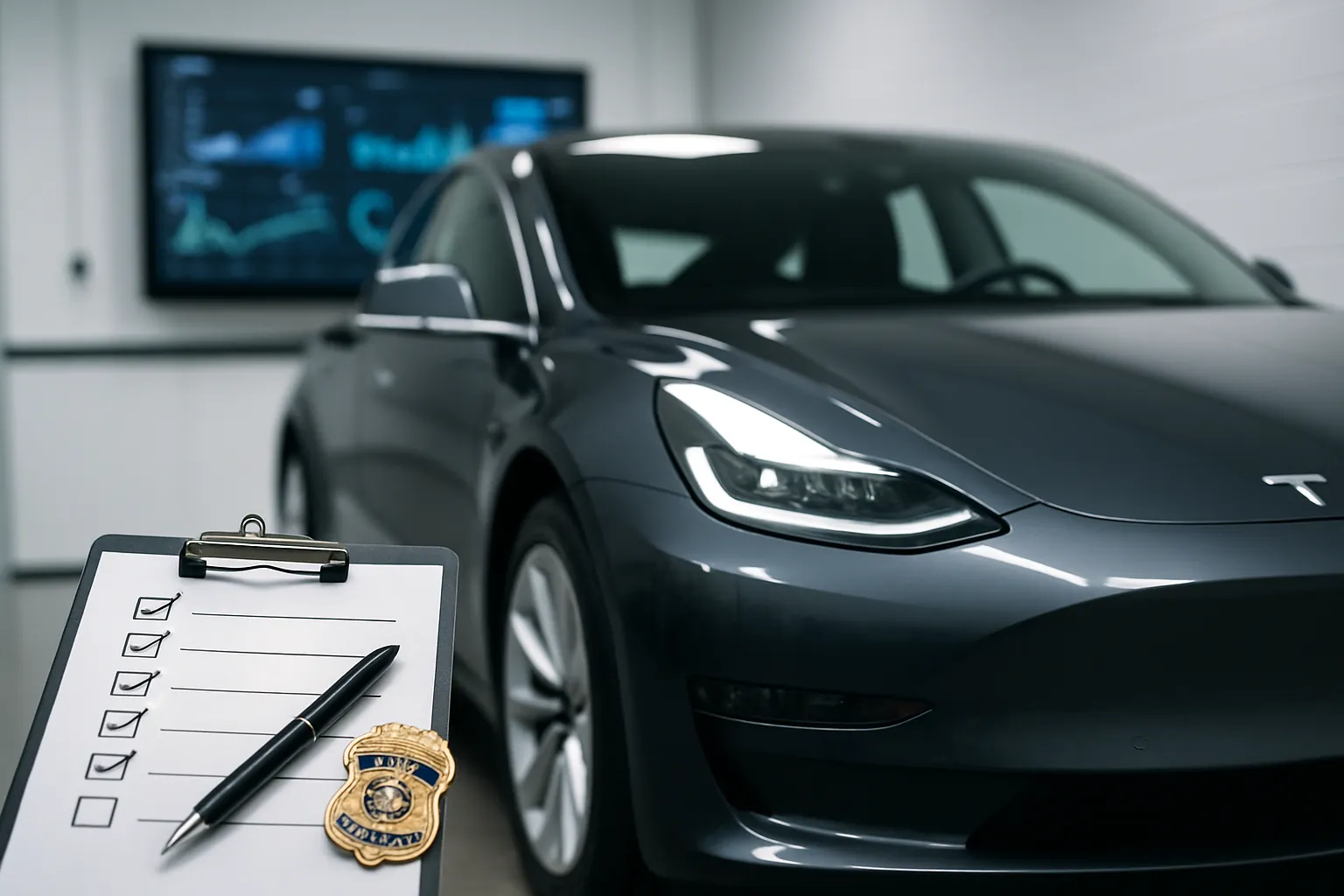
The National Highway Traffic Safety Administration (NHTSA) has stepped into the spotlight, launching a pointed investigation into one of America’s most audacious automakers. Tesla, long celebrated for its innovation and disruptive bravado, now faces scrutiny for a more grounded issue: civic responsibility, specifically the timely reporting of crashes involving its vaunted Autopilot and Full Self-Driving (FSD) systems.
Since 2021, federal law has required automakers to report serious crashes involving advanced driver assistance technologies within days—not months—of awareness. Yet data released last week reveal that Tesla repeatedly submitted incident reports to NHTSA long after the fact. The revelations prompted a full “audit query,” a technical term that points to suspicions not just of accidental oversight, but of systematic failure, perhaps even calculated risk-taking.
The significance of this probe extends far beyond a series of late-filed documents. It strikes at a fundamental tension in American society: Can we trust tech giants to police themselves, or is robust oversight indispensable when public safety is at stake? The NHTSA’s action—its most aggressive in this domain to date—challenges the cultural inertia surrounding Tesla’s public relations acrobatics.
Remember, this isn’t the company’s first dance with regulators. Just this year, NHTSA moved to scrutinize both Tesla’s Actually Smart Summon and FSD features following alarming reports of collisions, including a fatal crash. Despite high-tech promises, these systems haven’t always lived up to the hype or the safety standards expected on American roads.
Why Reporting Requirements Matter—And Who Gets Hurt When They’re Ignored
On paper, Tesla claims a near-instantaneous awareness of accidents happening in vehicles equipped with its advanced hardware. Their cars send automated “collision snapshots” to a central server within minutes. So why, then, did the company fail to notify the NHTSA in the required window—sometimes for months?
The answer, Tesla argues, lies in a system error: an internal glitch. But NHTSA’s probe is designed to test whether that excuse holds water—or if it masks a deeper reluctance to share damaging data. After all, delayed crash reporting doesn’t just flout procedural norms. As highlighted by Harvard transportation policy professor Laura Greene, “Prompt crash data is the bedrock of effective public safety policy. If companies withhold or slow-roll these reports, the entire regulatory system loses power and the public loses trust.”
The NHTSA’s Standing General Order 2021-01 made reporting requirements clear: Any crash involving serious injury, death, airbag deployment, or vulnerable road users must be disclosed within one day of learning about it, with updates within 10 days. Monthly reports cover less serious incidents. These rules exist not to create bureaucratic headaches, but to enable swift responses—recalls, safety alerts, and technology fixes—before tragedies multiply.
“When the regulator is always three steps behind, ordinary people become unwitting guinea pigs in a tech experiment conducted at highway speeds.”
Tesla’s repeated delays serve as a cautionary tale. When regulators are deprived of timely crash data, they cannot act quickly to uncover patterns that put more lives at risk. Consider the ripple effect: One miss today can become a tragic headline tomorrow. The ethical stakes, and the practical consequences, could hardly be higher.
Big Tech, Accountability, and the Road Forward
Is it reasonable to trust massive tech-centric companies to self-report when doing so risks their bottom lines—or their reputations? American automotive history is littered with examples proving the folly of that approach. From seat belt battles of the 1960s to the Ford Pinto’s notorious fuel tank cover-ups, corporate interests have often run counter to public safety, until watchdogs stepped in. The current Tesla investigation fits squarely into that historical pattern.
Recent years have seen Tesla expand the allure and capability of its Autopilot and FSD suites, making bold claims about autonomy while pushing updates directly to vehicles. Yet an Associated Press analysis found that a majority of drivers use the features inattentively, emboldened by Tesla’s marketing. As Rutgers engineer Alicia Mendel noted in a 2023 hearing, “Software can only correct so much for human overconfidence—and no amount of code can fix regulatory blind spots.”
Those blind spots are precisely what federal oversight seeks to illuminate. The NHTSA’s “audit query” doesn’t just address paperwork; it’s about reclaiming authority in an era when corporations are tempted to treat rules as optional. The stakes are even higher given that roads are shared spaces: every technological leap requires societal consent and protection, not just shareholder approval.
Beyond the technicalities, reporting delays fuel skepticism not only about Tesla’s safety record, but also about the company’s cultural aversion to transparency. Progressive values—accountability, equitable protections, respect for the lives of all motorists, cyclists, and pedestrians—demand better than after-the-fact apologies or algorithmic excuses. The autonomy revolution will shape the next generation’s relationship with transportation, but it must do so under the rule of law, not the rule of expediency.
So the question remains: Will regulatory bodies be empowered—and resourced—to ensure that self-driving promises aren’t built on the backs of silent casualties? Or will Silicon Valley exceptionalism continue to shield the powerful from answering for public harms?
