
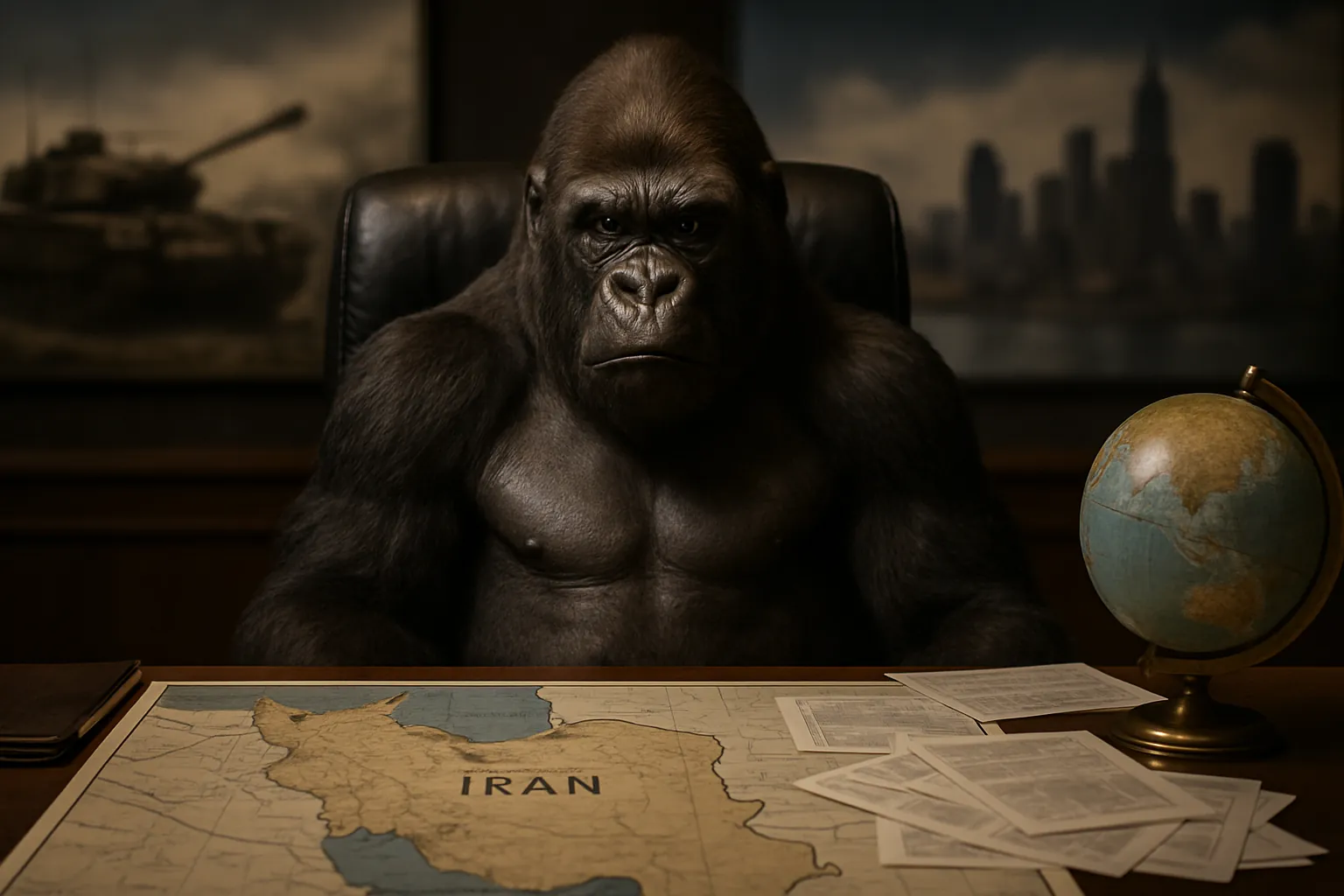
The Rise of ‘The Gorilla’ Inside the Pentagon
In recent months, a bold and unmistakable figure has muscled his way into the spotlight of America’s Middle East policy: Gen. Erik Kurilla, chief of U.S. Central Command. Within Pentagon halls, his imposing presence and unyielding style have earned him the nickname “The Gorilla”—a moniker referencing both his physical stature and, insiders say, his influence. For many, he’s become the unofficial kingmaker of the U.S. response to Iran’s saber-rattling and Israel’s fraught security dilemmas.
General Kurilla’s reputation isn’t just built on bravado. Decorated for valor after commanding his troops while wounded in Iraq, he’s the kind of commander whose battlefield legend gives him enormous credibility—especially with Defense Secretary Pete Hegseth, himself eager for ‘toughness’ at the helm of crisis response. In smoke-filled strategy sessions and the Situation Room, few have had more direct face time with President Trump himself than Kurilla. Officials note that his advice, often calling for robust deployments of U.S. military hardware—double aircraft carriers in the Gulf, fresh squadrons of fighters, intensified intelligence links with Israel—gets swift approval while more restrained voices find themselves sidelined.
A closer look reveals that Kurilla, widely respected for his brawn and his brain, is driving a dramatic concentration of American assets in the Middle East. Pentagon flight paths, it seems, are now mapped at his urging, at times overriding standard deliberative process and the wisdom of more cautious, seasoned hands. According to a former senior official interviewed by the Washington Post, “He’s got the look of the general that both Hegseth and Trump are looking for.” This kind of influence is rare even among four-star generals.
The New Balance of Power—And Its Consequences
Traditionally, American defense policy has leaned heavily on a careful equilibrium between civilian leaders and uniformed officers—a check designed to prevent rash military engagement, codified ever since President Truman famously ousted General MacArthur in 1951 for overstepping bounds in Korea. These lessons from history aren’t just dusty anecdotes. They serve as bulwarks against groupthink and escalation.
Recent moves, however, have called this fragile balance into question. Hegseth, reportedly frustrated by persistent infighting and “paralysis through analysis” in the Defense bureaucracy, has instead thrown his weight behind Kurilla’s muscular approach. Senior civilian officials like Pentagon policy chief Elbridge Colby and Chairman of the Joint Chiefs Gen. Dan Caine have each voiced concern about overcommitting to another Middle East quagmire, warning that drawn-out conflict with Iran could drain U.S. resources and readiness for crises elsewhere—especially in a world where Russia and China loom as strategic competitors.
Is this simply bold leadership, or a sign that civilian oversight is eroding? Pentagon spokesperson Sean Parnell insists that “Defense Secretary Hegseth empowers all of his combatant commanders the same way,” and asserts that senior leaders remain “united on national security decisions.” But insiders suggest that such unity is more appearance than reality, especially when crucial intelligence and access flow disproportionately to one general. Kurt Volker, former U.S. ambassador to NATO, reflected in an interview with Politico: “Civilian control works best when dissent is aired and options are genuinely weighed. If a ‘can-do’ general is always the loudest in the room, you risk sleepwalking into escalation.”
“The fact that top-tier military strategy can now turn on a single adviser’s instincts—however decorated—suggests a dangerous shift in how America considers war and peace.”
Real-world consequences are mounting. The deployment of a rare double-carrier strike group, normally reserved for global crises, marks a dramatic escalation. Aircraft and air-refueling tankers are being re-tasked from Europe and the Pacific, leaving other regions less covered. An arms race of signals and deployments now risks triggering inadvertent conflict, with Iran emboldened and regional actors nervous about miscalculation. The National Security Council’s attempts at interagency consensus, reported by Axios, have reportedly become perfunctory, with Kurilla’s recommendations fast-tracked to approval while civilian caution lags behind.
What Does America Want Its Military Leadership To Be?
Beyond the headlines, deeper questions about America’s identity and principles are at stake. Progressive values—like transparency, accountability, and the primacy of civilian authority—aren’t mere bureaucratic ideals. They exist precisely to ensure that military power is applied responsibly and that dissent, not deference, shapes democracy in matters of war. It’s one thing to laud heroism or battlefield experience; it’s another to let it become the only compass for national decision-making.
The stakes of this erosion go well beyond the Gulf. Harvard military scholar Rosa Brooks, writing for Foreign Policy, observes that modern crises demand “bedrock civilian control and intellectual pluralism.” She cautions that if one hawkish voice consistently overrides others, it can create an atmosphere where “skepticism is dismissed as weakness” and “ boldness becomes synonymous with good judgment.” This, she argues, is a perilous path, recalling the unchecked escalation of Vietnam and the heedless rush to war in Iraq—two searing reminders that strategy requires not just strength but deliberation.
So what is to be done? Robust debate and meaningful checks can shield the nation from catastrophic missteps, as generations of statesmen—Democrat and Republican alike—have understood. The arms of government must pull in concert, not at the command of a single charismatic officer. Resisting militaristic groupthink does not mean capitulation or weakness. It means insisting on a broader, saner understanding of security—one that values diversity of perspective and guards the threshold of armed conflict with care.
The moment belongs to Kurilla. History, though, may belong to those who keep the Republic’s founding promise: that no one—no matter how tough, decorated, or ‘jacked’—should carry the burden of war alone, or in silence. America’s future, and the invaluable trust placed in its military, depend on it.
