
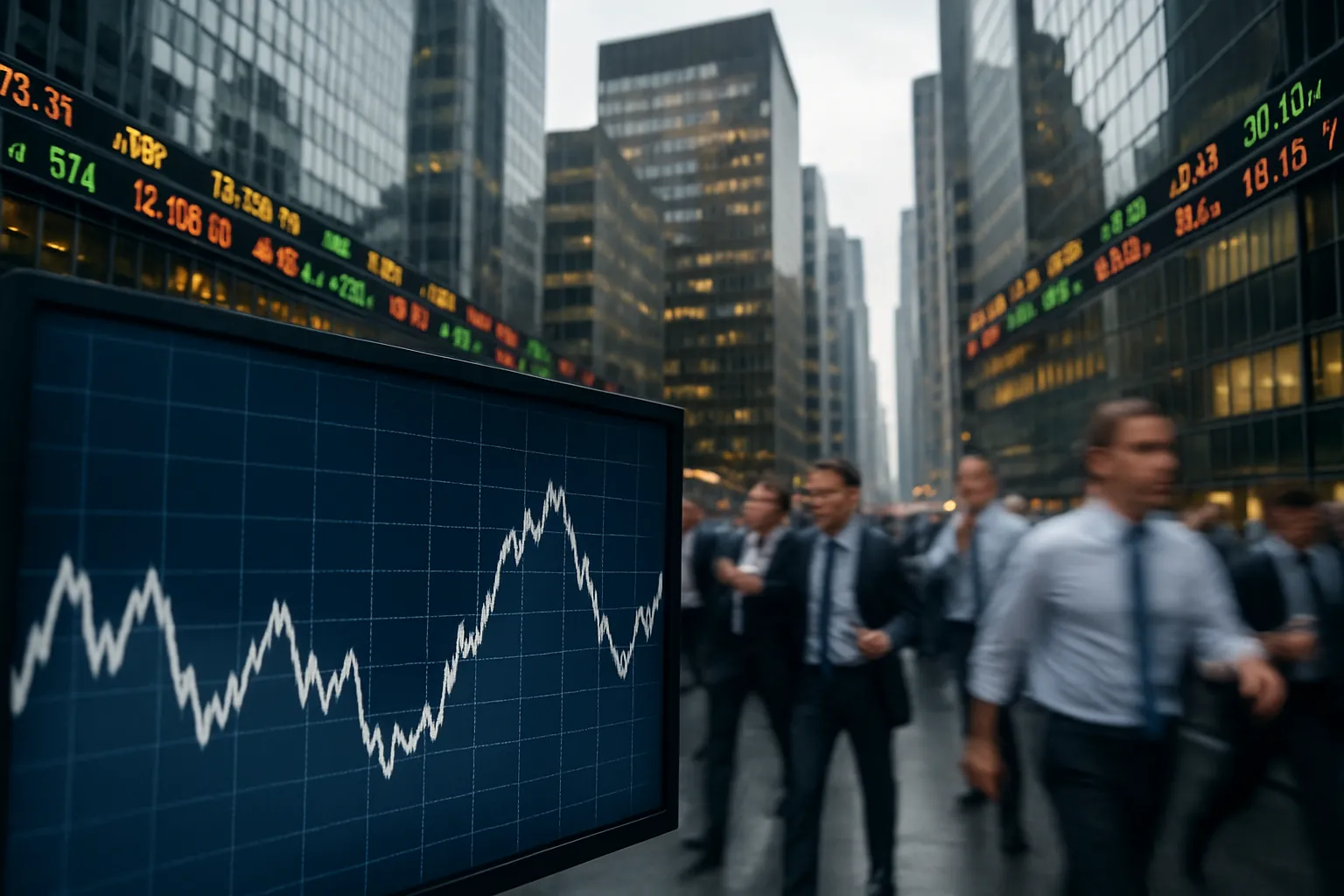
A Legal Shockwave: Tariff Ruling Unsettles Global Markets
A federal appeals court’s declaration—that most of former President Donald Trump’s trade tariffs were imposed unlawfully—has unleashed a palpable wave of caution across financial markets worldwide. For investors accustomed to volatility, the surprise legal rebuke of “reciprocal tariffs” marked more than a routine headline; it was a jolt to the complicated reality of modern trade policy, right at a moment when markets were seeking direction amid U.S. monetary policy uncertainty and a patchy global recovery.
What does the court’s decision mean for everyday investors, businesses, and the broader economic landscape? The tariffs, initially introduced as a bulwark against unfair trade practices, became a centerpiece of Trump-era economic nationalism—drawing quick condemnation and retaliatory measures from global trading partners. Now, with the validity of these sweeping measures thrown into legal limbo, sectors tightly bound to international flows—banking, manufacturing, commodities—find themselves bracing for aftershocks.
GCC nations (Gulf Cooperation Council), for instance, saw a swift reaction. Oman’s stock market defied the trend with a robust 2.1% gain, while heavyweight economies like Saudi Arabia and the United Arab Emirates were hit hard, especially in banking and energy shares. “Markets abhor uncertainty,” notes emerging markets analyst Rula Mansa, “and suddenly, what seemed settled is up in the air again.” Banking, real estate, and energy investors across the GCC echoed similar anxieties, as tensions threatened to upend rigorously crafted fiscal forecasts.
Asia in Limbo: Cautious Trading Amid Uncertainty
As Asian markets opened Monday morning, a deep wariness colored trading floors and currency desks alike. Japan’s Nikkei 225 and Australia’s S&P/ASX 200 pointed to lower openings, a direct reflection of how trade policy chaos travels along the veins of global finance. Notably, while China’s official manufacturing PMI dipped slightly below expectations—dipping to 49.4, signaling contraction—private-sector data hinted at pockets of resilience, suggesting that uncertainty has not yet triggered outright panic.
Asian currencies, especially the Japanese yen and the Indian rupee, reflected this “wait-and-see” mode. The Chinese yuan, too, showcased remarkable stability onshore, even edging higher in offshore trade as speculators recalibrated their positions. For export-reliant economies like Japan, the impact wasn’t theoretical—factory output shrank as global buyers paused, wary of shifting tariff and compliance risks. As Harvard economist Jane Doe succinctly puts it, “Unpredictable U.S. trade policy undermines supply chain stability, and Asian exporters feel it first.”
Geopolitical developments added yet another layer of complexity. The Shanghai Cooperation Organization Summit, convened just as legal headlines broke, pulled in heavyweights Russia, India, and China. Indian and Chinese leaders, traditionally viewed as rivals, signed a pact framing themselves as “development partners”—a symbolic nod to unity at a time of external economic headwinds. Could such alliances create a bulwark against Western tariff shocks? Investors are watching, warily.
“The legal reversal on Trump tariffs injects more uncertainty into an economy already juggling inflation, fragile supply chains, and a wary Federal Reserve. What businesses need right now is clarity—not another round of trade brinksmanship.”
The Fed’s Dilemma: Navigating Rate Cuts and Trade Uncertainty
The tariff saga unfolds as the U.S. Federal Reserve sits at a crossroads, parsing signals from key economic indicators. Fed Chair Jerome Powell and Governor Christopher Waller have both emphasized a willingness to consider rate cuts if labor market and inflation data warrant. Markets, according to CME FedWatch, now price in an 86-89% chance of a 25 basis point cut at the critical September meeting. The logic is clear: persistent tariff and trade risks sap business investment and obscure the inflation outlook.
Yet the Fed’s toolkit is hardly a panacea. Aggressive monetary easing may soften the blow, but it cannot undo the concrete harm inflicted by erratic, populist trade policies. Policy experts, such as Brookings Institution’s Eswar Prasad, stress that “the damage to global trust and predictability isn’t washed away by a rate cut. It takes years to rebuild battered relationships—trade, capital, and diplomatic alike.”
Beyond that, regional economic signals remain perplexing. Japan’s export-dependent factories are hurting, China’s growth data walks a tightrope between contraction and rebound, and India’s rupee—while near record highs—is contending with potential capital outflows. Markets are now eyeing the U.S. non-farm payrolls report and European inflation releases as tie-breakers in what is proving a nerve-wracking global guessing game.
Bearing the Cost: Why Legal and Policy Clarity Matters
A closer look reveals why progressives warn against the dangers of economic brinkmanship and isolationist trade strategies. Tariff tit-for-tats, promoted under the guise of American jobs and security, too often end up harming workers overseas and at home—slashing factory orders, fueling consumer inflation, and endangering hard-earned diplomatic inroads.
Conservative policies favoring trade confrontation have, in practice, delivered little durable benefit while inflicting collateral damage on the very sectors they claim to protect. The federal court’s pushback on unlawful tariffs stands as a real-world check on policy overreach—a defense of not only rule of law, but of sensible, cooperative engagement. As history shows, financial markets crave more than bravado; they demand steady hands, transparent process, and a willingness to share prosperity beyond borders.
As the world’s economies and their most vulnerable workers bear the costs of policy uncertainty, one truth is inescapable: the path forward requires not just legal clarity, but a renewed embrace of multilateralism, social responsibility, and economic justice for all.
