
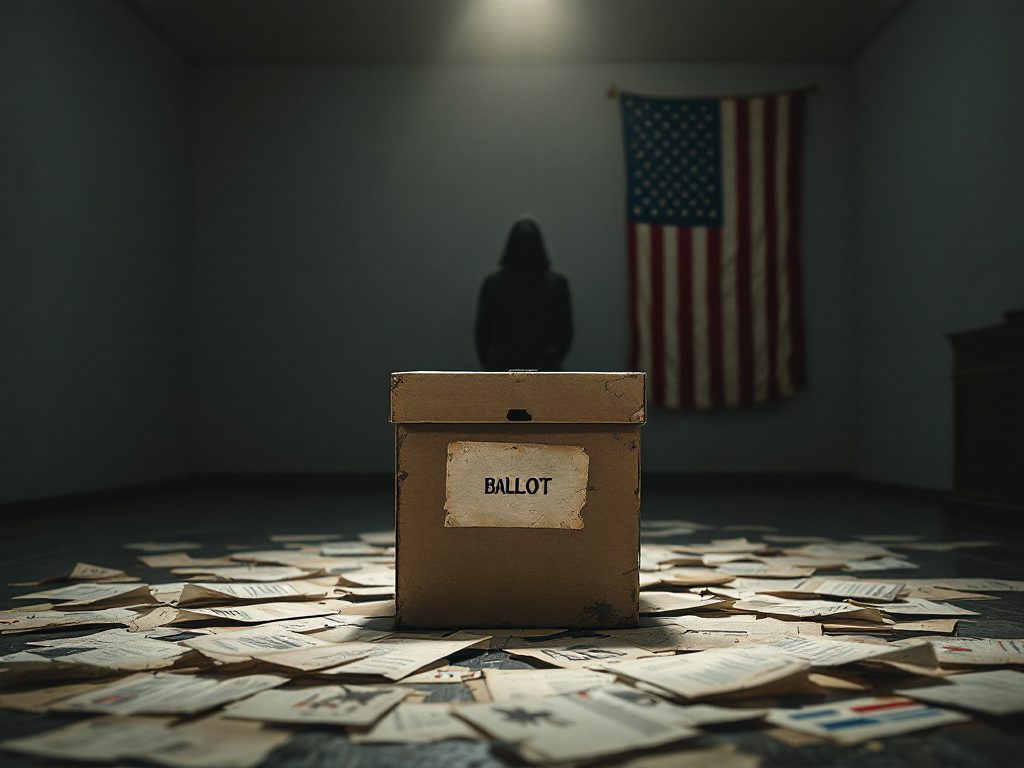
The Reality Behind Voter Regret: Breaking Through the Myths
Across cable news and online forums, a familiar thread has woven through discussions about the fallout from the 2024 presidential election: the supposedly growing remorse among Trump voters. Headlines splash phrases like “buyer’s remorse” and pundits muse that regret is surging in Trump’s base, hinting at potential political realignment. But what happens when we pull back the curtain on these claims?
CNN’s chief data analyst Harry Enten recently tackled this supposed surge in conservative regret, and the findings may surprise you. On “CNN News Central,” Enten cited a new University of Massachusetts Amherst/YouGov poll showing that a mere 2 percent of Trump’s 2024 voters said they would vote differently if given a do-over. Such a figure stands in stark contrast to the breathless speculation by some media outlets — and yes, even progressive commentators — that a wave of regret is poised to sweep Trump’s support away.
What’s even more striking: only 1 percent of these voters said they would have preferred not to vote at all. Taken together, less than 5 percent of Trump’s coalition—a negligible slice—expressed any intention to change their 2024 voting behavior in hindsight. The myth of mass defection, it seems, dissipates under the illumination of real data.
It’s worth asking: why do such narratives gain traction in the first place? As many liberals celebrate the value of holding political leaders accountable, we must also be honest about wishful thinking that can sprout within our own echo chambers. As historian Heather Cox Richardson has observed, “Changing the minds of committed partisans is one of the rarest phenomena in American politics.” Such realities should inform—not discourage—efforts to engage disaffected or undecided voters on the issues that matter most.
Loyalty in the Face of Turbulence: Why Trump’s Base Remains Steadfast
A closer look reveals that the loyalty of Trump’s supporters runs deeper than many pundits care to admit. Conventional wisdom has held that after periods of chaos or negative press—the rolling stock market anxiety, arguments over democratic norms, or the well-documented legal maelstrom engulfing Trump—supporters might begin to flee his camp. And yet, the empirical evidence just doesn’t bear this out.
Harry Enten himself dismissed the notion that persistent negative coverage about Trump—from economic policy criticisms to concerns over the health of American democracy—has weakened the Republican base. In Enten’s analysis, “if the election were held again, the results would almost certainly be the same.” This isn’t the blind loyalty of the uninformed, but rather a reflection of a deeply entrenched political identity, shaped over years of culture wars, economic anxiety, and skilled right-wing messaging.
How did it get this way? Psychologists like Drew Westen, author of The Political Brain, argue that intense partisan identity makes ideological shift exceedingly rare. Instead, entrenched voter blocs seek out information that reinforces their worldview, discounting facts—or even chaos—if it threatens group solidarity. In the Trump era, this effect has become turbocharged by hyper-polarized media cycles and social media silos.
Of course, liberal and moderate voters aren’t immune to their own bubbles. Yet the lesson here is not to surrender to cynicism, but to develop smarter, evidence-based strategies for engaging communities left out by current politics, rather than recycling worn narratives about “regret.” That kind of nuanced approach may not make for zippy cable news, but it just might make for a healthier democracy.
Beyond the Numbers: Where Should Democrats Focus Now?
The data from this and previous cycles offer a sobering truth: the dream of a spontaneous mass defection from the Trump base is, for now, little more than wishful thinking. According to The Pew Research Center, voter regret rates have hovered at similar single-digit levels in both parties for decades. What’s more, as Enten noted, this pattern holds not just for Trump voters but also Kamala Harris voters, underscoring a bipartisan reality: most Americans stick by their choices, even when confronted with post-election turbulence.
Rather than lamenting this lack of regret, Democrats and progressives can seize the moment to recalibrate their approach. Harvard political scientist Theda Skocpol has long highlighted that electoral victories rarely come from converting the hardest partisans, but instead from
winning over the margins—disaffected independents, younger voters, and communities often passed over by conventional campaigns.
“The story isn’t about mass regret—it’s about who we talk to, how we listen, and whether we offer something fundamentally different in a deeply polarized America.”
Action—instead of fixation on narratives—ought to guide liberal strategy. Investing in grassroots organizing in overlooked places, fighting for policies that materially improve people’s lives, protecting voting rights, and building cross-coalition partnerships can win far more hearts and minds than hoping for a sudden reversal of loyalty among entrenched Trump voters.
Recent history confirms this. Take the 2018 midterms: by focusing on health care, community issues, and voter turnout, Democrats flipped more than 40 House seats—a feat that happened not because Trump voters abandoned ship, but because progressives energized the people who had been left on the sidelines. The challenge now is to remember that lesson, and channel it into tangible, inclusive, justice-forward action.
