
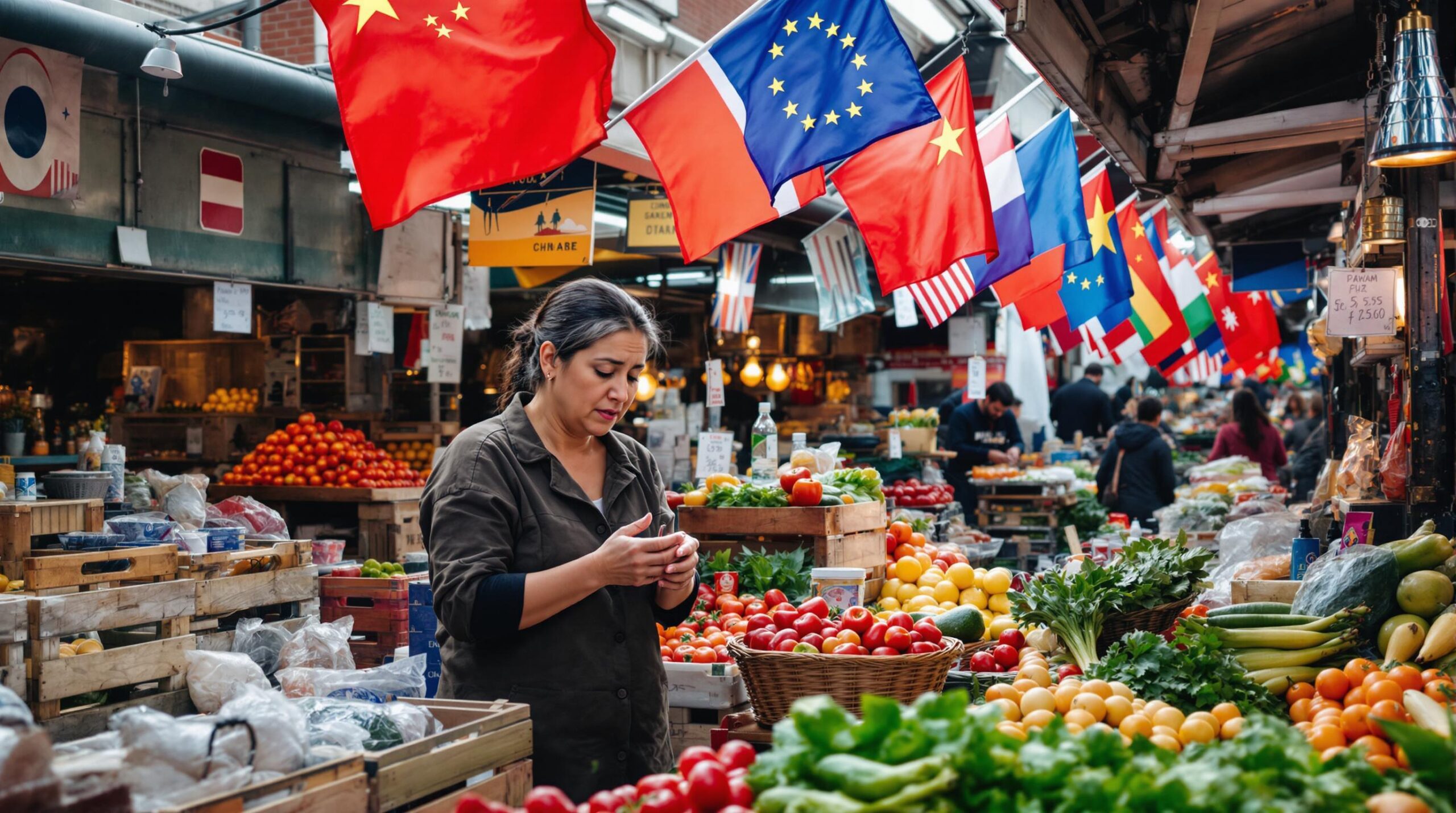
On April 2, 2025, dubbed ‘Liberation Day’ by former President Donald Trump, a controversial array of reciprocal tariffs will take effect, embodying one of his most contentious economic policies. The centerpiece: a 25% import duty on automobiles and auto parts. Experts warn that while Trump’s motives may aim to balance trade deficits and bolster American employment, the actual outcome threatens serious economic pain—both abroad and at home.
Economic Ripples Across Borders
The international repercussions of Trump’s reciprocal tariffs are vast. On the northern edge of America, Canada and Mexico brace for significant GDP downturns, with Canada facing a troubling projected GDP decrease of 16.5%, and Mexico 6.6%. The Trump administration’s previously celebrated US-Mexico-Canada Agreement (USMCA), once heralded by supporters as a landmark achievement, lies undermined by this abrupt policy shift. Trump’s tariffs, far from fostering regional cooperation, now risk inciting retaliatory measures that could spiral economies into recession.
Europe is equally apprehensive. The anticipated 20% tariff on British goods and services looms ominously, endangering luxury car producers like Rolls-Royce, Bentley, and Aston Martin. Crawford Falconer, a seasoned UK negotiator, foresees an uphill battle, suggesting that assuaging Trump’s trade measures could take upwards of a year. Alarmingly, economists warn the UK could see its economic size shrink by 1% as a direct consequence, creating a precarious path towards obligatory tax hikes this autumn. Even Downing Street has voiced extraordinary uncertainty, admitting candidly that they lacked precise foreknowledge—an unusual and alarming concession.
Yet, the impact isn’t confined solely to established Western allies. Indian exporters also stand at a crossroads, with Trump’s reciprocal tariffs potentially disrupting major sectors such as agriculture, pharmaceuticals, and electronics. With the US contributing significantly to India’s export revenue, the instability generated by Trump’s policies could reverberate significantly in India’s economy.
Unintended Consequences for American Workers
Despite Trump’s assurances, evidence strongly suggests that placing sizable tariffs on key industries will more likely hurt, rather than help, the average American. Trump’s working-class base, particularly in rural and economically vulnerable areas, will likely carry the brunt of increased costs. Working-class buyers, already grappling with inflation and economic uncertainty, now face markedly higher prices for new and used vehicles.
This shift away from affordability threatens to exacerbate economic inequalities domestically. Data from automotive research firms reveal a stark reality: only 16 car models priced below $30,000 are currently assembled in America. Automakers often rely on countries with lower manufacturing expenses—like Mexico, South Korea, and Japan—to keep vehicles affordable for consumers. Tariffs now jeopardize these cost-effective production models, possibly forcing automakers either to abandon economically viable lines or to hike prices beyond the reach of their target demographics.
Rick DeSilva, owner of Liberty Subaru, didn’t mince words when he warned, “There’s no doubt—the cost of this tariff will be borne largely by average American consumers.”
A Boost for Predatory Financial Practices?
An unforeseen side effect of rising automobile costs could well be a surge in the predatory lending practice known as Buy Now Pay Later (BNPL) financing. With parts and repair services already seeing significant price increases (the average vehicle repair cost increased by 6% last year to around $838), the financial strain on consumers is palpable. Tariffs promise to compound these financial strains significantly.
Financial institutions, recognizing the vulnerability of desperate buyers, will likely escalate targeted efforts to market BNPL financing, offering deceptive ease to financially distressed consumers. While such financial instruments promise immediate relief, they often trap consumers in cycles of debt, ultimately exacerbating economic inequality and instability.
“Trump’s tariffs could inadvertently amplify predatory lending practices, deepening economic stress for American families already struggling to make ends meet.”
Questioning the Logic of Tariffs
From a progressive point of view, Trump’s pursuit of economic nationalism through blunt instruments such as tariffs seems profoundly misguided. Eminently compassionate economists argue emphatically for intelligent, inclusive economic reform that considers the impacts on vulnerable populations first and foremost.
History reveals the grave limitations embodied in protectionist tariff policies—less economic isolation, more labor solidarity and international cooperation yield healthier, more resilient economies. Franklin Roosevelt’s vision during the Great Depression fundamentally differed: he championed thoughtful policies that nurtured international partnership, strengthening rather than undermining global economic stability.
Contrasted with Trump’s policies, Roosevelt’s reforms offer a powerful historical precedent that demonstrates the wisdom of open markets tempered by strong regulatory and ethical frameworks. History cautions us against repeating past errors—Trump’s tariff gambit is the very embodiment of the misguided repetitions we would do well to avoid.
Now, as April 2 approaches and nations prepare to absorb reciprocal blows, the precariousness of economic stability looms large. Deeper questions must be asked: Are tariffs the wisest method to address complex global economic imbalances? Is further alienating international partners conducive to better trade relationships? And, crucially, what are the tangible benefits for the hardworking Americans President Trump claims to champion?
As the global trade landscape shifts yet again, it’s crucial to remain vigilant, progressive, and compassionate in advocating for economic policies that genuinely uplift, rather than exploit, hardworking citizens around the world.
