
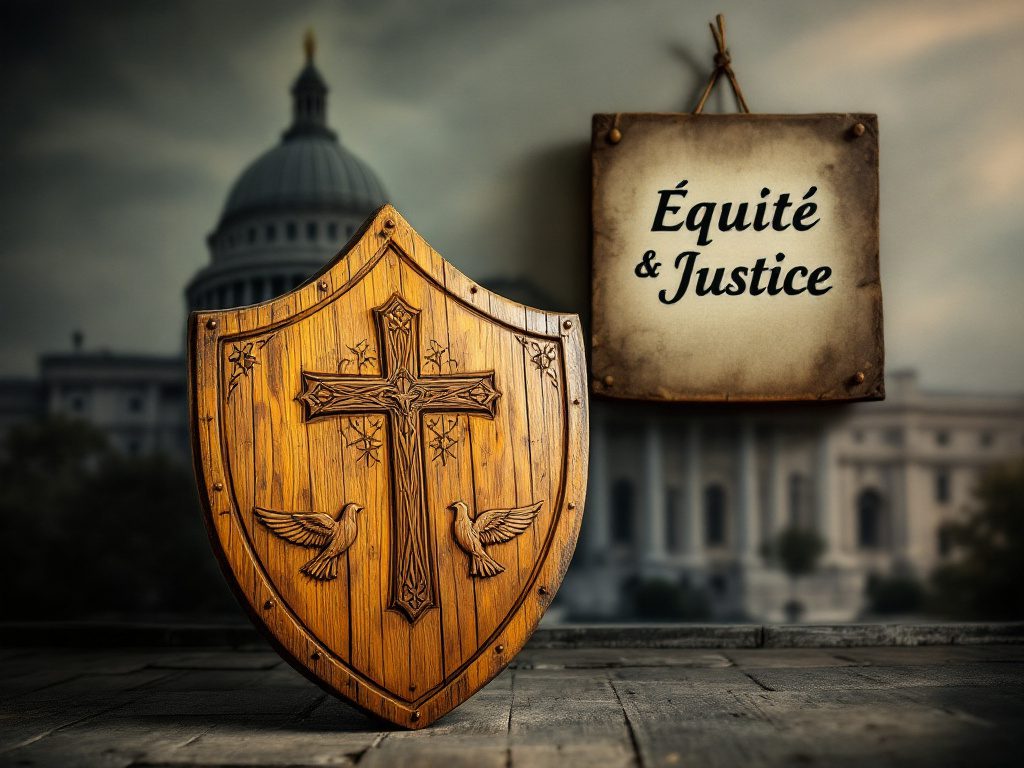
Task Force or Trojan Horse? The Launch of a New Political Front
Perched at the marble podium of the Department of Justice, Attorney General Pam Bondi declared that Christian Americans stand at a crossroads: “We will no longer tolerate attacks on people of faith,” she vowed, flanked by President Trump’s senior officials and the newly minted White House Faith Office. The occasion? The first meeting of the Eradicating Anti-Christian Bias Task Force—a creation of Trump’s executive order aimed at rooting out what his administration calls “unlawful anti-Christian policies, practices, or conduct” across the federal government.
A closer look reveals that this task force represents more than a bureaucratic reshuffling. Its charge is sweeping: every executive department, from the Department of Defense to the IRS, will be reviewed for supposed bias against Christians, with the White House Faith Office under Rev. Paula White teaming up for the first time on such an assignment. Bondi and her allies suggest their mission is about “religious liberty.” Yet critics, including Americans United for Separation of Church and State (AU), caution that the veneer of faith-based protectionism may encode an agenda to privilege certain religious viewpoints over others—potentially rolling back hard-won LGBTQ rights, reproductive access, and the secular underpinnings of American democracy.
The formation of faith-centric commissions isn’t unprecedented. Historical echoes reverberate from George W. Bush’s Faith-Based Initiatives, criticized then (and now) for funneling government resources to religious groups with minimal oversight. But today’s political climate heightens the stakes. Some worry this task force is less about protection from marginalization, and more about enabling what Harvard sociologist Sarah Posner describes as a “quest for dominion disguised as defense.”
The Real Cost of Manufactured Victimhood
What problem, exactly, is the administration solving? Bondi and conservative allies point to dropped prosecutions of pro-life protesters and the FBI’s scrutiny of certain religious gatherings under prior administrations as evidence of an expanded “war on Christianity.” During the meeting, Deputy AG Todd Blanche introduced testimony from individuals claiming to have been harmed by anti-Christian sentiment during the Biden years. Their stories resonated in a room designed to amplify a sense of siege.
The broader reality is far less clear-cut. According to a recent Pew Research Center study, Christians remain far and away the nation’s most privileged and protected religious group. Across the U.S., they enjoy significant representation across all levels of government, benefit from widespread legal exemptions, and student-led faith clubs can be found in most public schools. Only 13% of Americans identify as religiously unaffiliated.
The AU’s protest isn’t about hostility to Christianity itself, but about how the rhetoric of “anti-Christian bias” can be weaponized to justify state-sanctioned discrimination—undermining the very pluralism our founders sought to guarantee. The tragedy of this task force isn’t just in its potential to embolden religious majoritarianism. It risks hardening political divisions, redirecting policy focus from pressing, measurable instances of faith-based discrimination—especially those impacting religious minorities, Muslims, Jews, atheists, and the rapidly growing non-religious American cohort—toward a narrative that insists Christians are under constant threat.
“The strategy isn’t about genuine protection,” argues AU Executive Director Rachel Laser, “it’s about siphoning attention from real civil rights violations to stoke grievance and justify policies that chip away at everyone else’s freedoms.”
Real world consequences take shape where policy meets partisanship. Under Trump’s 2020 executive order and Bondi’s direction, the Department of Education is now reevaluating LGBTQ anti-bullying policies in public schools and reviewing restrictions on school-led prayer—raising alarms among civil rights groups and educators. Sara Robinson, a constitutional law expert at UC Berkeley, points out that such moves risk “turning public settings into arenas for prayer that excludes rather than includes.” It’s the paradox of this crusade: in the name of ending bias, the machinery of government may institutionalize new ones.
Separation, Not Subversion: American Values at Stake
Framed as a response to the “targeting of peaceful Christians,” this task force leans heavily on narratives of grievance. Yet history reminds us that the wall between church and state isn’t a license for marginalization—it’s a bulwark for the common good. Thomas Jefferson’s famed letter to the Danbury Baptists underscored that church-state separation protects faith as much as it protects government from religious interference. Why, then, this inversion of the principle so central to American pluralism?
As the task force gets to work, it faces a culture landscape far less monochrome than its rhetoric suggests. The United States—home to millions of Muslims, Jews, Buddhists, atheists, and the “spiritual but not religious”—needs policies that safeguard equality, not the privileges of a single tradition. Progressive religious voices, such as the Rev. William Barber, emphasize that authentic faith-based advocacy must “lift up the downtrodden, not entrench the powerful.”
Political critics on the left warn that, in the hands of power, religious grievance can quickly become an instrument of exclusion. Americans of conscience are correct to demand that their government protect everyone’s rights to worship — or not — without favoritism. We cannot allow a manufactured sense of persecution from those in power to erode the diversity at the heart of the American promise.
So, when you hear about new task forces fighting “anti-Christian bias,” ask yourself: Whose freedoms do they really defend? The answer matters, for the fate of our democracy—and the soul of our nation—hangs in the balance.
