
Setting the Stage: A Bold Offer in Jaipur
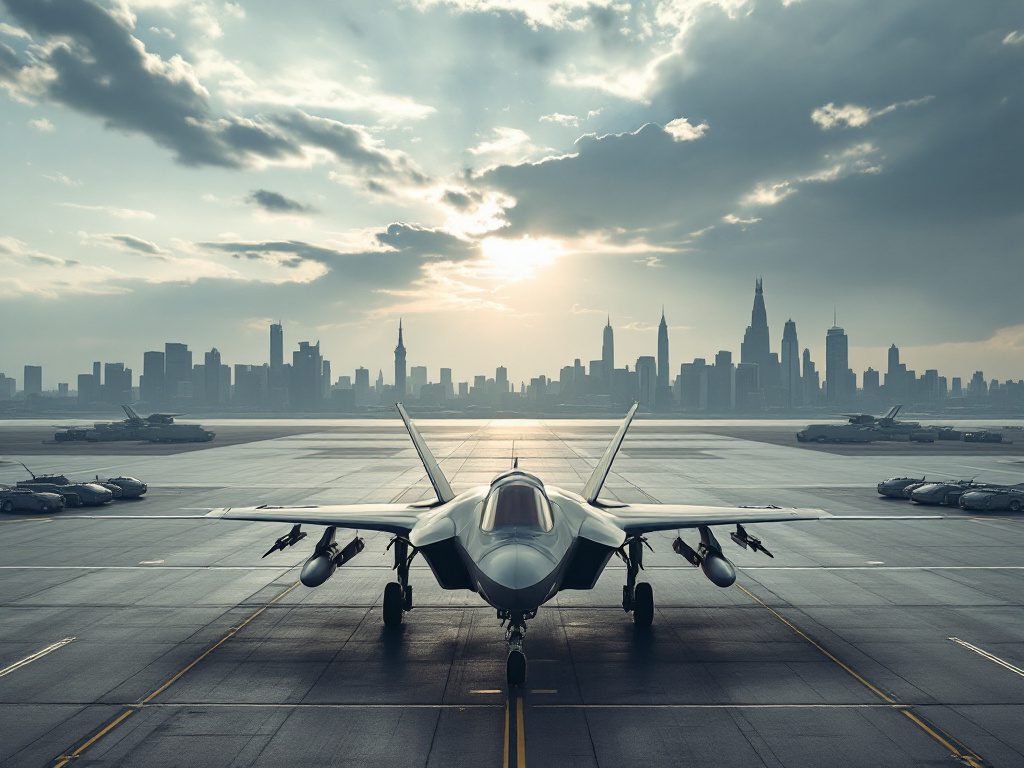
When US Vice President JD Vance stepped onto the stage in Jaipur, his message was clear and unmistakably ambitious: America wants a new kind of partnership with India—one characterized by mutual respect and high-stakes strategic cooperation. In a scene that drew the attention of both diplomatic observers and defense analysts, Vance offered India a significant opportunity: access to state-of-the-art F-35 fighter jets, an upgrade that would transform the Indian Air Force and tilt the region’s power balance.
This initiative isn’t just a footnote in a bilateral itinerary. It’s the product of several converging realities: Russia’s war in Ukraine has fractured global trust in Moscow as a reliable defense partner. At the same time, Beijing’s increasing assertiveness in the Indo-Pacific has cast a long shadow over the region’s delicate stability. For decades, India relied on Russian jets—a vestige of Cold War alignments. Yet in Jaipur, Vance effectively told the world: “America expects more, and we will offer more.”
Welcoming the offer, Indian officials have shown interest, but not without reservations. India’s long-standing defense arrangements with Russia remain complex. As Harvard security scholar Dr. Sameer Lalwani explains, “India’s military inventory is deeply intertwined with Russian hardware, but the promise of advanced American systems comes with both compelling advantages and significant diplomatic calculations.”
Rethinking Alliances: From Buyers to Joint Producers
Beyond the symbolism of advanced fighter jets, Vance’s visit marked a pivotal turn in how the US approaches India on security cooperation. Gone is the one-way street of arms sales; in its place is a vision for co-production and joint development. Vance highlighted the prospect of manufacturing Javelin missiles and Stryker combat vehicles inside India, empowering the nation to be not just a customer, but an essential collaborator in defense innovation. This approach recognizes India’s growing technological prowess and aligns with progressive goals of knowledge sharing and job creation for both economies.
Historically, American administrations have struggled to shed a reputation for patronizing lectures when engaging with international counterparts. Vance departed sharply from these missteps, lauding Prime Minister Narendra Modi’s negotiation acumen and emphasizing a new era of shared leadership. “For too long,” Vance said in Jaipur, “US-India relations have been cast in an outdated, hierarchical mold. The future demands equal partnership, and that starts by trusting each other with our most advanced technology.”
“The promise of advanced American systems comes with both compelling advantages and significant diplomatic calculations.” — Dr. Sameer Lalwani, Harvard South Asia Institute
A closer look reveals the stakes. India’s historical reliance on Russia for its air defense is now subject to intense scrutiny. Moscow, facing Western sanctions and resource constraints, recently dangled the prospect of jointly producing the Su-57 stealth fighter in India—a clear effort to retain its waning influence. Yet, the Su-57 is unproven in combat and plagued by development delays. In contrast, Lockheed Martin’s F-35 is already operational in a half-dozen allied air forces worldwide.
While Lockheed Martin maintains that any F-35 deal would occur at the government-to-government level, the US defense industry sees potential for billions in trade, co-manufacturing jobs, and a boost to the democratic security architecture of the Indo-Pacific. According to a recent Pew Research study, trust in major US defense technology among the Indian public has risen to its highest level in decades—a decisive shift that could expedite future deals.
Trade, Tech, and Energy: Building Foundations for the 21st Century
Military sales are only one facet of this evolving relationship. By finalizing terms for a comprehensive trade agreement, the US and India are laying the groundwork for deep and lasting economic integration with a goal to double annual trade to $500 billion by 2030. These ambitions stretch into energy, manufacturing, and digital infrastructure—sectors where both nations see room for transformative growth and shared benefit.
Energy security has emerged as a centerpiece of Vance’s agenda. He has promised expanded US crude oil and natural gas exports, as well as collaboration on nuclear power—moves that would help India decarbonize while reducing its dependence on fossil fuels from autocracies. Technology transfer, too, features prominently. Vance made clear that the US is ready to share not just products, but the know-how to create, install, and adapt them for local needs—a move experts argue is essential to true partnership in a rapidly changing global order.
Of course, such rapid alignment is not without hurdles. India’s complicated regulatory landscape, its desire for strategic autonomy, and skepticism rooted in past US policy inconsistencies all require careful navigation. But a careful recalibration seems underway. Stanford globalization expert Priya Mehra notes, “For policymakers in both nations, this isn’t just about countering Beijing or Moscow—it’s about proving that two large democracies can build trust and prosperity without sacrificing their sovereignty or their values.”
The results of this engagement won’t become clear overnight. Still, the tone and substance of Vance’s visit suggest that the US is, at last, embracing a more level-headed, collaborative approach in a region where the consequences of disengagement would be severe—not just for India and the US, but for the entire world.
