
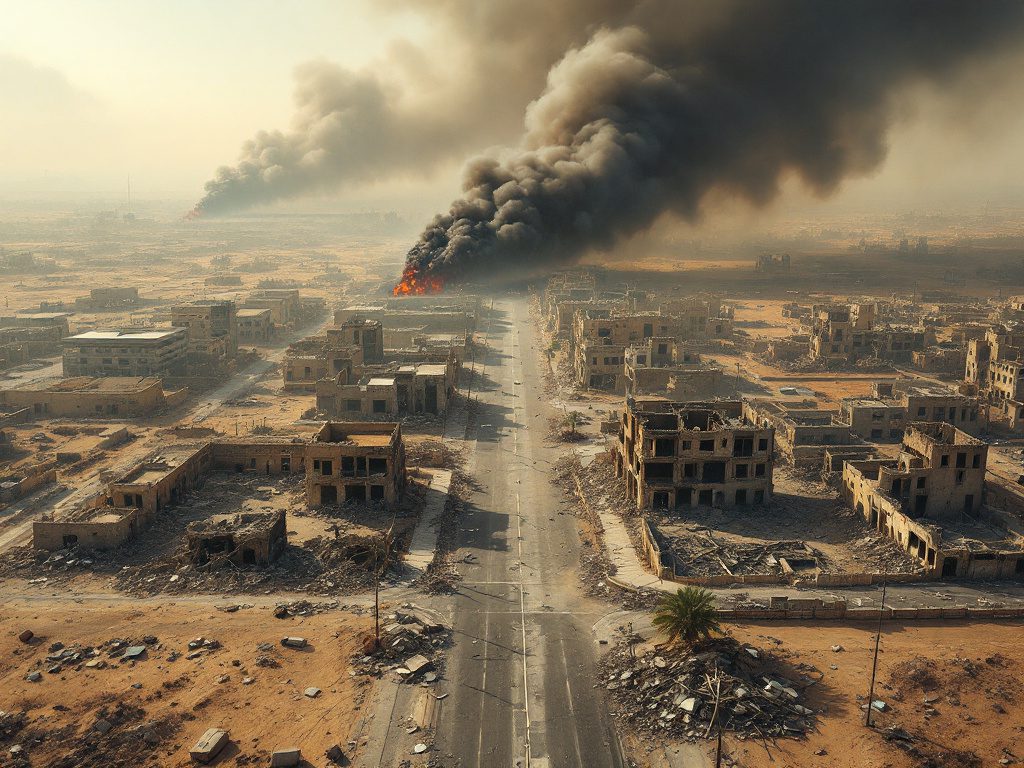
The Cost of a Strike: Civilian Suffering and Strategic Doubt
The morning after thick black smoke billowed from Yemen’s Ras Issa oil terminal, the death toll climbed along with the flames—at least 58 people killed and more than 100 wounded, according to Houthi-run media and local health authorities. Despite Pentagon pronouncements that the port was a vital supply and funding hub for Houthi fighters, many of the victims were oil workers, security guards, and paramedics responding to the initial explosions. Among the dead: five paramedics dispatched to save lives, only to be caught in a secondary American strike.
For Washington, the rationale was clear: disrupt Houthi-led assaults on Red Sea shipping—which have endangered one of the world’s busiest maritime trade routes by targeting vessels in an ostensible act of solidarity with the people of Gaza. To the families sifting through ash and rubble in Hodeida province, the logic feels less compelling. “We were just doing our jobs,” one wounded facility worker told a local news outlet, “when the world came down on us.”
Israel’s military intercepted a missile fired from Yemen mere hours after the airstrike, a stark reminder of regional complexities. The US campaign, not only the largest since the Trump administration escalated Middle East operations, marks a renewed willingness to use overwhelming force even as its political and humanitarian consequences flash red. According to Amnesty International, attacks of this scale on dual-use infrastructure risk “catastrophic consequences for civilians dependent on fuel for hospitals, water, and humanitarian relief.”
The Red Sea: A New Front in a Global Power Struggle
A closer look reveals that the Ras Issa strike is more than a response to Houthi drone and missile attacks on merchant ships. Washington’s justification—that the oil terminal funded militant operations—holds weight in military circles but glosses over a darker reality. Yemen is the poorest country in the Arab world, and its people are living through what the U.N. has labeled the world’s worst humanitarian crisis. When fuel flows halt, it is hospitals, farmers, and schoolchildren who first go without.
Why did the US escalate now? The Houthis had briefly paused their attacks after a two-month ceasefire, yet resumed them as the war in Gaza dragged on. The Biden administration, under pressure to defend international commerce, unleashed the most devastating strike of its campaign. Was there a path not taken—a diplomatic avenue, engagement with regional powers, or renewed push for a broader ceasefire? This is where hope, rather than missiles, could have become policy.
“Each time we bomb a port or power plant, we confirm our own failure to imagine peace—and ensure that war outlasts our intentions.”
Beyond the headlines, humanitarian agencies are now warning of an impending fuel shortage that threatens emergency medical care and imperils food delivery for millions. Harvard humanitarian law scholar Leila Sadat notes that under the Geneva Conventions, targeting infrastructure essential to civilian survival breaches the core of international law. The Houthi-run government, alongside Iran and Hamas, swiftly labeled the attack a war crime, underscoring growing consensus in the region and the wider world that the rules of war are being dangerously bent in service of short-term strategic goals.
Escalation’s Dead End: Lessons from Past Failures
History offers a clear warning. In the aftermath of US air campaigns in Afghanistan and Iraq, military officials boasted of shattering insurgent infrastructure and depriving militants of revenue. Yet a decade later, those societies remain fractured, their civil societies crippled and anti-American sentiment rampant. Why expect a different result in Yemen after wiping out a port that—whatever its Houthi associations—also powered ambulances, desalination plants, and bakeries in a nation teetering on famine?
Reflecting progressive values means questioning tactics that yield short-term military victories while planting the seeds of long-term instability. Strikes that cripple civilian lifelines become propaganda victories for America’s adversaries and contribute to the region’s cycle of grievance and retaliation. According to a 2024 Pew Research Center poll, over 70% of Middle Eastern respondents now associate US interventions with civilian casualties and diminished regional security.
Global security cannot be built on the ruins of communities already battered by years of war. Real leadership would demand investment in diplomacy, aid, and inclusive peace processes. Repeatedly, progressive lawmakers like Senator Bernie Sanders and Representative Pramila Jayapal have called for an end to blanket military authorizations in favor of engagements that respect sovereignty and center civilian needs.
Can we learn from these patterns? Modern security doctrines must reflect an unwavering commitment to international law and humanitarian principles, especially as America’s credibility in the world stands on the edge. As the smoke clears in Ras Issa, one truth should be inescapable: a nation’s strength is measured not by how precisely it bombs, but by how deeply it cares for those on whose land it does so.
