
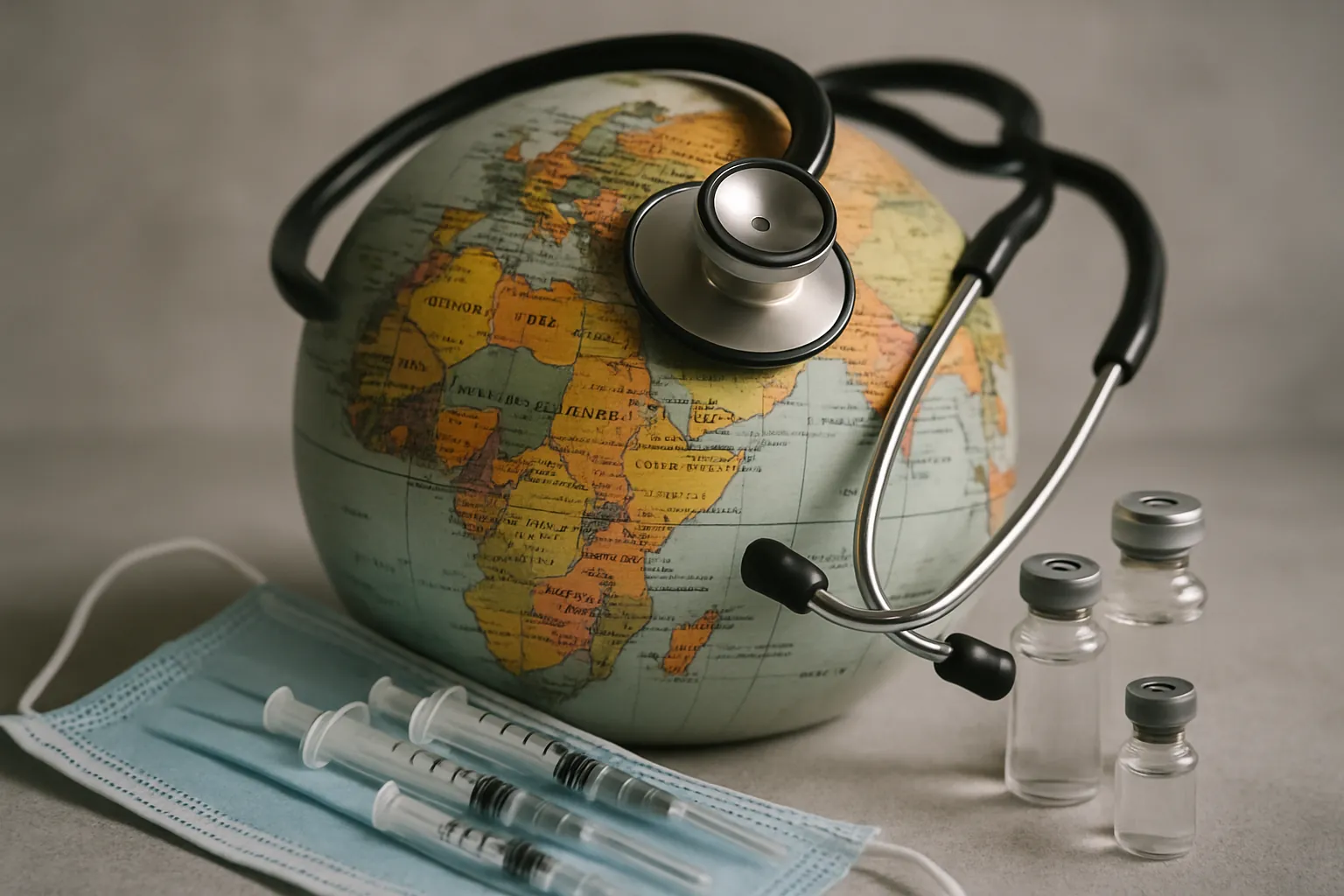
The Domino Effect of America’s Retreat
In Geneva’s glass corridors, there’s a chill that goes beyond the lingering remnants of pandemic anxiety. The World Health Organization (WHO) finds itself battered and backed into a financial corner, forced by circumstance—not choice—to halve its senior management team and scale down operations. Four months after President Donald Trump announced the United States’ departure from the agency, the fallout is on full display, with names once synonymous with global health leadership exiting stage left.
Few seemed to grasp, amid the bombast and headlines in Washington, what America’s pullback would mean for the rest of the world. The United States contributed $1.3 billion to the WHO’s 2022–2023 budget, most of it earmarked for initiatives that reach far beyond US shores. With the plug pulled almost overnight and required dues unpaid, the WHO faces an existential crisis. Director-General Tedros Adhanom Ghebreyesus stated—visibly somber—that “we simply cannot do everything” anymore, echoing a chilling truth: global health is a zero-sum game when major players walk away.
Tedros called the leadership reductions “extremely difficult and painful.” The real pain, though, is projected onto the world’s poorest and most vulnerable, for whom a leaner WHO could mean the loss of frontline pandemic response, vaccine deployment, and basic disease surveillance. Mike Ryan—who guided the globe through COVID-19’s darkest moments—and Bruce Aylward, a driving force in polio eradication, are stepping down. These aren’t just bureaucratic shuffles; they’re talent exoduses with lasting effects.
Slashing to Survive: How Cuts Threaten Health Security
Some might ask: Can’t the agency simply become leaner and more efficient? The facts suggest otherwise. Behind every dollar cut is a child overlooked, a virus undetected, an outbreak left to smolder. The WHO’s restructuring isn’t just symbolic—it’s drastic. The executive team at headquarters shrinks from 11 to 6 members. Departments nosedive from 76 to 34. Salary costs are targeted for a 25% reduction, while a proposed 21% budget slash for 2026–2027 drops planned spending to $4.2 billion—down from $5.3 billion, with barely 60% of that meager sum likely to be funded.
This isn’t about “trimming fat.” Experts warn these cuts could devastate epidemic early warning systems and slow-walk urgent health responses. Harvard public health scholar Michelle Williams puts it bluntly: “When you pare down global health infrastructure in a crisis-prone world, you magnify risks for everyone—including those far removed from the eye of the storm.”
The numbers alone don’t tell the whole story. The WHO’s Geneva headquarters will feel the first wave, but ripples reach clinics in Congo, research hubs in Brazil, rudimentary labs in rural India. The remaining leadership can only triage so much. Ongoing initiatives in malaria control, HIV prevention, and child nutrition, already chronically underfunded, now face further erosion. Internal documents warn that some offices in wealthy countries may close. Where does the responsibility lie?
“Global health isn’t a luxury for the rich—it’s the safety net for the entire world. When one thread unravels, the whole tapestry is at risk.”
The Politics of Abandonment and the High Cost of Isolation
The US withdrawal lands right when planetary health systems are at their most stressed. Arguments that America should not “subsidize the world” ignore decades of evidence—much of it gathered by the Centers for Disease Control and Prevention—showing that swift action by international agencies like the WHO stops epidemics before they become American crises. The Ebola outbreak saw American and WHO doctors side by side, demonstrating the undivided front line required against borderless threats. Dismantling this collaboration sends a dangerous signal: that collective security is optional, not essential.
The international response reflects the gravity of the moment. Other major donors have scrambled to fill the gap, but solutions remain piecemeal at best. The process for US withdrawal (which includes a year’s notice and paying all dues—currently unpaid) only prolongs an already debilitating uncertainty. Tedros, forced to balance gratitude toward departing leaders with the grim arithmetic of austerity, highlighted ongoing talks with other agencies to strengthen collaboration. Yet, these alliances can only go so far.
A closer look reveals the ideological roots of the funding cuts. Conservative skepticism toward multilateralism, fanned by populist rhetoric, positions America as a nation apart. But what are the ripple effects when the U.S.—the world’s largest economy and the only country capable of such a transformational role in global health—starts thinking small?
History offers a warning. During the early days of the HIV/AIDS epidemic, delays in international coordination exacerbated suffering and death. Today’s threats—from superbugs to climate-driven vector diseases—require not less but more cross-border action. By trading global engagement for insular policies, we gamble with everyone’s future—our own included.
Charting a New (and Riskier) Path Forward
Looking ahead, the WHO’s survival depends on tough choices, creative partnerships, and renewed commitments—not just from traditional donors but from new coalitions of nations, private sector innovators, and, crucially, civil society. Tedros and his diminished team will focus on “crucial priorities,” prioritizing, by necessity, what matters most. Efficiency can be a virtue, but no amount of internal restructuring can fully offset the vacuum left by US disengagement. The world cannot afford a race to the bottom.
The lesson for progressives is crystal clear. When circumstances are allowed to break the very mechanisms meant to defend global health, inequality grows starker, public trust erodes, and every nation—blue or red—slides closer to the catastrophic consequences of inaction. The path back will require vision, solidarity, and once again recognizing that in health, as in so many spheres, we are only ever as strong as our weakest link.
