
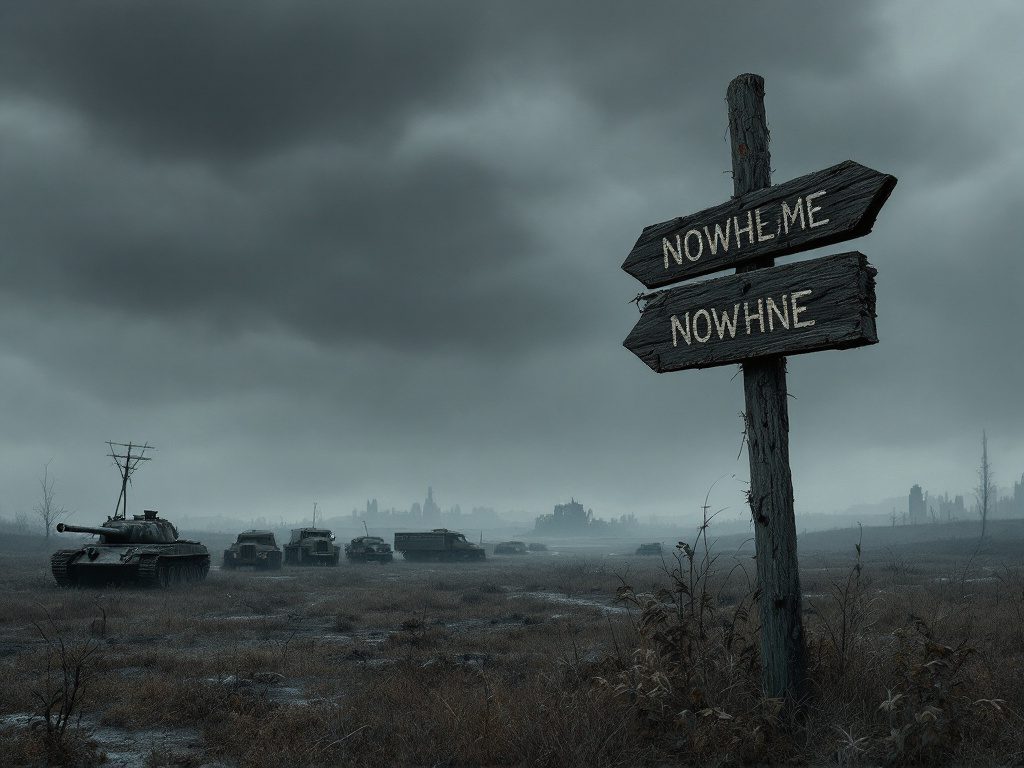
A Conflict with No End in Sight
The war in Ukraine, in its third grueling year, shows little sign of abating. After Russian President Vladimir Putin declared a brief, unilateral three-day ceasefire to commemorate Victory Day in May, hopes flickered that a broader pause might follow. Yet the offer, symbolically timed but fleeting in substance, belied a much harsher reality: both sides girded for more attrition, and peace remains as elusive as ever. U.S. Vice President JD Vance, breaking from previous White House optimism, openly acknowledged last week that the conflict is “not going to end any time soon,” a stark admission underscoring growing doubts about the viability of a swift resolution.
A closer look reveals the roots of this stalemate. Early in 2022, Russia’s invasion jolted the world order, igniting solidarity and military support for Ukraine across Western democracies. Yet the tide has shifted. According to a recent Pew Research Center poll, American public support for continued arms shipments to Ukraine has dropped, reflecting war weariness and deep political fissures at home. Within Congress, once-bipartisan support has splintered, with conservative lawmakers questioning the efficiency—and the wisdom—of open-ended U.S. commitments.
Putin’s latest ceasefire gesture failed to address these entrenched realities. After rejecting a U.S.-backed 30-day ceasefire proposal in March, Russia demanded the end of Western military aid as a precondition for talks. Ukraine, led by President Volodymyr Zelensky, refused to cede territory or legitimize Russian control over Crimea and the Donbas—stakes that, for Kyiv, are simply non-negotiable. Each side may know the other’s terms, but the gap remains stubbornly wide. Peace, for now, exists in the realm of hypotheticals.
The Politics of Stalemate
JD Vance’s comments are more than a candid assessment; they reveal a recalibration of U.S. policy priorities and political messaging. The Trump administration’s earlier campaign bravado—a promise to end the war “within 24 hours” if Trump returned to office—has quietly faded in favor of a workaround: brokering a “durable solution” within 100 days. That deadline has already come and gone, punctuating the limits of wishful thinking in foreign policy. With both Russia and Ukraine dug in diplomatically and militarily, and with domestic consensus in Washington fractured, the path to peace looks more tangled than ever.
National security experts argue that the new hands-off approach signals fatigue—and a dangerous abdication of responsibility. “For all the rhetoric about letting Ukraine and Russia find peace on their own, the reality is that Russia holds most of the negotiating leverage, buoyed by energy profits and China’s quiet support,” says former U.S. ambassador Marie Yovanovitch. Without sustained Western backing, Kyiv risks being cornered into concessions it cannot accept.
Conservative voices increasingly echo Moscow’s talking points, calling for a drawdown in aid and framing the conflict as a costly entanglement rather than a fight for democratic values. Former President Trump’s statement that “Crimea was lost years ago under Barack Obama” trivializes the ongoing struggle of Ukrainians living under occupation, and glosses over the principle that international borders should not be redrawn by force. This narrative ignores the lessons of appeasement from the past—when Western powers, by looking the other way in the face of aggression, set the stage for even wider conflicts.
“Leaving Ukraine to negotiate from a position of weakness not only endangers its sovereignty—it sends a dangerous message to authoritarian regimes everywhere.”
What should the U.S. do in the face of rising domestic skepticism and wavering alliances? History offers cautionary tales. The abandonment of Eastern Europe to Soviet domination after World War II carved wounds that endured for generations. Allowing exhaustion to dictate strategy could turn Ukraine’s fate into a blueprint for autocrats with territorial ambitions on other continents.
Human Cost and Moral Responsibility
The war’s toll grows heavier with each passing month: tens of thousands dead, cities in ruins, millions displaced and forced into precarious existence. This is not an abstract geo-strategic chess match, but a daily reality of human suffering and shattered communities.
Beyond that, a stalled or forgotten war is hardly convenient for global stability. Food insecurity and rising energy costs ripple out across Europe, Africa, and beyond, exacerbating inequality and destabilizing fragile states. According to the UN World Food Programme, disruptions to Ukrainian grain exports contribute to hunger crises as far away as Yemen and Somalia. The notion that the conflict can be cordoned off, its consequences consigned to Eastern Europe, is a dangerous illusion.
Yet in the U.S., some right-wing lawmakers continue to downplay these humanitarian costs, prioritizing short-term political gain over international responsibility. This points to a deeper crisis: “The question is not whether America can afford to support Ukraine,” says Harvard historian Serhii Plokhy. “It’s whether we can afford the world that follows if we abandon Ukraine to Russia’s aggression.”
The progressive vision demands solidarity with those striving for democracy and self-determination, not a meek retreat into isolationism. True peace will require creative diplomacy, steadfast support for Ukraine’s defense, and renewed efforts to rally the international community—not just platitudes or timelines that fade with the news cycle.
