
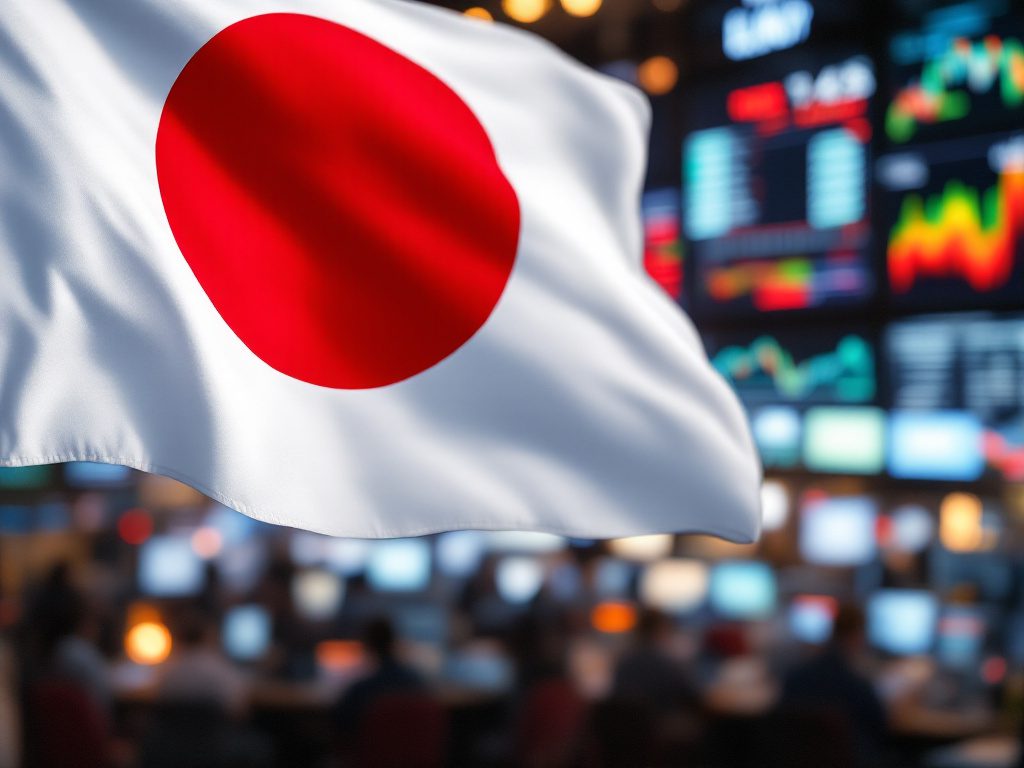
Striking a Nerve: Japan’s $1 Trillion Chess Piece
Imagine for a moment—the world’s largest store of U.S. Treasury bonds, a sum exceeding $1 trillion, on the negotiation table. That’s not a financial thought exercise; it’s the latest turn in the evolving saga of U.S.-Japan trade relations. When Japanese Finance Minister Katsunobu Kato openly floated the notion that these vast Treasury holdings could be used as a “negotiation card,” it set off not just a flurry of headlines but real anxiety inside economic and diplomatic circles.
Japan’s massive U.S. Treasury portfolio has long been a symbol of global economic interdependence, quietly underpinning both the dollar’s dominance and Tokyo’s own financial stability. Now, the willingness—even if only in rhetoric—to brandish that asset as leverage marks a subtle but significant escalation. Kato’s comments came just as Japan’s top trade negotiator Ryosei Akazawa met with U.S. Treasury Secretary Scott Bessent for high-stakes bilateral tariff talks in Washington, suggesting timing was no coincidence.
Until this moment, such “nuclear options” were mostly whispered about by market watchers and policy wonks. As Harvard economist Jane Leung explains, “For decades, Japan’s Treasury holdings were never a bargaining chip—just rainy day funds for yen intervention. Publicly acknowledging them changes the entire tone of negotiations.” This new posture arises against the backdrop of repeated U.S. tariff threats targeting Japanese automotive exports—a sector responsible for millions of jobs both in Japan and in U.S. towns anchored by Toyota, Honda, and Subaru plants. President Donald Trump’s proposals, which include eye-popping 24% duties and a potential universal 10% tariff, may be on hold for now, but the threat remains alive and palpable.
Power Plays and Shifting Strategies
Foreign reserves are rarely the headline act in global diplomacy. Yet, with U.S.-Japan trade tensions rising, Minister Kato’s comments offered a rare window into just how high the stakes have become. His reversal—from ruling out financial leverage to musing about it on national television—speaks volumes about the changing landscape. Why the sudden shift?
Beyond that, Tokyo recognizes that financial markets are jittery. A closer look reveals that even a modest hint of Japan selling Treasuries could trigger higher yields, affecting everything from U.S. mortgage rates to global investment flows. The memory is still fresh: when China, another major holder, merely rebalanced its portfolio in 2019, Wall Street held its breath as bond markets seesawed. The notion of Japan weaponizing its U.S. debt is both a declaration of frustration and a reminder that trade disputes are never contained to tariffs alone.
According to a recent Pew Research study, public opinion in both nations has soured as economic nationalism takes root among conservatives. While American voters may cheer “tough on trade” rhetoric, history warns us of unintended consequences. 1980s trade wars between the U.S. and Japan, despite headlines about “winning,” ultimately fueled resentment and spurred the Japanese government to become even more strategically cautious. Fast forward to today, we see echoes of that era, but with far more at risk: the sheer scale of global financial linkages is staggering, far beyond what Reagan or Nakasone could have imagined.
“Weaponizing sovereign reserves may make for good theater, but in reality, it’s a game of mutual assured disruption. Nobody escapes unscathed,” says Columbia trade expert Dr. Fatima Ellis. “The last thing we need is to destabilize the world’s financial foundation over populist pandering.”
Worryingly, Kato’s suggestion also injects uncertainty into already volatile markets. Wall Street knows full well: trust, not threats, is what keeps the system on even footing. When top finance officials break with precedent, the aftershocks ripple well beyond Tokyo and Washington.
Paths Forward: Risks, Realities, and Progressive Principles
Kato was quick to clarify—perhaps under pressure—that the main role of these Treasury holdings is to ensure liquidity for yen intervention in times of currency stress. He also reiterated that Japan does not manipulate its currency, brushing aside classic accusations that have been wielded, often cynically, during tense trade spats. Yet this backpedaling does little to erase the impression left by his initial saber-rattling.
Progressive observers see this episode as a stark illustration of the perils of transactional, “America First” trade policies. Beyond the immediate market risks, the focus on hardline bilateralism undermines decades of built-up goodwill and open-market cooperation. Had the U.S. pursued a multilateral strategy—think Trans-Pacific Partnership, often maligned and abandoned by conservatives—would these threats even be necessary? Evidence from Brookings Institution research suggests international trade pacts deliver greater resiliency and predictability than brinkmanship.
History stands as a caution; the U.S.-Japan Plaza Accord in 1985, designed to correct trade imbalances, led to currency swings that ultimately contributed to Japan’s infamous “lost decade.” Short-term tactical wins gave way to prolonged economic pain. Is this really the future any of us want for the two biggest democratic economies in the world?
Far from mere financial chess moves, these decisions impact lives: workers on both sides of the Pacific, consumers whose prices rise when tariffs bite, and the millions relying on stable pensions linked to global bond markets. True prosperity comes not from threats but from cooperation, transparency, and shared prosperity—values that conservative, inward-facing trade policies too often ignore in their quest for headlines rather than solutions.
As the world watches, one lesson is clear: when major economies parade their nuclear options in public, everyone’s risk increases—no matter which flag they fly.
