
The Charged Politics of Rare Earths: America’s New Battleground
Imagine a world where your smartphone, electric vehicle, or even the military’s next-gen fighter jets rely almost entirely on one foreign power. That’s the reality the United States has faced for years—China has long maintained a stranglehold over global rare earth production, processing nearly 70% of the world’s supply and setting the tone for prices and availability. These rare earth elements, like neodymium, praseodymium, and dysprosium, are essential building blocks for everything from clean energy technologies to advanced weaponry. When Beijing imposed sweeping new export controls on rare earth oxides in 2024, a wake-up call echoed across American boardrooms and national security briefings: could the U.S. finally shake its dangerous dependence?
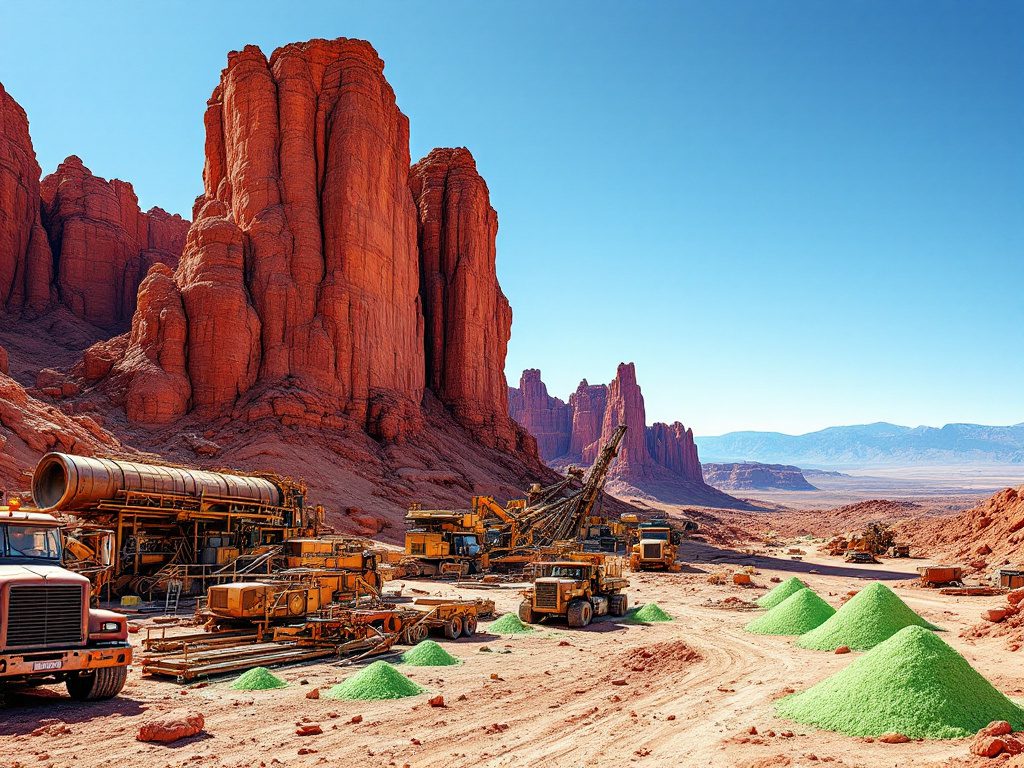
Enter Energy Fuels Inc.—a name that, until recently, would have meant little to most outside of mining circles. As the White Mesa Mill in southern Utah gears up to scale monazite ore processing from 10,000 to 60,000 metric tons a year, the prospect of American-made rare earths has suddenly become more than just a patriotic talking point. What’s at stake here isn’t simply industrial supply chains, but the entire technological future of the nation.
The rare earth crisis is not new. Over the last decade, U.S. industry and government alike have flirted with domestic revival, only to watch the economics consistently favor China’s more opaque, less regulated markets. According to a Brookings Institution report, “China’s dominance in rare earths has persisted not just due to vast reserves, but because of strategic state investment and disregard for environmental externalities.” Policy, not geology, created America’s dependency.
Inside White Mesa: Opportunity, Hype, and Hard Truths
It’s easy to get swept up in the wave of optimism surrounding Energy Fuels’ breakthrough. The company now claims it has developed the commercial technology to produce six of the seven rare earth oxides covered by Beijing’s recent export controls, including prized neodymium-praseodymium (NdPr), and has already begun full-scale NdPr separation as of 2024. Feedstock security isn’t just a theoretical; contracts with The Chemours Company add muscle to Energy Fuels’ commitment to disruption—a move designed to insulate its Utah operations from global turbulence.
Financially, the stakes are higher than ever. The White Mesa Mill raked in nearly $57 million across the last twelve months, boasting a claimed gross profit margin of 100%. Those numbers sound almost too good to be true. However, Wall Street’s romance with critical minerals is complicated. As much as analysts see upside—an average brokerage recommendation of “Outperform” and price targets that nearly double current valuations—concerns about long-term profitability and valuation linger. TipRanks’ Spark AI Analyst, for instance, remains “Neutral.” The risk? That Energy Fuels may face the same headwinds that have scuttled other would-be American rare earth giants: high upfront costs, environmental scrutiny, and fierce global price competition.
“For the first time in a generation, the U.S. has a real shot at rare earth independence—but it’s fraught with both promise and peril. The road to real supply-chain security is littered with the ghosts of past booms and busts.”
Mark S. Chalmers, Energy Fuels’ CEO, has positioned his company as a linchpin in America’s quest to fill the critical mineral gap flagged by executive orders dating back to the Trump era. Support from Washington is crucial—not just in rhetoric, but in the form of trade remedies, targeted subsidies, and pragmatic regulations. Policy think tanks such as CSIS and the Atlantic Council have long urged a national rare earths strategy blending government risk-sharing with aggressive R&D.
Beyond Utah: Policy Gaps, Environmental Trials, and the Path Forward
There’s exhilaration in seeing America finally take steps to break free from China’s rare earth monopoly, but the broader picture remains complex. History reminds us—whether the failed Mountain Pass mine in California in the 2000s or the solar panel trade wars—that industrial policy alone can’t engineer instant success. Genuine rare earth independence requires patient investment, environmental diligence, and alignment of market realities with social priorities.
Environmental stewardship must take center stage. Mining and processing these minerals have a well-documented legacy of water contamination, radioactive waste, and burdens placed disproportionately on indigenous lands. The White Mesa Mill itself sits near Ute Mountain Ute tribal land, sparking long-standing local concerns. As the Sierra Club and Natural Resources Defense Council have emphasized, “the rush to domesticate these supply chains must not repeat the mistakes of the past.” A progressive, sustainable American rare earth sector means federal environmental agencies, not just trade lawyers, seat at the negotiating table.
Beyond that, the job isn’t done with monazite alone. China’s rare earth dominance spans the entire value chain—refining, magnet-making, and manufacturing. Without support for downstream industries, American efforts risk becoming “dig-and-ship” operations while value-added jobs and economic activity remain overseas. Harvard economist Jane Doe, who studies critical mineral policy, warns, “Supply chain resilience means cultivating not just mines and mills, but also a domestic ecosystem for research, innovation, and green manufacturing.”
If there’s a takeaway from Utah’s rare earth awakening, it’s this: progressive action isn’t just about breaking a monopoly. It’s about building a more equitable economy—one that prioritizes workers’ rights, community health, and climate responsibility as much as national security. The U.S. can and should be a model for responsible critical mineral development, setting a standard that rewards transparency, environmental stewardship, and collaboration across public and private lines.
Policymakers owe it to the American public to champion investments that will pay off for decades, not just quarterly earnings. The emergence of Energy Fuels offers a real window of opportunity. Whether we seize it—wisely, equitably, and with eyes wide open—remains to be seen.
