
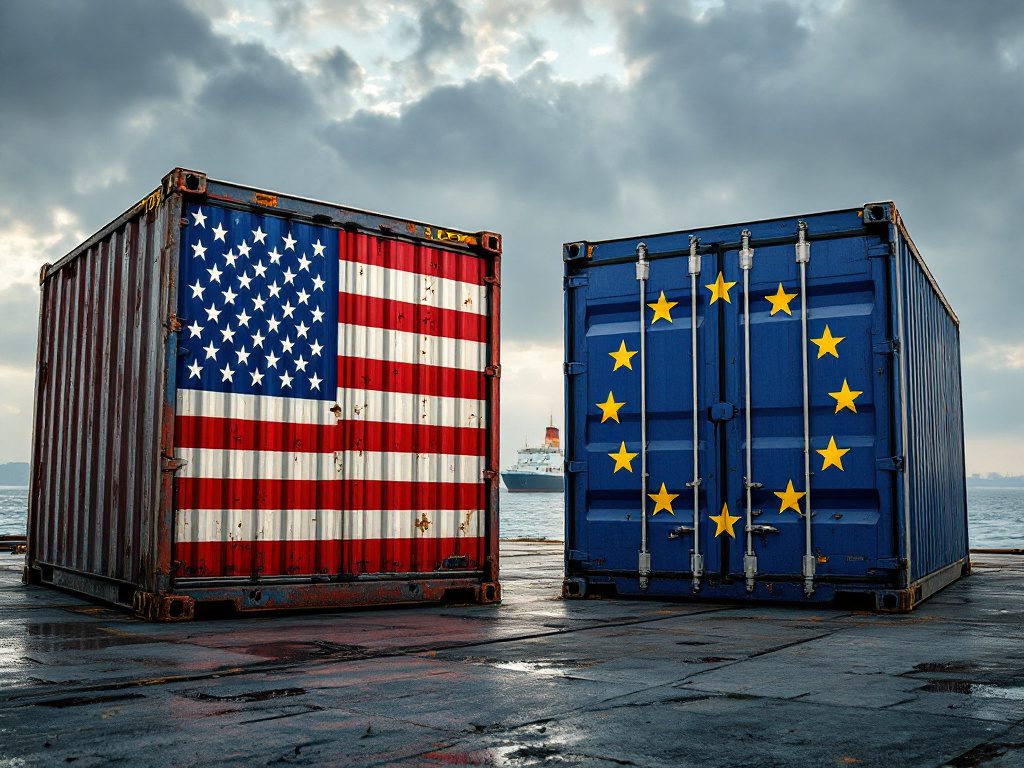
The False Promise of Tariff Wars
World leaders like to talk tough on trade, promising their citizens prosperity while wielding tariffs as weapons. But history, and increasingly outspoken experts, warn us that trade wars rarely produce winners—and the latest rebuke from a senior European Central Bank (ECB) official adds weighty evidence to that reality.
Earlier this week in New York, Francois Villeroy de Galhau, one of the ECB’s most respected voices, delivered a pointed critique of former President Donald Trump’s trade approach. Labeling it a “lose-lose game,” Villeroy didn’t mince words: Escalating tariffs, he argued, don’t simply punish adversaries but undermine economic growth on all sides, including in the United States itself.
The timing of Villeroy’s comments could not have been more pertinent. The International Monetary Fund’s most recent global forecast projects a sobering 2.8% growth rate for the year, down from earlier predictions. According to IMF chief economist Pierre-Olivier Gourinchas, much of this slowdown traces to policy uncertainty—including threats of new tariffs and retaliatory measures. As Villeroy urged, “de-escalation” is no longer an option; it’s a necessity to restore economic stability and trust between nations.
Why is this message so crucial? Because the Trump administration’s tariffs—especially those directed at China and the European Union—haven’t simply created headlines. They’ve fostered a climate where businesses become hesitant to invest, global supply chains falter, and consumers pay higher prices. As Harvard economist Dani Rodrik notes, “Trade restrictions ricochet through economies, rarely yielding the simple gains politicians promise.”
Attacking Institutions: Undermining Stability at Home and Abroad
Peeling back the layers of Villeroy’s critique reveals a deeper warning about the long-term health of economic institutions. Central bank independence sits at the heart of stable financial systems. Yet, President Trump’s repeated attacks—publicly lambasting Federal Reserve Chair Jerome Powell, even threatening to fire him—sent alarming signals to markets and allies alike.
Villeroy’s caution resonates with policy veterans. “Frequent, unpredictable interference in monetary policy destabilizes not just markets but the very trust investors place in a country’s economic system,” observes former U.S. Treasury Secretary Robert Rubin. Indeed, the mere hint that the Fed Chair could be dismissed for not aligning with a president’s whims sowed global anxiety. Why would foreign investors park money in U.S. bonds when the rules can change with a tweet?
Beyond that, Villeroy didn’t just stop with monetary policy. He amplified the urgent need to safeguard international pillars like the IMF and World Bank. With crises mounting—from supply chain breakdowns to climate-driven disruptions—these institutions act as economic shock absorbers. “Preserving multilateral frameworks isn’t nostalgia for a bygone era—it’s a pragmatic defense against chaos,” says Georgetown international relations scholar Rosa Brooks.
“Trade wars depress investment and growth, and risk eroding the sense of international partnership the world relies on for recovery. Every step toward escalation undermines the gains of past decades.”
A Path Forward: De-escalation, Dialogue, and Multilateralism
The question, then, is not just how to recover from the past but how to build resilience for the future. Villeroy offered a vision grounded in facts and shared interests—one starkly at odds with the zero-sum rhetoric echoing in some political circles. He reminded the audience that the European Union arose “after World War II with deep American support,” a living testament to multilateralism ‘at its best.’ To claim, as Trump did, that the EU was designed to exploit the U.S. is to rewrite history—and to risk the fracturing of alliances forged in blood and hope.
ECB President Christine Lagarde, speaking earlier that day, pressed EU nations to tear down their own internal barriers and strengthen cooperation. Her logic was clear: Collective action makes the whole stronger, especially when buffeted by external shocks. A similar principle should guide transatlantic relations, where honest dialogue—not bluster or punitive tariffs—stands as the best strategy for long-term prosperity. Even Trump, sensing political backlash and economic pain, was reported to be reconsidering his harshest measures, walking back certain tariffs, and declaring he had “no intention” of removing Jerome Powell as Fed Chair.
A closer look reveals that de-escalation isn’t a capitulation, but a recalibration—a recognition that interconnected economies rise and fall together. Consider the cautionary tale of the 1930 Smoot-Hawley Tariff Act, which deepened the Great Depression and spread misery worldwide. History, if anyone cares to read it, is clear: unilateral protectionism rarely benefits the many.
Where do we go from here? It begins with honest acknowledgment of economic realities, respect for expert institutions, and a renewed faith in the possibility of collective progress. As Villeroy and Lagarde highlight, the alternative—a turn toward isolation and antagonism—holds little promise except for deepening the woes we already face.
The lesson could not be more urgent or more clear: In an era of global risks, from pandemics to climate catastrophe, turning inward is a recipe for vulnerability, not strength. Leaders everywhere should heed the message from the ECB and other world institutions: it’s time to stop the lose-lose games and play for the future we all share.
