
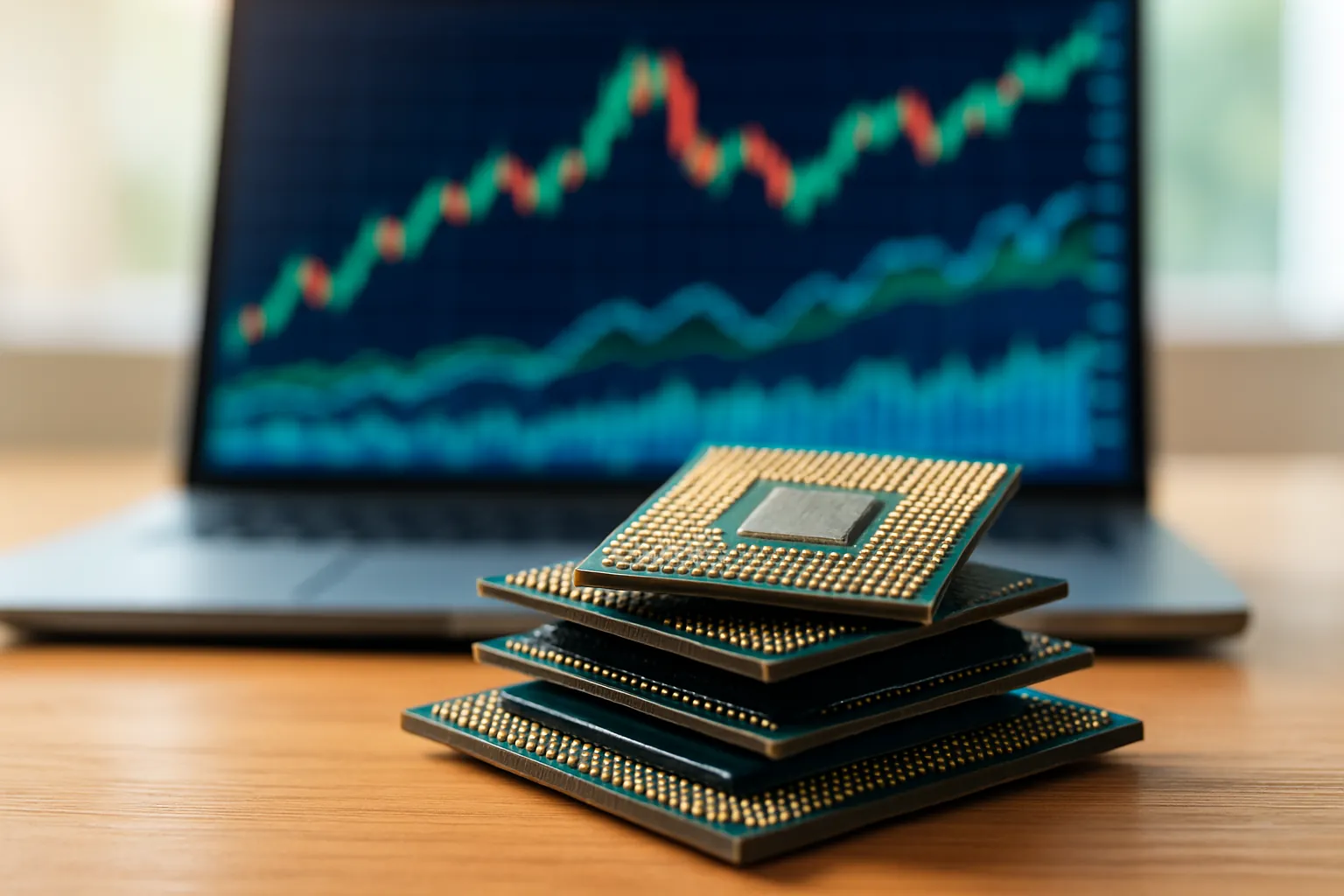
Tariff Truce Ignites a Market Rally
Wall Street awoke to roaring applause on Monday as the United States and China announced a breakthrough: a 90-day suspension on most retaliatory tariffs embroiling their economies. The timing and magnitude of this truce stunned both investors and policy observers, sending the Dow Jones Industrial Average up over 900 points—and the Nasdaq and S&P 500 to their best one-day performance in months. Tech giants like Amazon and Apple saw their battered shares catapult upwards, each delivering gains many analysts had not dared dream of just days earlier.
It wasn’t just the household names. Marvell Technology climbed 6.4%. Micron Technology and Super Micro Computer rallied nearly 8%, underscoring broad-based enthusiasm coursing through the chip sector. The global market rejoiced: Taiwan Semiconductor Manufacturing and ASML—key players in semiconductor supply chains—surged on European exchanges, feeding an unmistakable sense of relief among tech investors worldwide.
This dramatic rebound, after months of anxiety over trade policy, isn’t just about profits or quarterly reports. Ultimately, it’s a story about the fragility—and the promise—of a world knitted together by technology and trade. According to Harvard economist Laura Tyson, “Market confidence is a leading indicator of economic optimism—but policymakers cannot afford to squander this trust with stop-and-go brinkmanship.”
Semiconductors: Bellwether and Battleground
Why did this partial rollback of tariffs send such a powerful jolt through the tech sector? The answer lies in the nature of the global semiconductor supply chain. With US tariffs on Chinese imports dropping from a jaw-dropping 145% to 30%, and China’s duties on American goods falling from 125% to just 10%, the cost calculus for companies like Nvidia, AMD, and Intel changed overnight. Nowhere is the interdependence clearer than in the chip business, which touches everything from cars and medical devices to cell phones and cloud computing infrastructure.
During the trade war’s fever pitch, manufacturers scrambled to reroute supply lines and reconsider investments, compounding pandemic-driven shortages. The latest thaw offers short-term relief and renewed clarity for long-term planning. Intel CEO Pat Gelsinger put it plainly: “Stable and open supply chains are the lifeblood of innovation in our sector. Disruption harms not just business, but technological progress.”
Tech stocks have long been a barometer for investor optimism, but their sensitivity to macroeconomic shocks also reveals deeper vulnerabilities. The chip sector’s surge isn’t merely speculative; it’s a broad-based vote of confidence in globalized commerce, the rules-based international order, and the political will to avoid mutually assured economic destruction. Market data from FactSet shows semiconductor indices outpacing the broader S&P 500 by more than twofold on the day of the announcement.
“This deal signals the first genuine break in a spiral of escalation. Global supply chains—and the workers and communities they support—desperately needed some breathing room.”
— Mark Zandi, Moody’s Analytics Chief Economist
Is the rally sustainable? History offers a mixed verdict. After the volatile 2018 tariff skirmishes, short-term rebounds frequently gave way to further turbulence. However, this agreement’s robust joint statement referencing “the importance of bilateral trade to global stability”—language absent from previous armistices—signals a potentially more durable intent. Analysts at Morgan Stanley, in a note to clients, described this as “the most constructive language from both capitals in over two years.”
What Lies Ahead: Fragile Progress or False Dawn?
Investor giddiness is understandable but not without cause for caution. Conservative approaches to trade—championing isolation over integration—have repeatedly shown themselves to be counterproductive. Over the last six years, erratic tariff diplomacy has ricocheted across the global economy, battering industries, consumers, and even national security interests. The recent pause, while welcome, is not a panacea and risks unraveling without vigilant, good-faith negotiation.
The impact of low tariffs extends well beyond the bottom lines of Silicon Valley and Wall Street. A more predictable trading environment translates to lower consumer prices, secure jobs, and the resources necessary for long-term investments in green energy and next-generation technologies. According to a 2023 Pew Research study, more than 60% of Americans support engagement with China despite national security concerns, understanding that cooperation on trade can coexist with strategic competition.
Contrast this with the illusory simplicity of the “America First” mantra, which promised resilience but delivered price hikes and uncertainty. The last tariff escalation cost American households an average of $800 per year, according to the nonpartisan Congressional Budget Office. The liberal promise, by contrast, is a community of nations working collaboratively—accepting that economic security is global security, and that short-term wins must not imperil long-term planetary or human well-being.
A closer look reveals underlying vulnerabilities: the “de minimis” import exemption, a key provision for small businesses, remains untouched. Issues like intellectual property theft and state subsidies in China linger unresolved. But this deal, for all its gaps, marks a pivotal first step. As journalist Fareed Zakaria argued recently, “We can only address our deepest anxieties—wages, technology, climate, and more—by repairing and revitalizing multilateral engagement, not by retreating behind walls.”
As daylight returned to trading floors from New York to Shanghai, the verdict was clear: risk appetite is back. Investors may be celebrating today, but the real work—institutionalizing this detente and confronting the systemic challenges of tomorrow—has only begun. Whether this truce marks the start of a new era or a fleeting respite will depend on the choices made in the months ahead. For all who believe in prosperity through interconnection, the stakes could not be higher.
