
American Ambition Meets the Chips Race
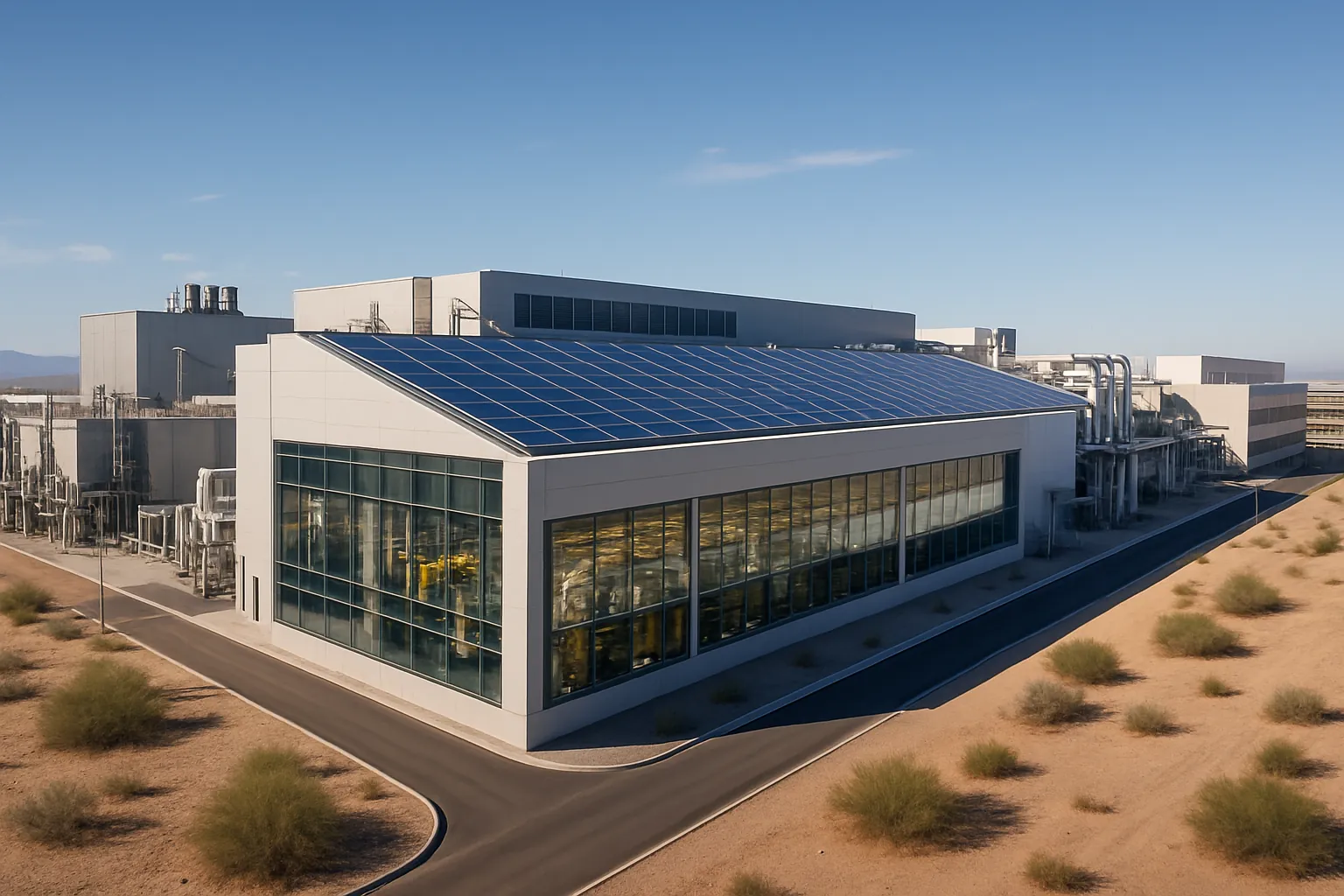
It’s not often the heart of the global tech industry throbs in the Arizona desert. Yet, as cranes swing above a sprawling compound outside Phoenix, the world’s most valuable chipmaker, Taiwan Semiconductor Manufacturing Company (TSMC), is rewriting the narrative on American innovation and industrial policy. The stakes couldn’t be higher: the fragile global supply of advanced chips—the hidden engines powering everything from iPhones to fighter jets—is now at the epicenter of economic policy, national security, and the race for technological supremacy. This is more than factory construction; it’s a high-stakes gamble with international repercussions.
Since the launch of TSMC’s first Arizona fab in 2024, which began shipping 4nm chips to clients like Apple, NVIDIA, and AMD, the ambitions surrounding U.S. semiconductor production have only intensified. A second Arizona facility, known as “P2,” kicked off construction earlier this year with a compressed, two-year buildout timeline. The goal? To begin installing advanced 3nm equipment by September 2026—an unprecedented sprint reflecting mounting pressure from Washington and Wall Street alike.
This acceleration isn’t happening in a vacuum. According to Boston Consulting Group, global chip demand is set to double by 2030, with artificial intelligence and electric vehicles forcing supply chains to their limits. U.S.-based production is seen as a linchpin for reducing dependency on Asian suppliers—especially as tensions simmer in the Taiwan Strait. Harvard economist Dani Rodrik warns, “Strategic industries like semiconductors are now battlegrounds of national rivalry, not just business competition.” The TSMC Arizona gamble understands this new reality all too well.
Big Tech, Big Money, and Big Promises
A closer look reveals why TSMC’s Arizona expansion is triggering such seismic ripples. The company’s $165 billion commitment isn’t just a line item—it’s a generational investment, propelled in part by the “Made in USA” narrative promoted under former President Trump and now deeply intertwined with America’s renewed industrial strategy. The Biden administration’s CHIPS Act, and generous state tax incentives, have fueled a bipartisan arms race to claim a piece of the semiconductor future.
Yet, the true engine driving this acceleration is the insatiable appetite from Big Tech. “The demand from U.S. hyperscalers for the latest process nodes has never been higher,” says semiconductor analyst Stacy Rasgon at Bernstein Research. Apple, NVIDIA, and AMD are clamoring for more locally made chips, hoping to insulate themselves from global shocks like the 2020 supply crunch that froze automotive and electronics production worldwide.
Of course, rapid expansion comes with sticker shock. TSMC is already warning customers of a looming 3–5% wafer price hike in 2026, citing ballooning construction costs, labor shortages, and supply chain headaches. Price increases at the American fabs could top 10%, a clear sign of the premium attached to U.S. self-sufficiency.
“No one quite appreciates how much American-made chips will cost when all’s said and done. But the real price of bringing leading-edge fabs stateside may be measured in strategic insurance—not in dollars,” affirms Arizona State University supply chain specialist Dr. Lauren Zuber.
Beyond that, the ecosystem effects can’t be ignored. Taiwanese engineering heavyweights like Han Tang and Fanxuan, pivotal to phase one, are now doubling down in Arizona, bringing their expertise—and reaping the rewards. American suppliers of specialty chemicals and gases, such as Shangpin and Shengyi, are scaling up to support what’s quickly becoming a southwest semiconductor boomtown.
Beneath the Hype: Is This Enough?
For all the breathless announcements, there’s no quick fix to America’s chip deficit. Only segments of TSMC’s Arizona megasite will be running before 2029—highlighting a gradual, phased approach and reinforcing the region’s long learning curve. Advanced packaging, a crucial step for bleeding-edge chips (including the much-vaunted Chip-on-Wafer-on-Substrate process), will remain in Taiwan for now, with no U.S. facility opening before late 2026 at the earliest.
Critically, the Arizona experiment is not without risks. Some strategists—like former Obama NSC official Mira Rapp-Hooper—point out that as the U.S. localizes part of its chip needs, it could inadvertently weaken the so-called “silicon shield,” a strategic buffer that has deterred aggression across the Taiwan Strait for decades. If the West no longer relies on Taiwan’s fabs, does that embolden Beijing? Historians recall how the hunt for strategic resources has shaped global power struggles, from Middle Eastern oil in the 20th century to today’s chips—fuel for the digital age.
This effort reflects a defining moment for American industrial policy: will it solidify domestic resilience, or introduce fresh vulnerabilities? For working Americans, there are also larger questions about good jobs and equitable growth. Major investments can spur thousands of high-tech and construction jobs, but critics point to lingering inequalities, union-busting practices, and the persistent lack of diversity in STEM fields. As the stakes rise,
so does scrutiny of what “Made in America” really delivers—not just for Wall Street, but for workers and communities.
Yet, the alternative—continued reliance on fragile offshore supply chains—offers little comfort. Supply chain disruptions during the pandemic exposed exactly how brittle the status quo had become. The accelerating TSMC buildout in Arizona marks a determined effort to learn from the past—and, perhaps, to forge a more secure and equitable future.
