
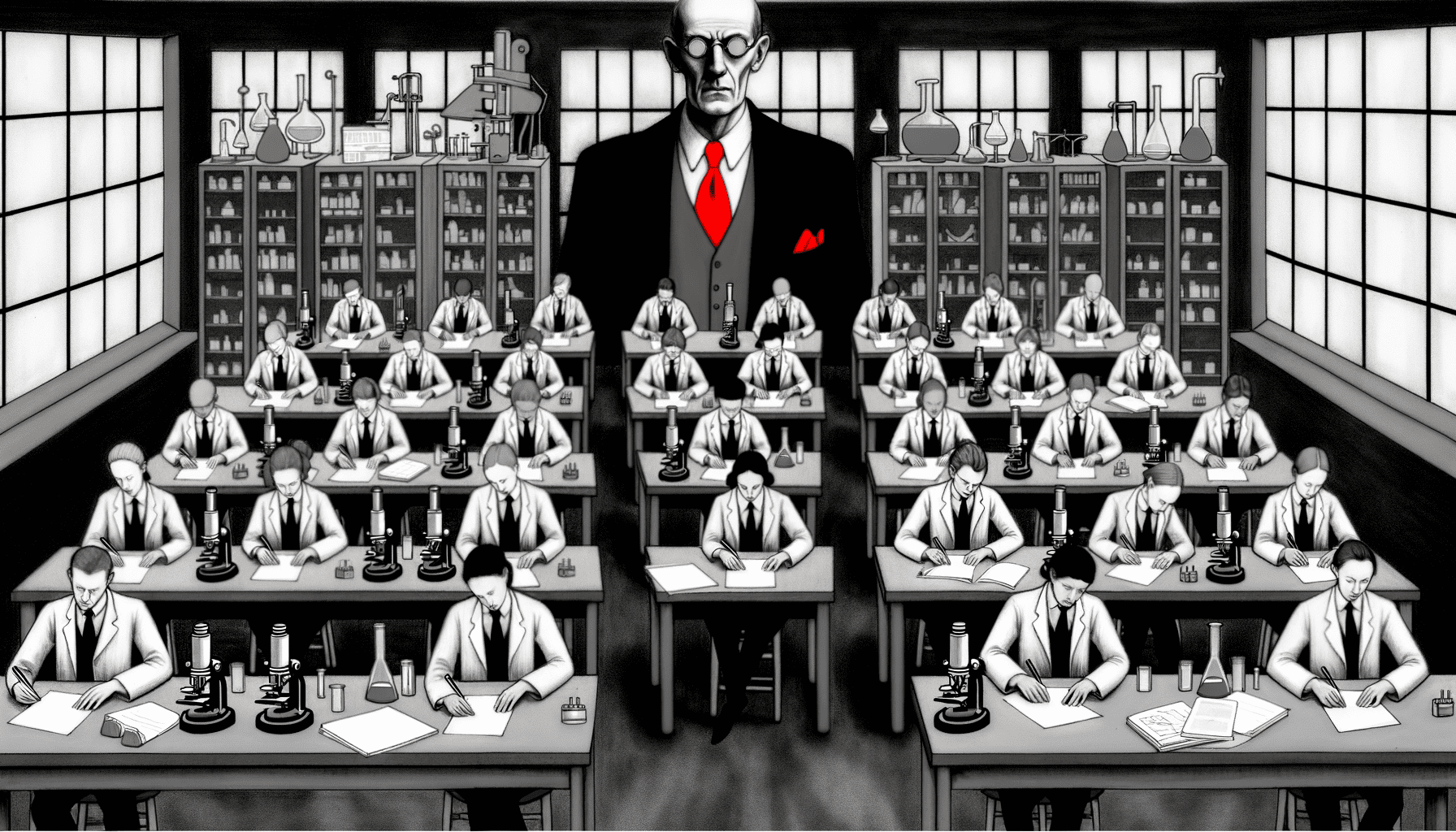
The Assault on Science: Institution and Individual Repercussions
In an alarming strategy reminiscent of authoritarian regimes, the Trump administration has dramatically reshaped the landscape of American scientific research and academia since taking office. Systematic reductions in science funding and deliberate purging of critical voices have sent shockwaves through the scientific community.
Michael Lubell, a physicist from the City College of New York, voiced his grave concern about the situation, stating, “I’ve never seen anything even remotely similar to what’s going on. The science community is in a state of shock.” Indeed, Trump’s measures have been shockingly decisive. The National Institutes of Health (NIH), a cornerstone of American innovation and medical progress, has faced an extensive funding freeze alongside severe reductions in overhead payments from around 40% to a mere 15%. These cuts endanger vital research initiatives that combat diseases, advance medical treatments, and contribute significantly to global health.
Meanwhile, NASA—a beacon of America’s innovation and ambition—plans to shutter significant components of its structure, including its office dedicated to technology, policy, and strategies, along with its chief-scientist position and diversity offices. These closures sharply reflect the administration’s troubling trend towards silencing advocacy on diversity, equity, and inclusion (DEI), crucial lenses through which many contemporary scientific challenges should be viewed.
A Generation at Stake: The Loss of Young Talent
Perhaps most concerning is the termination of the Presidential Management Fellows program—established in 1978 explicitly to attract and retain bright minds within the federal workforce. Its discontinuation not only undermines decades of bipartisan effort to foster public sector leadership but poses a real threat to retaining the talented professionals critical to effective governance. Experts warn of an impending “brain drain”, a massive loss of intellectual capital that threatens to severely handicap American governance and innovation.
The abrupt termination of hundreds of young fellows and their placement on indefinite administrative leave conveys a dire message about the country’s dwindling appreciation for academic merit and public service. Historically viewed as an esteemed and competitive entry point into federal work, the abandonment of this program sends a powerful—and troubling—message about what the administration chooses to value.
“The elimination of the Presidential Management Fellows program is more than just a cut—it’s a loss to America’s future leadership,” argues policy analyst Elena Vargas. “We’ve handed a win to foreign competitors who invest in their young talent while we push ours away.”
The Authoritarian Playbook: Controlling Ideology Through Science
Historically, authoritarian regimes have targeted educational and scientific institutions, perceiving them as incubators of dissent and free thought. From Mao’s Cultural Revolution in China to Soviet crackdowns during the Cold War, control over academic discourse and scientific advancement has been a key mechanism to consolidate power. Trump’s regime alarmingly mirrors these tactics, deliberately disrupting research aligned with diversity, equity, inclusion, climate science, and gender studies—topics often unsettling to conservative dogma.
The Department of Government Efficiency (DOGE), under Trump ally Elon Musk, notoriously saw the release of over 300 employees from the National Nuclear Safety Administration, ironically compromising national security. Only after considerable backlash and judicial intervention were key positions reinstated. This mismanagement not only endangers immediate security but undermines the credibility and effectiveness of organizations responsible for fundamental national safeguards.
Moreover, the systematic removal of climate change references from government websites and decisive cuts to the National Science Foundation’s workforce underscore the ideological motivations underlying this administration’s actions. Such censorship goes beyond undermining current science efforts—it directly inhibits public education and accountability, effectively keeping Americans less aware and less prepared to address significant existential threats like climate change.
Looking Ahead: The Imperative of Science Advocacy
This dire scenario calls for vigorous advocacy for science and reason by citizens, scientists, and lawmakers alike. Science is inherently progressive, demanding an open dialogue, diverse representation, and unhampered financial and intellectual investment to thrive. It is telling—and troubling—that contemporary conservative politics views these values as threats rather than assets.
We must collectively challenge these regressive policies, assert the value of diversity and equitable inclusion in scientific fields, and demand transparency and accountability from the government. Fostering respect and support for educated and informed dialogue is not merely beneficial—it is foundational to the continued advancement of our democracy and the true protection and empowerment of the American public.
American democracy and global leadership owe much of their strength and vibrancy to the courage and commitment of its science community, whose past innovations and future potentials hinge upon maintaining a climate of openness, tolerance, and unfettered inquiry. The Trump administration’s ongoing assault underscores the critical importance of renewed commitment to protecting and promoting science’s role in society. Unless we unite vocally in support of scientific integrity and academic freedom, we risk all the progress and security that American innovation has historically afforded us.
