
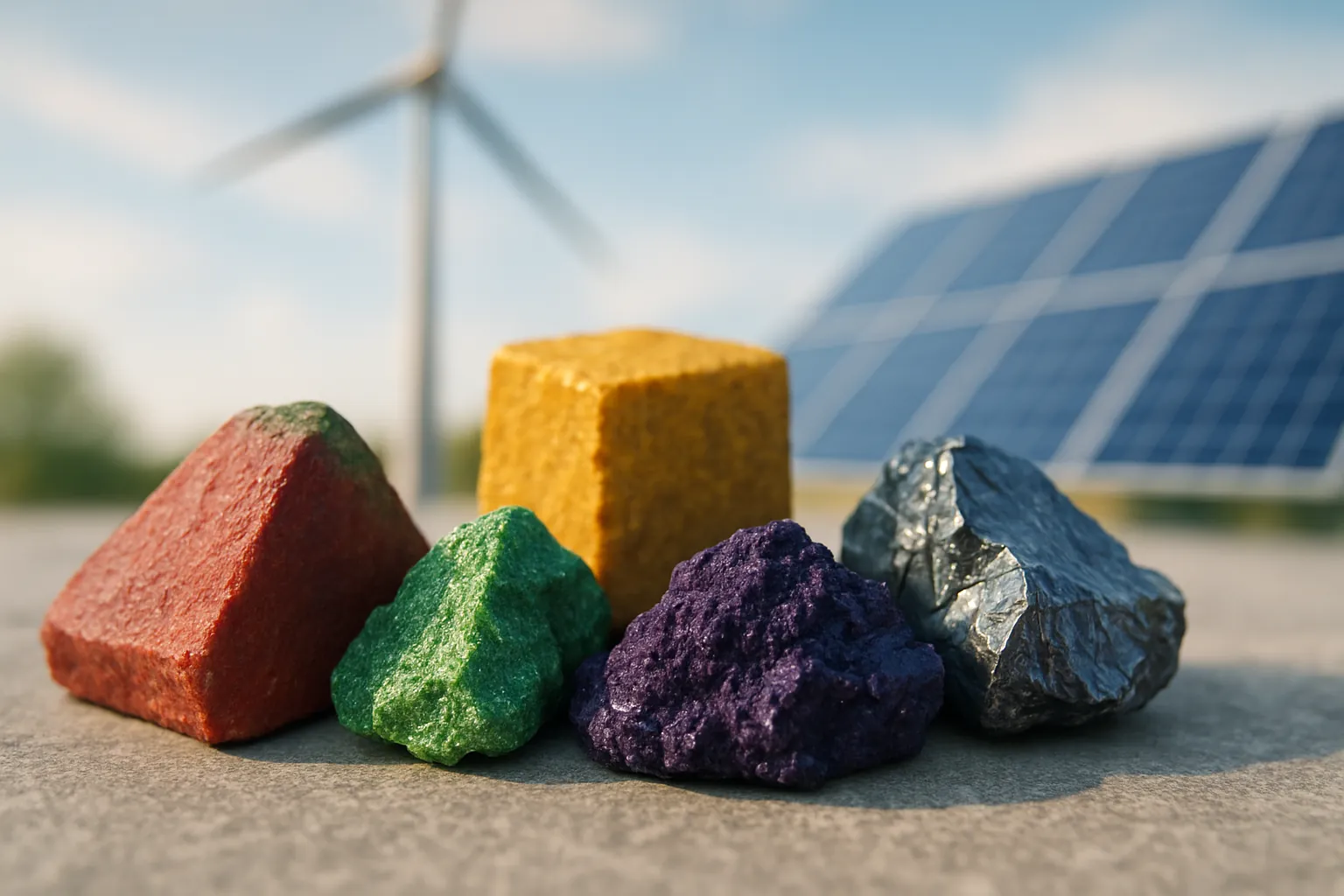
The Geopolitics Behind a 660% Export Spike
It doesn’t often make the front page when a shipment of industrial magnets doubles or triples in volume—but for those closely watching the clean energy race, China’s rare earth magnet exports to the United States this June signaled a seismic shift. In a single month, exports soared by an astonishing 660%, rebounding from a near standstill imposed by tit-for-tat tariffs and new export restrictions. The surge, totaling 353 metric tons, arrived in the wake of a hastily brokered Sino-U.S. trade agreement that offered a lifeline to U.S. automakers and energy companies starved for these critical building blocks of electric vehicles, wind turbines, and advanced electronics.
Why should you care about the flow of obscure-sounding minerals like dysprosium and terbium? These are not just industrial ingredients—they are linchpins in America’s clean tech dreams and even its military security. After China struck back against Western tariffs with new curbs in April 2025, rare earth magnet exports to the U.S. dropped a staggering 93% compared to the previous year. Assembly lines ground to a halt: Ford mothballed EV lines, defense contractors scrambled to find foreign alternatives for advanced sonar and radar systems, and grid-scale wind projects stalled, all for want of a tiny but irreplaceable part.
Beyond that, the political undertones are impossible to miss. China today processes around 80% of the world’s rare earth minerals and manufactures about 90% of its rare earth magnets, granting Beijing unrivaled leverage—an uncomfortable truth for democracies hoping to lead the next industrial revolution. As Harvard’s Megan O’Sullivan notes, “The world went to sleep thinking oil was the critical energy resource. It woke up to discover it was rare earths.”
Supply Chains on the Brink—and the Wake-Up Call We Needed
A closer look reveals the cost of overreliance and complacency. Years of twin priorities—relentless cost-cutting and environmental outsourcing—lured Western firms to China’s upstream supply chains. It seemed logical: China offered skilled processing, scale, and lax environmental enforcement that U.S. and European sites could no longer match after Superfund-style cleanups shuttered domestic mining operations decades ago. An unfortunate byproduct of this offshoring? The U.S. now sits at the mercy of Beijing’s strategic calculus.
April and May’s restrictions didn’t just create a temporary shipping headache. They exposed the fundamental vulnerabilities in how the U.S. sources materials for green infrastructure, advanced manufacturing, and national defense. According to the Department of Energy, nearly every major EV motor and wind turbine relies upon Chinese-made rare earth magnets; alternatives, either from Vietnam or recycled stocks, remain years behind in capacity and cost.
Trade negotiations in June restored some vital flow, but the apparent recovery was more mirage than real progress. While the 660% month-on-month rebound was dramatic, export volumes remained 38% lower than the previous year and 18.9% down for 2025’s first half in total. Even with recent concessions, such as Nvidia’s H20 AI chips returning to Chinese markets as part of the broader deal, the underlying dynamic hasn’t fundamentally changed. One Chinese policy reversal, one diplomatic spat, and America’s clean energy engine grinds to a halt yet again.
“For all the talk of decoupling, the last few months show how deeply U.S. ambitions—whether for a greener grid or next-generation vehicles—remain tethered to the world’s authoritarian monopolist in critical minerals.”
Policymakers in Washington finally seem to be awakening to the stakes. The Critical Minerals Action Plan, adopted at the recent G7 summit, aims to coordinate investments in refining capacity, recycled materials, and downstream manufacturing. The EU’s Critical Raw Materials Act follows a similar logic, with a goal to derive 40% of strategic minerals from inside Europe by 2030. Yet, progress is undeniably slow, encumbered by permitting delays, environmental opposition, and the sheer complexity of recreating entire industrial sectors from scratch.
Building Resiliency: Lessons, Challenges, and a New Path Forward
The latest trade truce is no victory lap. It’s a red flashing light: the world’s two largest economies remain locked in a tug-of-war over the foundational inputs of tomorrow’s technologies. End-user documentation requirements, unpredictable licensing regimes, and constant uncertainty signal a “new normal” for rare earth supply chains, where volatility is the only constant. Analysts, including S&P Global’s Anna Shpitsberg, warn that unless the U.S. dramatically ramps up domestic extraction and materials science innovation, strategic dependence will worsen. “We’re still only at the beginning of what will be a years-long transition,” Shpitsberg told Bloomberg in July.
Yet, there are hopeful signs. Federal projects to reopen or modernize mines in California and Texas, new recycling startups in the Midwest, and alliances with trusted international partners are beginning to chip away at the monopoly. The Biden administration has earmarked billions for supply chain resilience, yet the time frame for meaningful independence stretches into the next decade. Community engagement, environmental protections, and labor standards must guide this process, ensuring that American-made clean tech doesn’t come at unjust social or ecological cost—a lesson the last century failed to heed.
So what does this moment demand from leadership? Not panic, but determined resolve. Fair trade frameworks, collaborative R&D with allies, and robust investment in education for the next generation of material scientists can transform vulnerability into strength. History shows the U.S. can turn industrial crises into catalysts for reform—remember how Sputnik galvanized the Space Race, or the 1970s oil shock birthed the modern environmental movement.
What’s clear is that a more just, equitable, and sustainable clean energy future will not be won by rolling the dice on the lowest-cost supplier or chasing short-term political points. As a nation, we must recognize that energy security—and by extension, national security—now hinges on championing diversity of supply, social justice, and environmental responsibility across the clean tech sector. Only by doing so can we ensure the transition is not just fast, but fair, resilient, and truly global in its benefits.
