
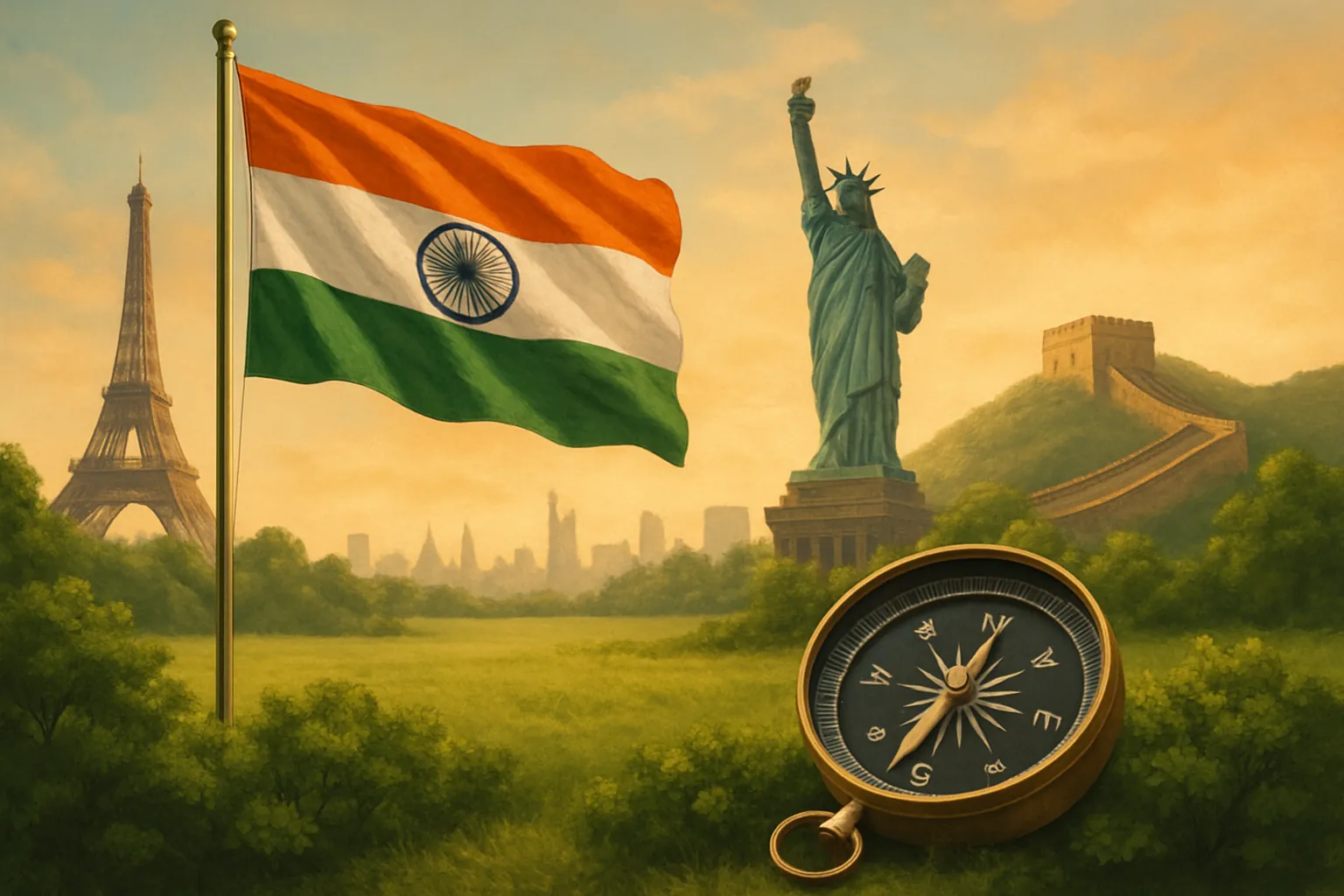
The Fragile Foundations of Global Autonomy
Anxiety stalks the halls of global finance and diplomacy, not from a distant warzone, but from the U.S. political arena. Days after news broke that former President Donald Trump weighed firing Federal Reserve Chair Jerome Powell, Asian markets braced for the kind of fallout that makes the 2008 financial crisis look like a minor stumble. Expert warnings about the consequences were stark: according to Deutsche Bank’s George Saravelos, the U.S. dollar could plunge by 3-4% within a single day, sent spinning by a rupture in the customary independence of America’s central bank. Such a move would shake global confidence, rattle Asian markets, and reinforce the message that even long-held democratic guardrails are vulnerable to political expediency.
This isn’t merely an American story. Across the Indo-Pacific, where currencies and commodities follow the beat of the Federal Reserve, the specter of an embattled Fed chair reverberates far beyond Wall Street. As JPMorgan Chase CEO Jamie Dimon warned, the cascading effects—spiking interest rates, credit contraction, and investor panic—would not confine themselves neatly within U.S. borders. Asian and emerging economies would be forced to absorb shocks over which they have no control, laying bare the region’s entwined fate with the American behemoth. Such episodes starkly illuminate the challenge nations face in preserving meaningful autonomy in a multipolar, yet deeply interconnected, world.
India’s Quest for Strategic Autonomy: Posture and Paradox
Few countries vocalize aspirations for strategic self-determination as openly as India. As George Yeo, Singapore’s former Foreign Affairs Minister, observed, New Delhi’s current mantra is decisively nationalistic—charting its own course, shunning formal alliances, and talking up leadership of the Global South. Yet, as is so often the case in international affairs, the reality rarely matches the rhetoric.
On the surface, India’s willingness to co-lead the United States in launching the Autonomous Systems Industry Alliance (ASIA) is the latest sign that its aspirations are not just words. The co-development of advanced maritime drones and AI-enabled counter-drone technology between U.S. defense giants like Anduril and Indian conglomerates signals India’s ambitions to be a key shaper—rather than a subject—of Indo-Pacific security. Such partnerships are pitched as efforts to forge a “democratic standard for trusted autonomy,” securing regional order and resilience in the face of growing authoritarian assertiveness.
But look closer, and caution emerges. Expert analysis, like that from the Carnegie Endowment’s Ashley J. Tellis, points to real obstacles. ASIA “lacks a clear structure, timelines, and testing frameworks”—raising the potential for yet another ambitious U.S.-India memorandum that stirs headlines but stalls in implementation. Defense strategists warn that unless these projects scale beyond symbolic collaborations, India risks being a participant but not a real driver of technological autonomy.
“India’s great-power delusions stem from its wish to hedge all bets, dreaming of both strategic partnership and true independence. In trying to be everywhere, it often lands nowhere.”
The problem isn’t just technical. India’s posture on the world stage is riddled with contradictions. Under Prime Minister Narendra Modi and External Affairs Minister S Jaishankar, India has talked a good game about solidarity with the Global South. Yet when international justice calls—whether by supporting Palestinian self-determination or upholding Tibetan cultural rights—New Delhi is selective or silent. Abstaining from the U.N.’s recent Gaza ceasefire vote, while continuing arms deals with Israel, betrays a gap between public advocacy and policy reality.
“India’s foreign policy often chooses the path of least resistance,” Georgetown University’s C. Raja Mohan notes, “It courts Washington, preserves ties with Moscow, and carefully avoids offending Beijing—hardly the stuff of principled leadership.”
Great Power Dreams and Global South Responsibilities
How can a nation assert moral and strategic autonomy if it refuses to risk discomfort? India faces mounting doubts about whether it truly champions the collective good or merely calibrates self-interest. Its hesitance to challenge powerful friends—the United States on Russia sanctions, or Israel over Gaza—has frequently been justified as “strategic autonomy.” Yet, autonomy that avoids responsibility is little more than isolationism in disguise.
There’s an inconvenient historical parallel on display. The United States, during the height of its Cold War ascendancy, used its economic and military might to impose order but rarely delivered justice for marginalized nations. India today echoes that duality: boasting solidarity with formerly colonized peoples while, in practice, declining to take stands that might disrupt trade or diplomatic ties. For progressive observers dedicated to global justice, this duplicity is hard to ignore.
Beyond that, India’s rise is not without formidable roadblocks. Economic and strategic analysts, from Harvard’s Amartya Sen to Brookings Institution reports, point out the scaling back of civil liberties and rise of Hindu nationalism at home limit both India’s moral credibility and its economic capacity for true global leadership. Tensions with China and Pakistan make any superpower status precarious at best; climbing GDP charts does not equate to securing a world that values pluralism, equity, and democratic accountability.
Looking westward, the Trumpian threat to undermine the independence of the Federal Reserve only strengthens the case for Asian nations—and India in particular—to build resilient democratic institutions. The lesson is clear: alliances matter, but so do values. A world order built for the 21st century cannot rely on transactional deals alone; it demands courage to take principled, sometimes uncomfortable, stands on global justice.
Do you want an Indo-Pacific where the next generation inherits more war-drones than democratic rights? Or a regional order that upholds shared prosperity, justice, and dignity?
