
Promises of Withdrawal, Reality of Occupation
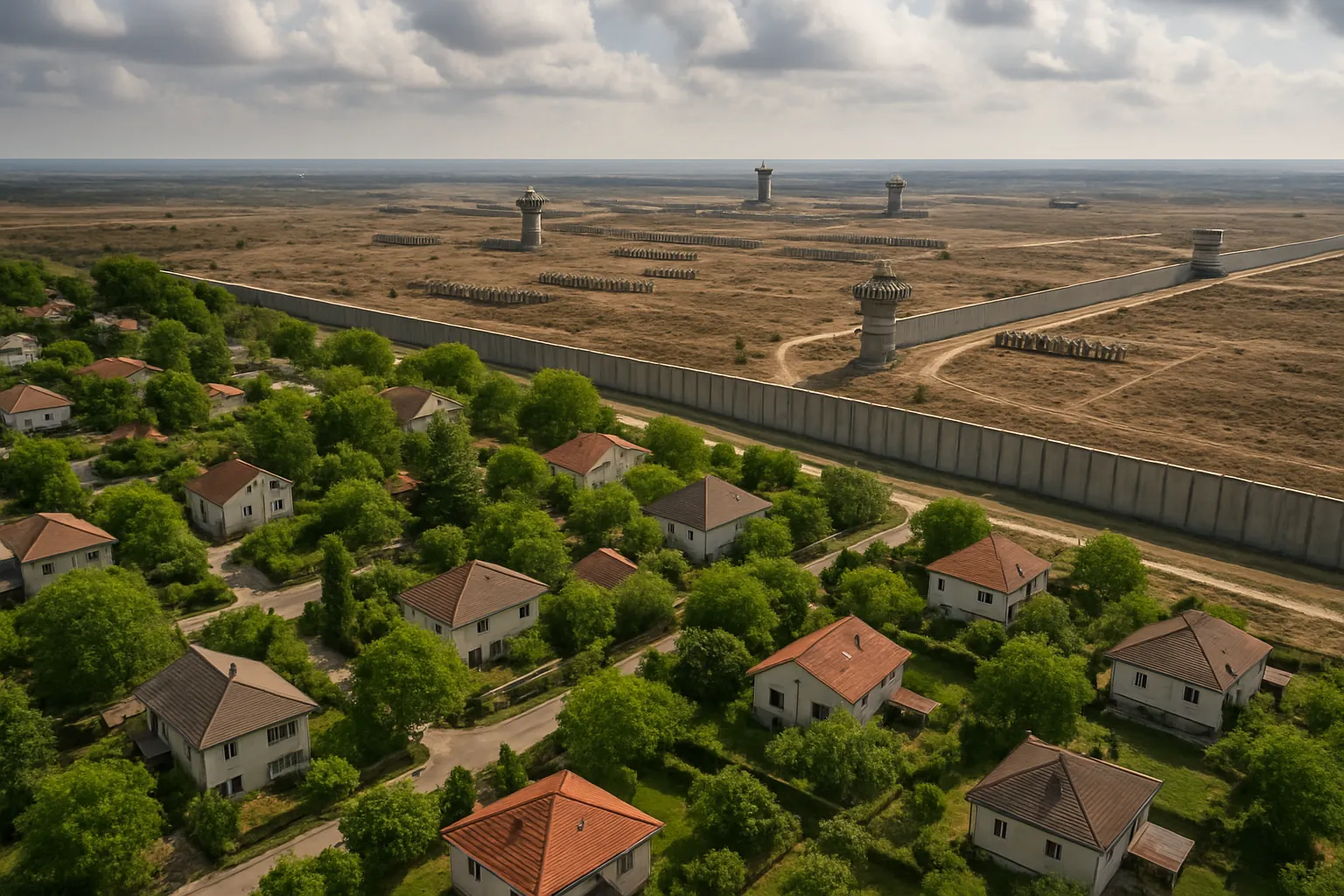
A late-night salvo from Israeli artillery shattered the stillness near Gaza just hours after news broke of Israel’s intent to hold key positions inside the Strip, even after any phased withdrawal. Despite international headlines heralding a forthcoming ceasefire and prisoner exchange, Israeli officials have quietly—but firmly—notified the United States that their presence will remain entrenched at three strategic sites: the Philadelphi Corridor along the Egyptian border, the infamous Hill 70 (Tel al-Mantar) overlooking vast stretches of northern Gaza, and a militarized buffer zone just within Gaza’s boundary.
A closer look reveals that these positions are not random. Each is designed to give Israel “field superiority” and control over logistical routes, surveillance, and, as some analysts argue, psychological dominance over a traumatized population. Israeli defense planners insist this is about security, but what does perpetual presence look like on the ground for Palestinians? What message does it send to allies like the U.S. who are brokering diplomatic endgames, or to regional actors like Egypt, watching their border transform into a fortress?
According to Kan News and corroborated by statements to Washington, the phased plan will see Israeli troops remain after initial withdrawals, awaiting the entrance of foreign forces—under U.S. auspices—to “manage security.” Yet, as diplomats parse phrases like “reduction of fire” rather than a true ceasefire, the region is getting a vivid lesson in the elasticity of war’s endgames.
Security or Entrenchment? The Strategic Sites at the Heart of Controversy
Beyond formal agreements, the specifics of Israel’s intended outposts lay bare a hard truth: military withdrawals cloaked in layers of semantic ambiguity offer little hope of real autonomy for Gaza. The Philadelphi Corridor, running the length of the Gaza-Egypt border, is considered critical by Israeli officials to prevent weapons smuggling and cross-border tunnels. Yet, the corridor’s fortification raises longstanding fears—particularly in Cairo—of instability spilling over into Egypt, and of Gaza’s isolation tightening.
Hill 70, or Tel al-Mantar, provides a literal and figurative high ground. From seventy meters above sea level, Israeli forces enjoy expansive views (and, crucially, artillery reach) across Gaza City and the Jabalia refugee camp—centers of civilian life and, lamentably, frequent theaters of conflict. By retaining this spot, Israel preserves not just oversight but deterrent capacity. “Control of the high ground is a classic military tactic, but when occupied indefinitely, it blurs the lines between defense and domination,” notes Omar Shakir, Human Rights Watch’s Israel and Palestine Director.
Meanwhile, the buffer zone poses deep moral and humanitarian questions. With every meter of land under direct Israeli watch, displaced families face uncertainty about whether rebuilding is even possible—physically, emotionally, or politically.
“A withdrawal that leaves foreign boots on the ground is, at best, a fragile peace and, at worst, a recipe for perpetual unrest.” — Professor Nadia Abu El-Haj, Columbia University
For proponents of collective security, the phased fallback—first to a “yellow line” within Gaza, then to a “red line” as foreign troops arrive—resembles past international interventions that have often proven chaotic, contested, or even counterproductive. The dynamic evokes the dismal aftermath of Israel’s 2005 withdrawal, when settlement evacuations were replaced by blockades and sporadic military incursions. As Harvard analyst Sara Roy underscores, “History tells us that half-measures and partitioned sovereignty breed more violence, not less.”
Broken Ceasefires, Civilian Suffering, and the Shrinking Horizon for Peace
Israeli forces, meanwhile, continued heavy bombardment in various parts of Gaza, including the complete collapse of Al-Azhar University’s main campus—an event that only underscores the hollowness of ceasefire talk. Attacks on tent encampments for displaced civilians north of Khan Yunis, causing mass injuries, reinforce a grim sense of déjà vu. While Israeli spokespeople maintain these strikes are “targeted operations,” the world is watching as civilian infrastructure is methodically erased—schools, apartment blocks, medical centers.
Absent a true end to hostilities, even the most meticulously-planned phased withdrawal risks perpetuating a climate of fear and instability. The language of “reduction of fire” rather than “ceasefire” is more than a matter of translation; it’s a window into the mindset of Israeli leadership and the limitations they have placed—by choice or political necessity—upon the notion of peace.
Policy experts on both sides of the Atlantic warn that these moves consolidate, rather than alleviate, the root inequalities that lie at the heart of the conflict. According to a recent Pew Research Center survey, Americans are evenly divided on U.S. support for Israel’s Gaza policy, with younger and more diverse voters expressing “profound discomfort” with indefinite occupation or half-hearted ceasefires. For a generation shaped by the failures in Iraq and Afghanistan, the continued militarization of Gaza reads not as prudent security, but as an abdication of responsibility to pursue lasting peace.
Across progressive circles, there is deep skepticism about the language of “buffer zones” and “necessary precautions” when so many Palestinian lives have been shattered. Genuine peace, after all, does not coexist with military occupation; real security cannot be built atop blockaded communities denied the basic tools of economic and civic recovery.
Seeking True Peace: Progressive Values or Perpetual Control?
Why does this matter to you, the concerned citizen—be you Jewish, Arab, American, or simply committed to justice? The stakes are straightforward: Accepting entrenched occupation under new euphemisms opens the door to decades more of dispossession, violence, and mutual distrust. Israel’s rhetoric around security must be met with a robust defense of international law, human rights, and the backward truth that no people can be endlessly surveilled into submission without expecting blowback—not just at the border, but far beyond.
Shared regional security, sustainable peace, and genuine reconciliation demand more than military logistics—they require “courageous and creative political solutions,” as former U.N. official Lakhdar Brahimi once put it. An approach rooted in equality, mutual security, and respect for sovereignty recognizes Palestinian aspirations as legitimate—not as threats to be managed, but as rights to be honored.
The current plan, with its strategic footholds and phased retreats, may satisfy hawkish appetites for control. It will not, though, deliver peace or the security both Israelis and Palestinians desperately need. That will only arrive when the logic of occupation gives way to the ideals of coexistence and collective well-being. Until policymakers move from talking peace to making it real, Gaza’s shadow will linger as a profound challenge to anyone who values justice, dignity, and hope for a shared future.
