
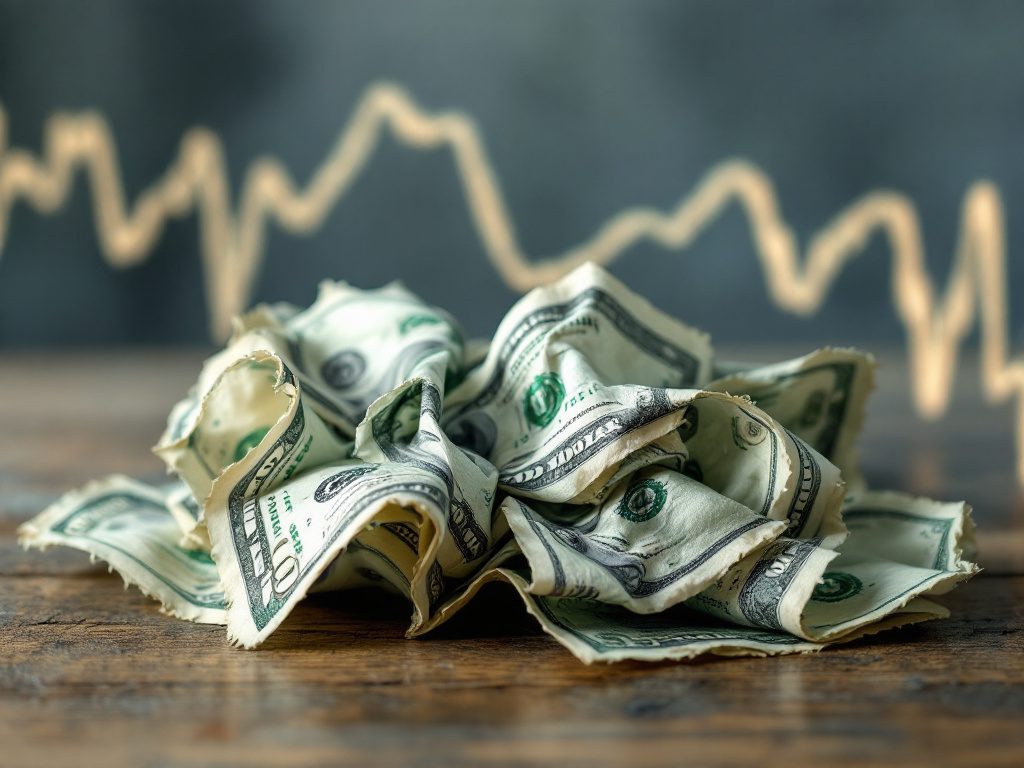
When President Trump announced a sweeping array of tariffs on foreign goods, many economists braced for the economic aftershocks. It didn’t take long for those tremors to surface. Economy watchers from Wall Street to Main Street quickly recalibrated their forecasts, assessing the collateral damage that tariffs can inflict—not just on trade and markets, but on consumers, businesses, and growth. Most notably, Goldman Sachs economists have now raised their assessment of the likelihood of a U.S. recession within the next year, moving it sharply upward from 35% to 45% as uncertainty grips financial markets.
A Trade War’s Crippling Ripple Effect
Goldman’s new assessment did not mince words. In a stark statement, the bank’s economists pointed directly to the recent tightening of financial conditions caused by Trump’s trade war, coupled with the intensifying policy uncertainty making businesses jittery, less inclined to invest and hire—a perfect recipe for economic slowdown.
Goldman Sachs isn’t alone in its gloomier outlook. Other major financial institutions echoed similar apprehensions. JP Morgan, for example, has stated that the odds of a global recession have ballooned to a troubling 60%, explicitly laying blame at the feet of “disruptive U.S. policies,” including trade wars. The real-world implications of the trade war became painfully apparent almost immediately. The S&P 500, a critical benchmark of American capitalism, lost an astonishing $5 trillion in market value over just two trading days—an ominous sign for what may lie ahead for American workers and consumers.
High tariffs don’t just bruise exporters overseas; they directly hit American consumers’ purchasing power, raising prices for goods like smartphones, computers, and appliances. Beyond that, they invite retaliatory measures from affected nations—most notably China, who swiftly responded in kind, ramping up tariffs on U.S. agricultural exports which strained the farming sectors across the Midwest and heartland states.
“The sudden escalation in tariffs could dramatically undermine American economic growth, putting pressure on businesses already coping with uncertainty,” cautioned JP Morgan’s Chief Economist.
Stunting Long-term Economic Prospects
Goldman Sachs, previously optimistic about U.S. economic growth, revised its 2025 annual GDP growth projections downward from 1.5% to 1.3%. While that change might seem minimal, it underlines broader apprehensions about the country’s economic trajectory in a landscape scarred by ongoing trade tensions. Even worse are forecasts from banks like Wells Fargo Investment Institute, predicting just 1% growth—a bleak recognition of the damage aggressive tariff policies can wield over a nation’s economic vitality.
And the collateral damage reaches beyond U.S. borders, spilling over into international economies closely intertwined with America’s economic fate. Canadian Prime Minister Mark Carney spoke plainly about these ramifications this week, warning, “The chances of a U.S. recession have shot up and will inevitably hit Canada.” Carney’s stark acknowledgment underscores an uncomfortable reality: the interconnectedness of global economies means Trump’s tariff decisions can wreak economic havoc far beyond U.S. soil.
A Roadmap to Economic Uncertainty—or Turnaround?
Despite these ominous signs, not everyone sees the situation as irreversibly negative. Fox Business host Maria Bartiromo, who typically delivers pro-administration commentary, hinted at the seriousness of the tariff threat, warning, “I do expect this to hit Main Street.” However, she urged precaution against panic selling and total pessimism, suggesting that the market reaction may be an “overreaction,” and optimistically proposing: “All we need is one announcement to actually change sentiment here.”
Could Bartiromo be right in her guarded optimism that a well-timed policy shift or renegotiation announcement might halt the slide, restoring confidence among investors and business leaders? Possibly. However, policy whiplash—whether delivered via erratic tweets or abrupt tariff reversals—will likely make investors acutely cautious. After all, markets and businesses favor clear, consistent messaging—especially on issues as consequential as tariffs and international trade.
Looking forward, policymakers grappling with the consequences of Trump’s tariff policy will face the challenging task of buoying economic stability. Goldman Sachs expects that the Federal Reserve will begin proactively cutting interest rates, possibly as early as June, a move anticipated by economists to offer some relief from a geopolitically briefed economic contraction. Lowering rates can mitigate the sting businesses feel, making borrowing cheaper for expansion, innovation, and hiring. Yet even the Fed’s considerable influence may be insufficient if tariff wars continue unabated.
As tariffs and tariffs threats continue, businesses, investors, and policymakers alike remain in limbo, stuck navigating the chasm between protectionist policies and increasingly stark economic realities. The question that looms large isn’t merely if a recession might strike—chances appear uncomfortably high—but rather, how severe and long-lasting its impacts could be. The answer may hinge on whether pragmatism prevails in trade negotiations or if America’s economy slides deeper into the costly consequences of trade warfare.
