
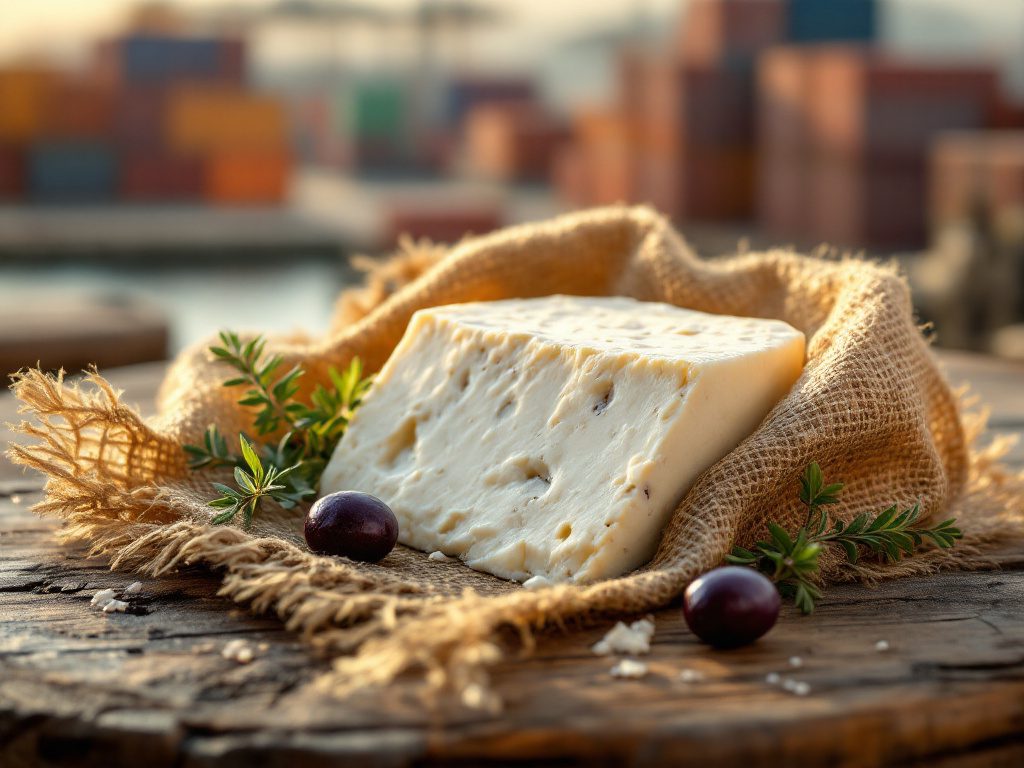
In Kalavrita, a picturesque town nestled within Greece’s southern Peloponnese region, a cooperative of 1,200 dedicated dairy producers once imagined 2025 as their turning point—the year when their creamy, celebrated feta cheese would finally reach American supermarket shelves en masse. Known locally as “white gold,” feta is not merely an export product. For Greeks, it symbolizes culinary heritage, a cultural ambassador that boasts an impressive history stretching back more than 6,000 years. Yet, overnight, this vision of American consumers savoring rich slices of feta alongside fresh tomatoes, olives, and oregano (a staple Greek combination) has stumbled upon an unanticipated barrier: President Donald Trump’s recent imposition of a 10% tariff against most imported European goods.
A Promising Market Threatened
Over the past four years, the steady growth of Greek feta exports to the United States has signaled a promising trajectory. American demand for Greek feta has doubled recently, comprising approximately 8% of Greece’s annual feta exports, according to Greece’s dairy industry association. The optimistic forecast for continued growth has rapidly given way to apprehension. Feta producers now face a daunting scenario where new U.S. tariffs could effectively halve their exports, severely undercutting years of investment and strategic market exploration.
“What share of that tariff cost will go to the final consumer? Where the roulette ball will land remains to be seen,” Konstantinos Latsis, general manager of Kalavrita’s cheese cooperative, recently voiced his concerns. The uncertainty expressed by Latsis underscores the depth of worry prevalent across Greek dairy circles. The Kalavrita cooperative annually produces approximately 5,000 tons of feta, mostly barrel- and tin-aged, destined primarily for Greek and European markets. The United States represented a significant strategic target, an initiative designed to bolster the cooperative amid ongoing internal economic challenges.
Prime Minister’s Cautious Optimism Amid the Storm
Prime Minister Kyriakos Mitsotakis has publicly responded with a cautious tone, balancing realism with encouragement as the feta producers grapple with harsh economic realities. In a statement underscoring the regional and global implications of protectionism, Mitsotakis expressed his disappointment in escalating trade tensions. “The trade war will harm everyone. I hope we will soon see a de-escalation of these practices,” he remarked to reassure anxious constituents. Mitsotakis further emphasized the strategic importance of responding adaptively to these new tariffs, reinforcing that the Greek economy must and will adjust to these external pressures. His administration has pledged commitment and “responsibility” in mitigating potential setbacks through fast-tracked economic initiatives and support measures aimed especially at vulnerable sectors like agriculture and exports.
“The trade war will harm everyone. I hope we will soon see a de-escalation of these practices.” – Prime Minister Kyriakos Mitsotakis
A closer look reveals Greece’s commitment to coordinated efforts within the European Union to combat unfavorable tariffs. Mitsotakis has positioned Greece actively in EU strategic discussions, exploring collective responses to Trump’s tariff policies that could include reciprocal duties. However, for now, those reciprocal tariffs have only intensified anxieties, adding another layer of unpredictability to Greece’s economic outlook.
Alternative Markets and Long-term Adaptations
Yet, despite the bleak outlook in the U.S., Greece’s dairy industry leaders remain optimistic, intentionally choosing economic resilience over despair. Christos Apostolopoulos, representing Greece’s dairy industry association, recently emphasized an urgent strategic pivot: aggressively exploring alternative markets. The evolving export strategy signals Greece’s willingness to innovate beyond traditional pathways, underscoring an economic tactfulness that considers broadening trade partnerships with countries in Asia, Africa, and the Middle East.
This recalibration of export strategy aligns neatly with broader economic reform efforts by Mitsotakis’s government, particularly the initiatives aimed at restructuring labor markets and enhancing domestic investments in sustainable agriculture. In Western Macedonia, for instance, targeted projects are generating new employment opportunities, encouraging optimism that displaced agricultural and industrial workers—affected by Greece’s economic pivot away from coal-dependent industries—may benefit from newly invigorated markets abroad.
Nonetheless, the shift comes with significant barriers. Even as Greek producers seek to promote feta’s unique qualities—secured under EU trademark protection since 2022—they must counteract increased competition from European neighbors equally affected by tariff realignments. Italy, Spain, and France, each proudly bearing their own signature dairy exports, find themselves in a comparative contest for available global markets as protective tariffs reshape the landscape of European agricultural trade. Greek feta, while uniquely Greek, must now assert its story more forcefully than ever, emphasizing quality, authenticity, and cultural legacy.
As these producers confront this tariff-driven crossroads, you might reasonably ask: what comes next for Greece’s beleaguered feta exporters? Ultimately, the resilience and adaptability of Kalavrita’s dairy cooperative—and Greece’s feta industry more broadly—will prove decisive. The decisions they embrace in the coming months and years will not only define their economic future but also set a precedent for other industries affected by protectionist policies abroad. One thing remains abundantly clear: Holding onto traditional markets amid challenging trade dynamics requires strategic foresight, adaptability, and collective effort, elements Greece is no stranger to mobilizing throughout its storied history.
