
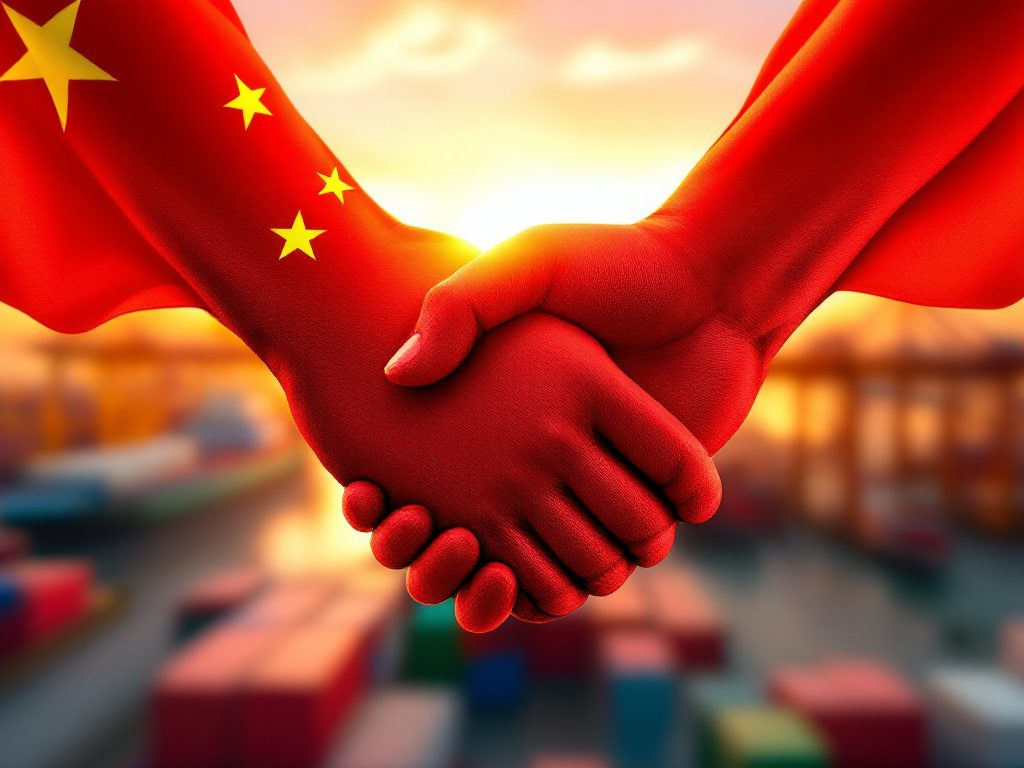
It was a wake-up call that Hanoi couldn’t ignore. When Washington recently slapped Vietnam with a staggering 46% tariff, branding it with a “Liberation Day” salvo, the message was clear: engaging in practices that help China dodge U.S. tariffs would not be tolerated. Facing economic repercussions, Vietnam swiftly pivoted, proposing comprehensive measures to prevent Chinese goods from circumventing U.S. tariffs. The move clearly indicates Hanoi’s eagerness for reconciliation with its most significant trade partner and leading security ally, the United States.
Unintended Consequences in a Trade War’s Shadow
The backstory is crucial here. As the trade war between the U.S. and China escalated, Chinese manufacturers began routing products through Vietnam, falsely labeling goods as “Made in Vietnam” to evade hefty American tariffs. According to senior U.S. trade advisor Peter Navarro, this transshipment practice has significantly undermined the effectiveness of American trade policy aimed at recalibrating economic relations with China.
Washington was quick to act against Vietnam for this transshipment loophole, initially imposing substantial tariffs as a wake-up call to Hanoi. However, acknowledging Vietnam’s strategic attempts at compliance, the U.S. administration has suspended the steep tariff for 90 days. This reprieve is conditional, presenting Hanoi with a brief window to persuade Washington that robust reforms on trade fraud and export control are not only planned but swiftly executable.
Hanoi’s Balancing Act
Hanoi, eager to maintain its strategic ties with the U.S., is responding actively. It has announced fresh measures aimed at tightening loopholes and cracking down on illicit trade practices. Regulatory adjustments include introducing stricter controls and surveillance of goods entering and leaving the country. Moreover, Vietnam is moving urgently to enact a resolution strengthening control over dual-use exports such as semiconductors and satellite equipment—critical technologies Washington fears could inadvertently strengthen China’s military-industrial complex.
“Vietnam is a large economy with great potential, and Hanoi’s swift responsiveness signals a positive trajectory for stronger bilateral relationships,” stated U.S. Secretary of Commerce Howard Latnik in a recent briefing.
Vietnam stands at a critical crossroads, balancing its economic interests tied to China, currently its indispensable source of imports and investments, and its aspirations towards deeper integration and trust with America. This challenging tightrope walk emphasizes the complexity of global trade dynamics in an era increasingly marked by geopolitics.
Indeed, Vietnam’s willingness to engage in detailed discussions, as reported by personnel close to recent negotiations, illustrates a serious bid to satisfy U.S. demands. According to sources familiar with the talks, Hanoi anticipates reducing imposed duties to a manageable level—somewhere between 22% to 28%, perhaps even lower—and U.S. trade representatives have signaled an openness to this negotiation.
A Calculated Gamble
But beyond immediate economic pragmatism, what could Vietnam’s latest moves indicate geopolitically? Vietnam is a careful player in Asian power dynamics, consistently positioning itself cautiously between the two giants. Traditionally wary of both Beijing’s regional ambitions and historical grievances attached to Washington, Hanoi now increasingly leans towards the U.S., partly as a hedge against an assertive and militarily growing China.
Economic consequences aside, this episode highlights Vietnam’s broader geopolitical contemplation: a strategic alignment with Washington, especially given the recent sharpening of territorial disputes in the South China Sea. Hanoi sees stronger ties with the U.S. not just as economic reassurance but as security insurance, crucial to safeguarding its sovereignty in regional disputes.
Simultaneously, Vietnam remains cognizant of China’s proximity and power. The impending visit of Chinese leader Xi Jinping underscores the delicate balance that Vietnam seeks to maintain. How effectively Vietnam navigates its diplomatic and trade relationships in the coming months may well set precedents for other nations similarly caught amid competing superpowers.
Fundamentally, Hanoi is now making calculated moves, seeing clearly that U.S. patience for trade manipulation is at its limit. The significance of its response goes beyond economic reconciliations—it’s about asserting proactive agency in a global order characterized by power politics, aligning itself closer with America both for immediate economic reassurances and broadened security horizons.
Will Hanoi’s newfound regulatory rigor pass muster with Washington? The answer lies in the details and speed of these proposed measures. Washington is watching carefully, with Vietnam’s economic resilience at stake. But clearly, this goes beyond mere trade negotiations—it’s a mirror reflecting Vietnam’s deeper strategic pivot towards the West amidst a rapidly changing geopolitical landscape.
