
Turbulence for the Military-Industrial Complex
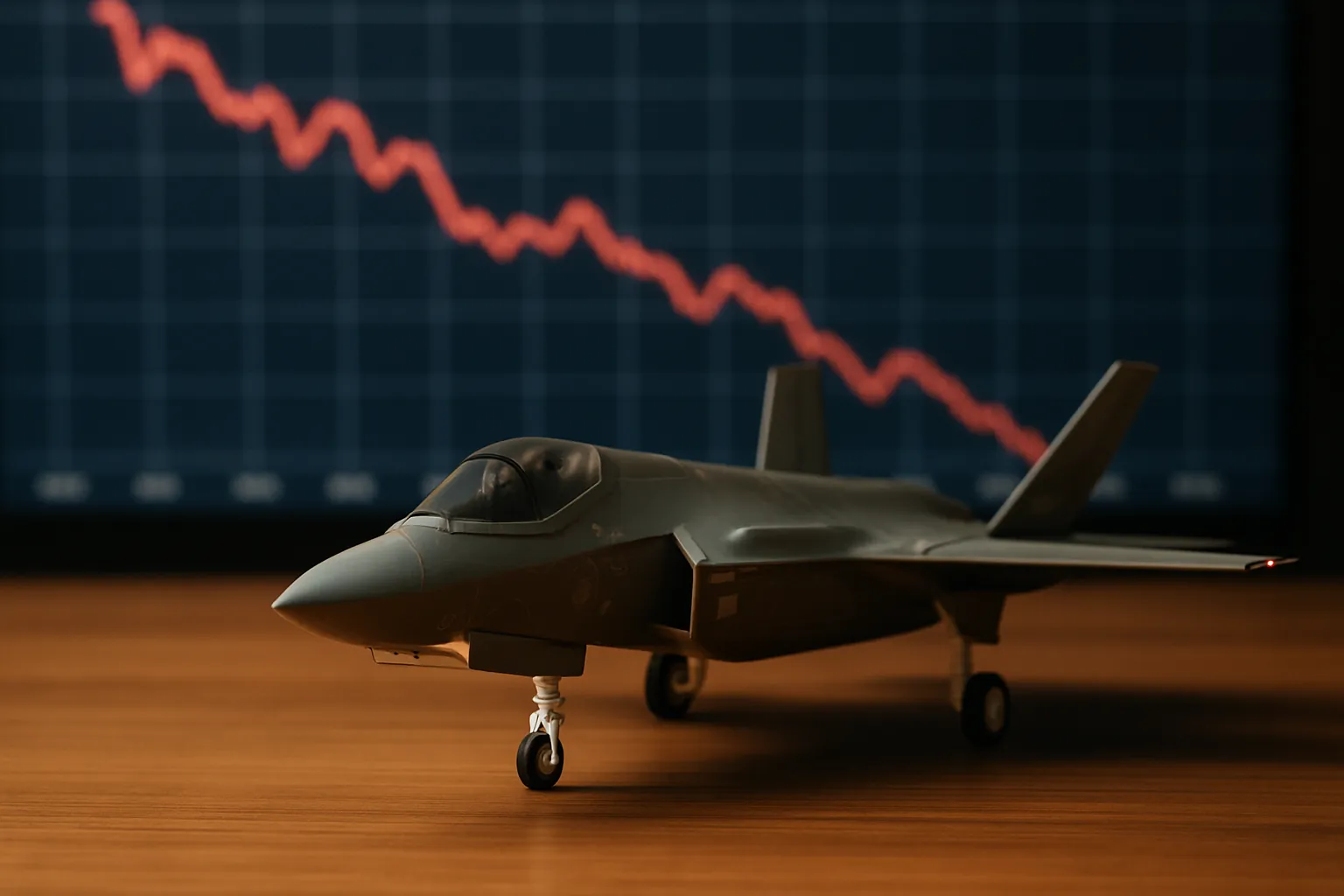
Picture the cold, humming assembly lines at Lockheed Martin’s sprawling Fort Worth facility. For years, those lines have been abuzz, churning out F-35 fighter jets—symbols of American military might and, for investors, lucrative assets. That narrative abruptly faltered this week when the Pentagon slashed its Air Force order for F-35s from 48 to just 24 for the upcoming fiscal year, triggering a seismic shock that sent Lockheed Martin’s (LMT) stock down over 5% on June 11 and deepening worries across the defense sector.
Shares hit an intraday low of $443.41, steadily approaching their nadir for 2025 and marking the worst three-day stretch since March. The ripple effect was not lost on Wall Street’s heavyweights or defense sector peers like Northrop Grumman, all of whom watched with trepidation as the S&P 500 industrials index lagged for the day. The order cut, Bloomberg reported, also pared Navy requests to 12 aircraft (from 17) and skimmed two jets from the Marine Corps’ order. For a company whose F-35 program makes up nearly 30% of revenue—$18 billion in 2024 alone—this reduction is a body blow.
A chorus of analysts responded quickly, highlighting the significance. “This is the largest one-day percentage drop in LMT shares since January 2025, and one of the widest three-day losses since the sector’s pandemic turbulence,” observed aviation analyst Richard Aboulafia on CNBC. Against this stark backdrop, the question grows ever louder: Is the era of bipartisan defense spending finally confronting a fiscal reckoning?
Political Calculus Meets Real-World Consequences
A closer look reveals a tangled confluence of fiscal pressure and shifting national priorities behind these cuts. Budgetary constraints, mounting federal deficits, and evolving global threats are forcing the Pentagon to make decisions that, while economically prudent, have significant repercussions.
Critics of runaway military budgets have long argued for trimming fat from colossal defense programs. Progressive voices in Congress, like Rep. Barbara Lee and Sen. Bernie Sanders, have advocated redirecting a portion of America’s $886 billion defense budget toward education, health care, and climate resilience. The F-35, notorious for its delays, ballooning costs, and what the Government Accountability Office has called a “persistent maintenance and reliability challenge”, has been the poster child for this debate.
History offers context: The post-Cold War 1990s saw a similar contraction, with massive weapons programs downsized in favor of the peace dividend. Yet, as geopolitics evolved—think Russia’s resurgence or China’s ascendancy—defense budgets crept up again. Today, with two active conflicts (Ukraine and Gaza), policymakers appear caught between responding to current crises and restraining future excesses.
The fiscal squeeze comes as voters increasingly demand better roads, affordable prescriptions, and action on climate. According to a 2024 Pew Research Center survey, over 60% of Americans now say government should invest more in domestic priorities rather than expanding the military. That sentiment likely contributed to the Pentagon’s rationale this cycle.
“We cannot address 21st-century challenges—pandemics, climate change, income inequality—if every budget cycle we reflexively shovel money into defense,” former Secretary of Defense Leon Panetta told NPR last month. “Smart security means investing in what keeps Americans safe, not just what looks good on a runway.”
Are the defense giants, used to multi-decade contracts and guaranteed congressional largesse, equipped to reckon with a world where priorities are shifting and public patience for endless Pentagon spending is waning?
Market Jitters Spread—And New Questions Emerge
What’s striking is that the drag on Lockheed’s stock wasn’t contained within aerospace boardrooms. As the company’s shares plummeted, risk sentiment soured more broadly. U.S. equity markets were stable, but cryptocurrency prices took a notable dip, with Bitcoin and Ethereum falling in tandem with Lockheed’s decline. According to CoinDesk, institutional investors appeared to rotate away from traditional defense stocks, seeking safer harbors as uncertainty mounted. The Bitwise DeFi & Crypto Industry ETF (BITQ) also slipped, reflecting a subtle yet telling shift across asset classes.
This sort of market nervousness is a reminder of the interconnectedness of modern finance. It also raises uncomfortable questions about overreliance on a handful of government contracts to keep defense giants – and by extension, thousands of workers and communities – afloat. As Yale political economist Jacob Hacker notes, “When military budgets contract, the shock is felt not only by aerospace CEOs but by suppliers, union workers, and municipalities whose economies depend on the Pentagon’s largesse.” The F-35 program alone stretches across 45 states and supports more than 254,000 American jobs, according to Lockheed Martin’s own data.
Shifting priorities will require defense contractors to innovate in ways that genuinely serve the public interest. Instead of doubling down on weapons platforms with chequered histories, why not incentivize manufacturers to pivot toward technologies that address existential threats—pandemics, climate resilience, green infrastructure? Raytheon and Boeing, for example, have expanded their portfolios to include key aerospace and clean energy technology; so can Lockheed, if politics allow and market incentives align.
Beyond that, institutional investors remain cautiously optimistic. While LMT stock is down more than 27% from its October 2024 high, some analysts peg its one-year upside at over 16% should new overseas orders or materiel upgrades develop. Morgan Stanley defense analyst Kristine Liwag underscores: “These cuts reflect short-term fiscal realities, but the U.S. will continue to modernize its military. The key is agile adaptation.”
Fiscal Reality Check and America’s Security Choices
The drama unfolding around Lockheed Martin this week isn’t just about numbers on a stock ticker. It’s about recalibrating what security means in an era of complex challenges, rethinking whether defense dollars best serve Americans by buying more warplanes or by confronting inequality and climate chaos head on. Every dollar spent reflects this clash of priorities—and, increasingly, congressional Democrats and Republican deficit hawks recognize that tradeoffs are not just inevitable, but urgent.
Winding down the F-35 frenzy forces a reckoning with a legacy system—one overdue for scrutiny and reform. It’s an uncomfortable but necessary step. If we want an America that is truly safe, resilient, and fair, now is the time to ask hard questions of the defense establishment, demand accountability, and redirect resources to where they matter most. The Pentagon’s shift signals perhaps the beginning of a new reality—one shaped not by inertia, but by public will and progressive priorities that put people, not just corporations, first.
